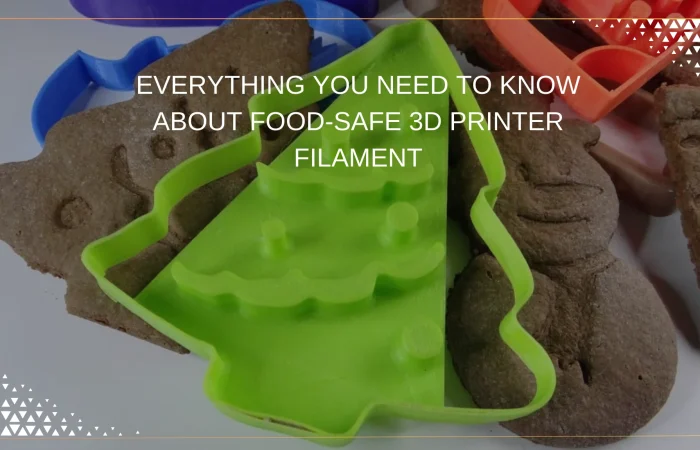
Everything You Need To Know About Food-Safe 3D Printer Filament
Not all 3D printed parts belong near food. If you’re printing items like cookie cutters, kitchen tools, or packaging, you need materials that are safe, stable, and clean. That’s where food-safe 3D printer filament comes in.
But using the right material is only the first step. Food safety depends on what you print, how you print it, and what happens after the print is done. Even the smoothest-looking part can trap bacteria if the wrong nozzle or finishing method is used.
In this guide, we’ll walk through what makes a food-safe 3D printer filament, which types are commonly used, how to check for certifications, and how to avoid common risks. Whether you’re making kitchen tools, display items, or storage containers, this article will help you print with safety and confidence
What Makes A 3D Printer Filament Food-Safe?
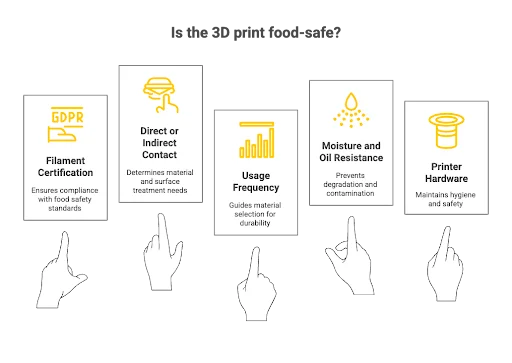
A food-safe 3D printer filament must do more than be non-toxic. It needs to resist leaching, prevent bacterial growth, and remain stable when in contact with food. Materials should be BPA-free, free of unsafe additives, and meet food-contact regulations like FDA CFR 21 or EU 10/2011.
But labeling alone isn’t enough. A filament may be food-safe in raw form, yet the printed object might still pose a risk. Poor nozzle hygiene, rough surfaces, and improper post-processing can all introduce contaminants.
A recent study found that cleaning 3D printed PLA and PETG parts with warm water and dish soap removed over 90% of bacterial colonies from the surface. When paired with a short bleach soak, the cleaning process became even more effective.
So, when selecting a food-safe 3D printer filament, remember, it’s not just about the material. The way you print, clean, and finish the object plays just as big a role in keeping it truly safe for food contact.
Types Of Food-Safe 3D Printer Filaments
There’s no one-size-fits-all food-safe 3D printer filament. Different projects call for different properties, flexibility, strength, clarity, or heat resistance. Below are some of the most commonly used food-safe filaments and where they work best.
- PLA (Polylactic Acid): PLA is often the first material people think of for food-related prints. It’s biodegradable, easy to print, and available in many “pure” versions. However, standard PLA isn’t always food-safe, especially if colorants or additives are involved. It also doesn’t tolerate heat or moisture well, so avoid it for hot or wet applications.
- PETG (Polyethylene Terephthalate Glycol): PETG is a popular choice for making durable and moisture-resistant containers, utensils, and molds. It’s more heat-resistant than PLA and generally considered safe for indirect and short-term food contact. Many certified food-safe 3D printer filament products are PETG-based.
- TPU/TPE (Thermoplastic Elastomers): These flexible filaments are useful for printing soft kitchen tools like jar grips or gaskets. When made with food-grade formulations, TPU can be both flexible and safe. Just be aware that flexible filaments often have more surface texture, which can make cleaning harder.
- Polycarbonate (PC): Strong and heat-resistant, PC is sometimes used for reusable food containers or high-impact items. Food-safe versions are available, but printing PC requires a high-temperature setup and good environmental control.
- Other Specialty Filaments (Nylon, ASA): Some food-safe versions of nylon and ASA exist, though they’re less common and more expensive. Nylon can absorb moisture, which may affect its long-term safety. Always check if the specific formulation you’re using is certified for food contact.
No matter which food-safe 3D printer filament you choose, always verify the manufacturer’s data sheet for certifications, recommended uses, and safe printing conditions.
Also, read:
Best PLA Filament to Start With: A Beginner’s Guide to Choosing the Right Material
Is Resin or Filament Better for 3D Printing? A Detailed Comparison
Certification And Standards For Food-Safe 3D Printer Filament
Choosing a food-safe 3D printer filament isn’t just about the material type—it’s about what the label actually guarantees. True food safety requires compliance with specific national and international standards.
- FDA Approval (U.S.): In the United States, a filament labeled as FDA-compliant must meet the requirements outlined in FDA CFR Title 21, which regulates substances in contact with food. But keep in mind: FDA approval usually applies to the raw material, not the final printed object.
- EU and LFGB Standards (Europe): In the European Union, Regulation (EU) No. 10/2011 outlines food-contact safety for plastics. Germany’s LFGB certification goes even further with stricter migration testing. Filaments meeting these standards are generally safe for repeated food contact if printed and post-processed correctly.
- Understanding Filament Labels: Many spools say “food safe,” but unless it’s backed by proper documentation, that claim is meaningless. Look for phrases like “complies with FDA 21 CFR” or “EU 10/2011 certified.” Also, check whether the filament contains food-safe colorants; some pigments can make an otherwise safe material unsafe.
- Why the Printing Process Matters: Even with certified materials, poor printing habits can ruin everything. Contamination from dirty nozzles, oils on the build plate, or even airborne dust can compromise the print. In fact, many experts say the food-safe 3D printer filament is only part of the equation—the rest depends on your hardware and post-processing.
If you’re serious about food safety, treat the full workflow, from the spool to the finished part, with the same level of care as you’d treat the food itself.
Consult With Our 3D Printing Specialists
Common Applications Of Food-Safe 3D-Printed Objects
When printed and processed properly, parts made with food-safe 3D printer filament can be both practical and creative. Here are some of the most common and useful ways people put them to work in real kitchens and commercial spaces.
Kitchen Utensils and Tools
From custom cookie cutters to measuring spoons and spatulas, food-safe prints are perfect for creating unique kitchen tools. PLA and PETG are often used here; just make sure they’re certified, properly sealed, and used for cold or dry foods unless otherwise stated.
Food Storage Containers
PETG and polycarbonate filaments can handle moisture and temperature swings, making them ideal for dry food bins, spice jars, and fridge organizers. Some users even print custom lids for store-bought containers.
Custom Food Molds and Decorations
Want to make chocolate in the shape of your company logo? Or need a reusable mold for fondant or gummies? You can do that with a food-safe filament 3D print. Just keep prints smooth or sealed so residue doesn’t build up between uses.
Food Display and Packaging
In restaurants and food retail, brands use food-safe 3D printer filament to create custom trays, stands, and packaging components that stand out on display tables or in storefronts. These parts aren’t always in direct food contact, but it’s still smart to use certified materials.
Whether you’re experimenting at home or customizing tools for your business, food-safe 3D printing opens up endless options for safe, smart design around the kitchen.
Potential Risks And Considerations
Using a food-safe 3D printer filament doesn’t guarantee the final part is safe to use. Whether you’re prototyping kitchen tools or designing a container for real-world use, it’s critical to think beyond the spool label.
Surface = Risk
Even the smoothest FDM print has tiny layer lines. Those micro-grooves can trap food residue, moisture, and bacteria, especially after repeated use. If you’re planning to reuse the print, sealing the surface with a food-safe coating isn’t optional. It’s a safety step.
Printing Quality Matters
Misprints, under-extrusion, or layer shifting don’t just ruin the look; they create structural weak points and hidden cavities. A well-tuned printer, clean nozzle, and tight settings are a must when working with food-contact prints.
Moisture Is a Problem
Some filaments, like nylon, naturally soak up water. That makes them risky for items that hold wet food or get washed often. If you’re designing for repeat use, stick with low-absorption materials like PETG or sealed polycarbonate.
Wear and Tear Happens
No 3D printed part is immortal. Scratches and stress cracks, especially on soft materials like PLA, can turn safe surfaces into contamination traps. Inspect regularly, and replace prints that show wear.
Even with the best food-safe 3D printer filament, safety depends on how the part is printed, handled, and used. Treat it like a real product, not just a prototype, because someone’s eating off it.
Safe Printing Starts With The Right Filament
Working with food-safe 3D printer filament opens up real possibilities for functional kitchen tools, custom molds, and creative food-safe components. But material choice is only one part of the equation. Print quality, post-processing, and proper handling are just as important if you’re designing for direct or repeated food contact.
At Additive Plus, we don’t just supply certified filaments; we help manufacturers, designers, and R&D teams make the right choices for real-world applications. Our team understands the safety standards, the print requirements, and the risks that come with food-contact printing. Whether you need one spool or a complete setup, we’re here to help you do it right.
Need help finding the right food-safe 3D filament for your next project?
Contact us today or schedule a consultation to get expert advice and access to certified filaments and tools that meet real-world food safety standards.
At Additive Plus, we specialize in helping clients smoothly transition to 3D technologies. With over a decade of experience and a curated portfolio featuring top brands like Farsoon Technologies, Kings3D, we offer high-quality solutions such as 3D printers, 3D scanners, materials, and other products for every project.
Need expert advice or top-tier equipment?
Get a quote today and see how Additive Plus can help accelerate your next project!
FAQ
Can I use any filament for food-related printing?
No. Not all filaments are safe for food contact. To be considered a food-safe 3D printer filament, the material must be made from non-toxic components and manufactured according to food-contact safety standards. Always check for FDA or EU certifications, and avoid filaments that include uncertified colorants or additives.
Is PLA filament always food-safe?
Not always. PLA is made from corn-based bioplastics and is often described as biodegradable and food-safe. But unless it’s a certified food-safe 3D printer filament, it may still contain additives or be processed in a way that makes it unsafe. Surface texture and printer contamination can also affect its usability.
How do I ensure my 3D printed objects are safe to use with food?
Start with a certified food-safe 3D printer filament, use a clean printer with a stainless steel nozzle, and post-process your parts to remove gaps and rough surfaces. Apply a food-safe coating if needed, and always clean the print thoroughly before use.
Can I print food-safe items on a regular 3D printer?
Yes, but only with proper precautions. Most standard printers can process food-safe filament 3D materials, but you need to avoid cross-contamination. This includes cleaning the hotend, replacing brass nozzles, and using a dedicated build surface if possible.
Are there any special post-processing steps to make 3D prints food-safe?
Yes. Because FDM prints have layer lines that can trap food and bacteria, it’s often necessary to sand or seal the surface. Food-safe epoxy coatings or solvent smoothing (when material-compatible) can significantly improve safety by creating a smoother, non-porous finish.
Explore What’s New in 3D Printing
How to Clean a 3D Printer Nozzle: Easy Steps for Optimal Performance
Can You 3D Print Metal? A Comprehensive Guide to Metal 3D Printing Technologies
3D Printing for the Medical Industry: A Review of Essential Technologies and Trends
How Long Do Resin 3D Prints Last? Factors Affecting Durability and Longevity in 3D Printing
How Can LFAM Boost Efficiency and Flexibility in the Automotive Industry?
Related Posts
Particle size distribution is a critical measurement for understanding and controlling how materials perform. It…