Skip to content
News_Additive-Plus-25

What Material is Used for 3D Printing? A Complete Guide to 3D Printing Materials
3D printing is reshaping how we develop and innovate, stretching its influence across numerous sectors from quick prototyping to intricate final products. As this technology integrates further into various fields, selecting the right 3D printing material isn’t just a necessity—it’s a strategic decision that can unlock immense potential.

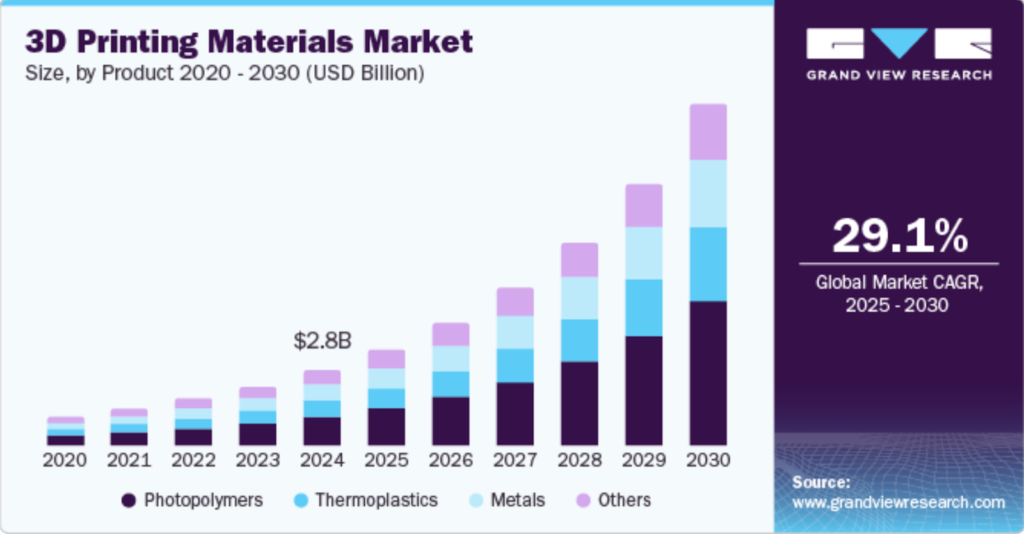
The global 3D printing materials market was valued at $2.68 billion in 2024, increased to $3.19 billion in 2025, and is expected to exceed $15.39 billion by 2034, with a growth rate of 19.10% from 2024 to 2034.

3D-printing

Source: Grandviewresearch


Whether you’re a designer eager to materialize your latest concept, an engineer tackling production hurdles, or a student pushing the limits of what’s achievable, understanding what material is used for 3d printing types is essential.

This guide thoroughly examines the “what material does a 3d printer use” question for flexible tool in different applications. It’s designed to provide you with the knowledge to make informed choices and to approach your printing projects with confidence.

What Material Is Used For 3D Printing?

The variety of materials available for 3D printing is vast, each bringing distinct properties and advantages to the table, enabling innovators in various fields to turn their digital models into tangible realities. 

Here are the primary categories of materials commonly used in 3D printing:


Type of Resin

Properties

Uses

Standard Resins

Balance of strength and detail

General prototyping

Tough Resins

Mimic the strength of ABS plastic

Functional prototypes requiring durability

Flexible Resins

Rubber-like properties, providing compressibility and bendability

Parts that must withstand repeated stress

Castable Resins

Burn out cleanly without residue, perfect for investment casting

Jewelry and dental use in investment casting

Dental Resins

Biocompatible, designed specifically for dental applications

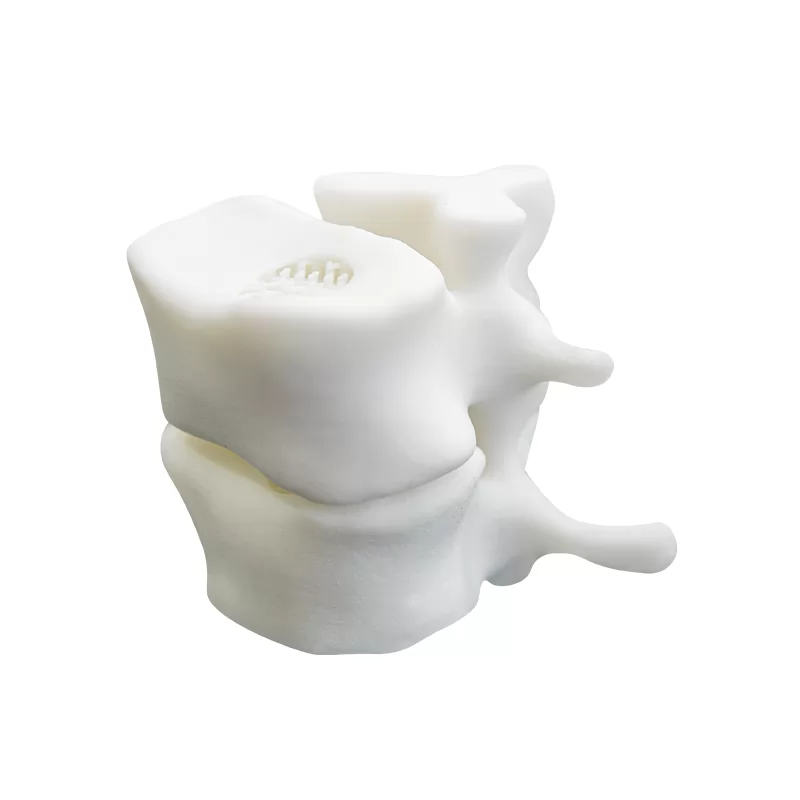
Safety and precision in medical models and devices

Conductive Filaments

These materials are revolutionizing the electronics industry by allowing the printing of circuitry directly onto objects

Opening up possibilities for integrated smart devices and wearables


Each material category opens up new possibilities and challenges, making it crucial to understand their specific properties and best use cases to fully leverage the capabilities of 3D printing technology.

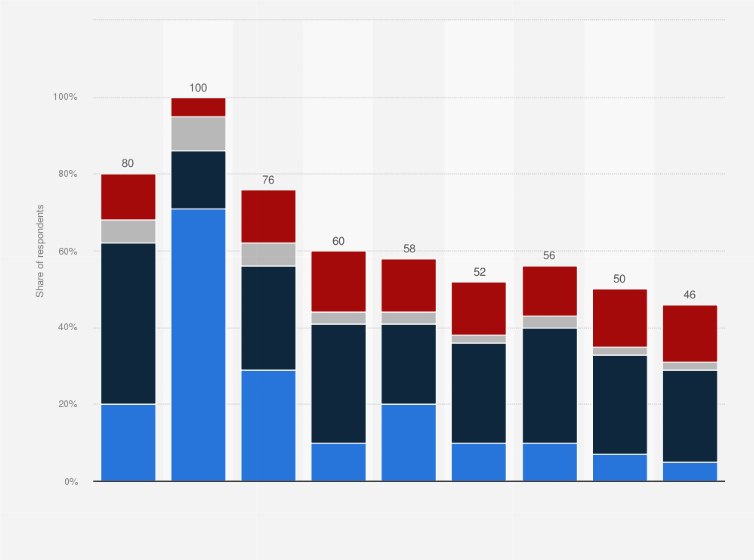
Materials For FDM 3D Printing (Fused Deposition Modeling)

statistics of materials

In Fused Deposition Modeling (FDM), one of the more accessible and widely used 3D printing methods, the filament you choose makes a big difference in both the printing process and the final outcome. 

Source: Statista 


Let’s dive into some of the top filaments used:

  • PLA (Polylactic Acid): This is the go-to for many, especially if you’re just starting out. It’s made from renewable resources like corn starch, making it biodegradable and kind to the planet. PLA prints easily at low temperatures and doesn’t warp much, so it’s great for decorative pieces, models, and any project where the look matters more than function.
  • ABS (Acrylonitrile Butadiene Styrene): If you need toughness, ABS is your best bet. It’s a sturdy, petroleum-based plastic that’s perfect for creating functional prototypes or anything that needs to take a bit of a beating. It can handle higher temperatures and offers more strength than PLA. However, it can be tricky to work with because it tends to warp during printing.
  • PETG (Polyethylene Terephthalate Glycol): This material blends the best of PLA and ABS. It’s as easy to print as PLA but brings the strength and temperature resistance of ABS. This makes PETG ideal for functional applications that also need to look good.
  • TPU (Thermoplastic Polyurethane): For projects that need to bend and stretch, TPU is fantastic. It’s flexible and elastic, perfect for items like phone cases, wearable tech, or any other project that needs a bit of give.

Choosing the right filament really depends on what you need from your final print—whether it’s flexibility, detail, or durability. Each material offers unique benefits suited for different types of projects in FDM 3D printing.

What Materials Are Used In Stereolithography (SLA) Printing?

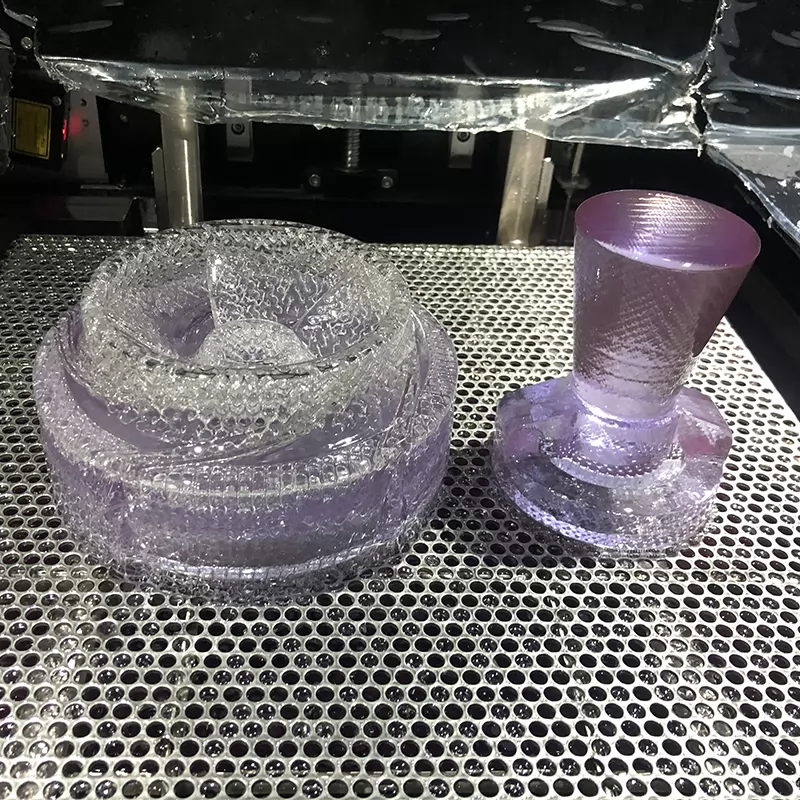
Stereolithography (SLA) printing stands out in the 3D printing world for its precision and finish, largely due to the resin-based materials it employs. SLA printers use a variety of specialized resins, each tailored to meet specific requirements of the printed object.

Type of Resin

Properties

Uses

Standard Resins

Balance of strength and detail

General prototyping

Tough Resins

Mimic the strength of ABS plastic

Functional prototypes requiring durability

Flexible Resins

Rubber-like properties, providing compressibility and bendability

Parts that must withstand repeated stress

Castable Resins

Burn out cleanly without residue, perfect for investment casting

Jewelry and dental use in investment casting

Dental Resins

Biocompatible, designed specifically for dental applications

Safety and precision in medical models and devices


If you are looking for high-quality SLA 3D printing services for rapid prototyping, request a quick quote from Additive Plus’s team to get a personalized approach to your needs! 

Materials For SLS 3D Printing (Selective Laser Sintering)

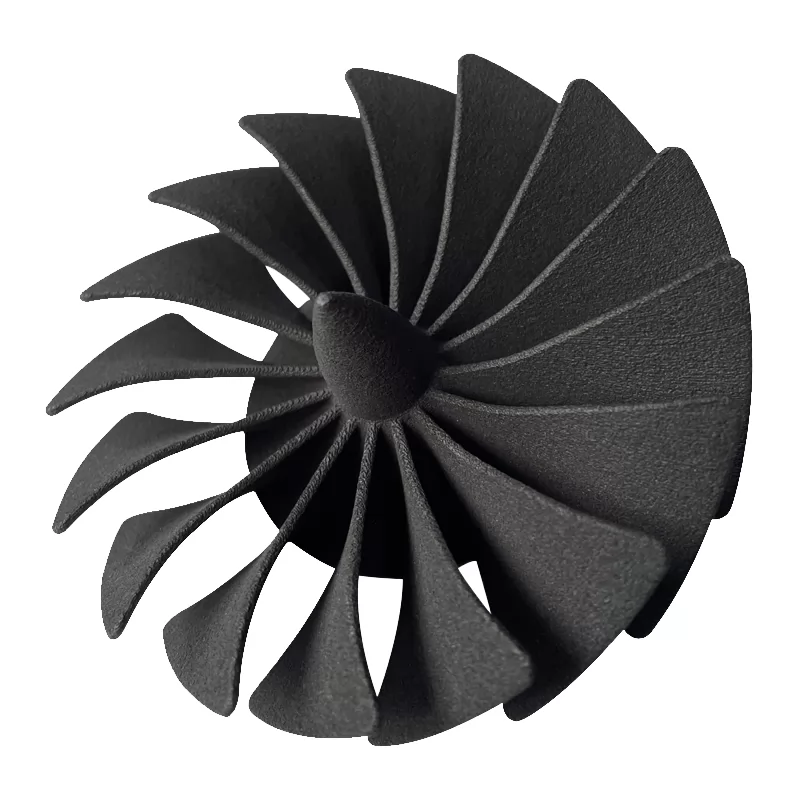
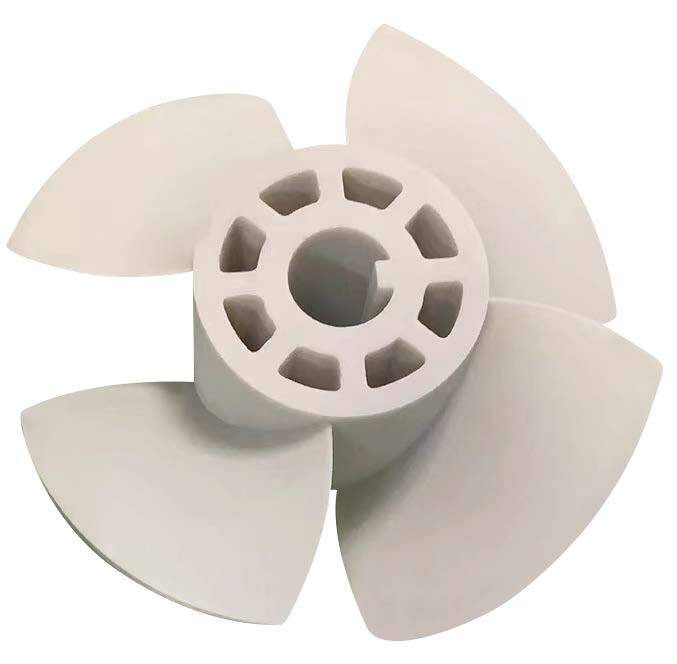
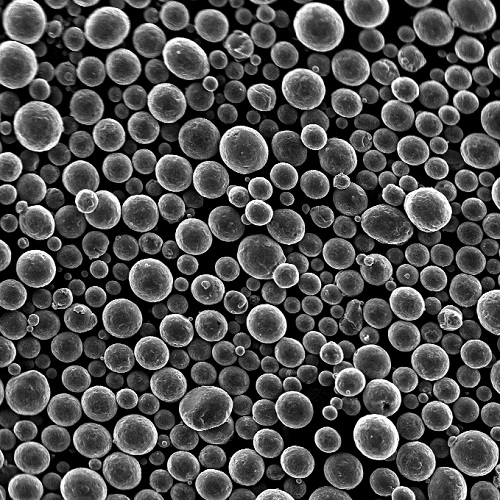
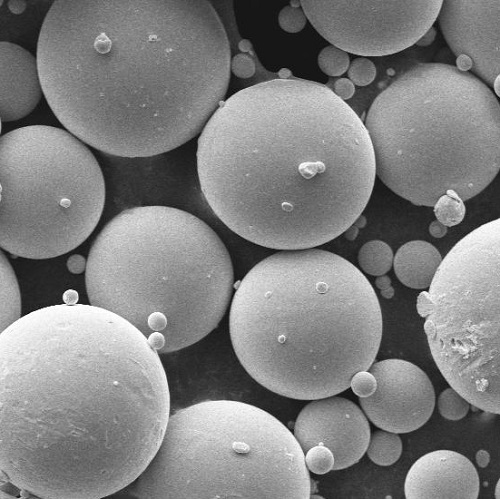
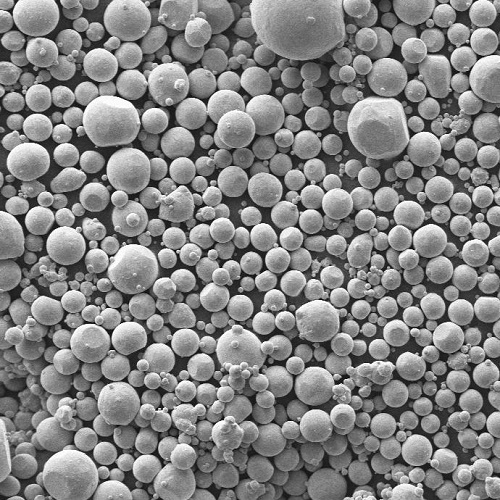
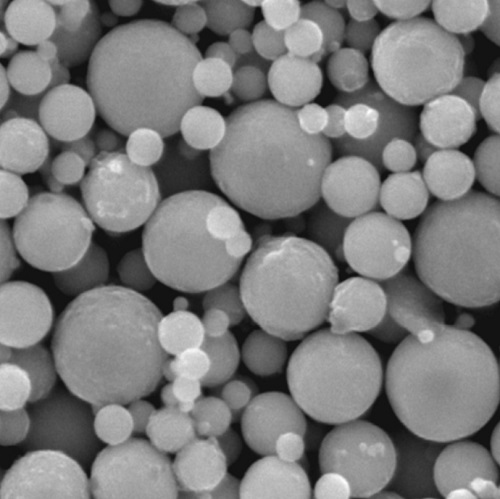
Selective Laser Sintering (SLS) 3D printing excels in transforming powder-based materials like nylon and various metal powders into durable objects. Nylon is valued for its robustness and flexibility, making it ideal for functional parts in industries such as automotive and consumer goods, where high impact resistance is crucial.

For applications requiring even greater durability, metal powders like stainless steel, titanium, and aluminum are used to produce parts that must withstand extreme conditions. These materials are essential in aerospace, medical, and engineering sectors, where components are subjected to rigorous stress and temperature extremes.

SLS printing’s ability to handle diverse materials makes it a key technology in the industrial sector, allowing for innovative and reliable product development beyond traditional manufacturing limits.

What Material Does A 3D Printer Use For Metal 3D Printing?

Metal 3D printing, utilizing methods like Selective Laser Melting (SLM) and Direct Metal Laser Sintering (DMLS), harnesses a range of metal powders tailored for specific industrial applications. 

Here’s a breakdown of the most commonly used metals:

  • Titanium: Valued for its strength and lightweight properties, making it essential in aerospace and biomedical applications.
  • Stainless Steel: Offers excellent corrosion resistance, widely used in the automotive and construction industries.
  • Aluminum: Known for its favorable strength-to-weight ratio, crucial in automotive and consumer electronics.
  • Copper Alloys: Preferred for their superior thermal and electrical conductivity, ideal for electronics and heat exchangers.

These advanced metal 3D printing techniques enable the production of complex, durable parts that are difficult to achieve with traditional manufacturing, expanding their use across various high-tech industries.

What Materials Can Be 3D Printed For Prototyping And Production?

When it comes to 3D printing, the materials you choose can make all the difference, especially when distinguishing between prototypes and final products. Let’s break down what you need to consider:


Functionality


Are you just trying to get a feel for the shape and design, or does the piece need to function in a real-world setting? For prototypes, materials like PLA or standard resins often do the job well—they’re affordable and good for visualizing an idea. However, for production-level projects where the item needs to perform consistently under real conditions, you’ll want to lean on more durable options like metals or specialized ceramics.

Tip: Use standard resins or PLA for initial prototypes to save costs. Consider using dual-material prints to simulate final product characteristics without full investment when transitioning to functional prototypes.


Durability


If your prototype needs to endure some hands-on testing, you might opt for slightly tougher materials like ABS or Tough Resins. For final products, though, the stakes are higher. Materials like titanium or reinforced composites are favored to ensure longevity and resilience, essential for items in constant use.

Tip: For prototypes expected to undergo stress tests, switch from PLA to ABS to better approximate the durability of the final product without incurring the costs of more advanced materials.


Cost


During prototyping, keeping costs down is usually a priority, which is why cheaper materials are common. But when you shift to production, investing in higher-quality materials can pay off. Higher upfront costs can lead to lower overall expenses by minimizing the risk of product failures and the need for replacements.

Tip: Balance your material choices by starting with more economical options for early prototypes and gradually moving to more expensive materials as designs are finalized. This staged approach keeps initial costs low while still ensuring the final product meets quality standards.


Also, read: How Much Does 3D Printing Really Cost? A Complete Breakdown for Beginners


From prototyping to full-scale production, you set the stage for success, ensuring that each print job isn’t just a trial but a step towards a durable, functional final product.

Factors To Consider When Choosing A Material For 3D Printing

When choosing materials for 3D printing, it’s essential to consider how each option will impact the overall success and functionality of your project. Here’s a friendly guide to help you navigate the choices:

  • Strength and Flexibility: Think about the demands your printed object will face. Will it need to bend without breaking? 

Nylon is excellent for its resilience and flexibility, perfect for parts that endure stress.

  • Temperature Resistance: If your project will encounter heat, you’ll need materials that stand up to the challenge without melting or warping. 

ABS plastic and titanium are superb choices for their ability to withstand high temperatures.

  • Transparency: For projects requiring a clear, glass-like finish, like lenses or windows, clear resin is your go-to for its excellent optical clarity.
  • Color and Texture: The look of your final print can be just as important as its function, especially for items meant to catch the eye. 

With PLA, you can choose from a rainbow of colors and various finishes to make your project pop.

  • Application-Specific Needs: Tailor your material choice to the specific requirements of your project. Need something that’s safe for food contact or medical use? 

Look for FDA-approved resins and medical-grade metals that meet rigorous standards.

Remember, choosing the right material isn’t just about meeting technical requirements—it’s about bringing your project to life in the most effective and aesthetically pleasing way possible.

Making The Right Choice For Your 3D Printing Project

As we look ahead, the landscape of 3D printing materials continues to evolve with exciting developments like biodegradable options and the potential for multi-material printing. 

These advancements promise to broaden the horizons of what’s possible with 3D printing, offering more tailored and sustainable solutions. Whether you’re experimenting with prototypes or gearing up for full-scale production, understanding the key properties and applications of various materials will ensure you make informed decisions. 

Choose wisely based on strength, flexibility, temperature resistance, and specific application needs to maximize the effectiveness of your 3D printing projects. 

Keep an eye on emerging materials that might revolutionize how we think about manufacturing in diverse industries, from healthcare to automotive, ensuring your projects are not only innovative but also future-ready.

FAQ

What material is used for 3D printing most frequently?

PLA (Polylactic Acid) is the most commonly used 3D printing material because of its ease of use, environmental friendliness, and excellent printing properties, making it ideal for a wide range of applications, from educational projects to consumer goods.

ABS and advanced ceramics are ideal for high-temperature applications in 3D printing. They maintain structural integrity under thermal stress, making them perfect for automotive and aerospace parts.

SLA printers typically use resin-based materials. These include standard resins for detailed prototypes, tough resins for durable parts, flexible resins for components requiring elasticity, castable resins for precise investment casting, and dental resins for medical precision in dentistry.

Titanium and aluminum alloys are extensively used for 3D printing in the aerospace industry due to their lightweight properties and high strength-to-weight ratios.

Yes, metals are extensively used in advanced 3D printing applications. Commonly used metals include titanium for aerospace and biomedical devices, stainless steel for automotive and industrial components, and aluminum for lightweight structural parts.

New materials being explored include biodegradable materials to reduce environmental impact, multi-material printing technologies that combine different properties within a single print, and conductive materials for integrating electronic functionalities into printed objects.

For applications requiring high temperature resistance, materials like ABS (Acrylonitrile Butadiene Styrene) and specialized ceramics are preferred due to their ability to withstand high thermal stress without deforming or degrading.

For prototyping, materials such as PLA, ABS, and standard resins are recommended because they provide a good balance between cost, ease of use, and mechanical properties, allowing for rapid iteration and testing.

TPU (Thermoplastic Polyurethane) is favored for its elasticity and flexibility, making it perfect for items like phone cases and wearable accessories that require bending and stretching.

Request a quote

Scan My Object

Please describe your part and scanning needs. Include details like size, material, and how you plan to use the 3D model. Let us know if you require additional services like digital sculpting. Upload images of your part(s) if you have them.

Ask for details

Partner with us

Get instant quote

Talk to Material Expert

Select the unit of measurement for your file
No 3D file? We’ve got you. We can design it for you or scan your existing part.
Upload a photo or drawing if you have one — we’ll get in touch soon.
Select the unit of measurement for your file
No 3D file? We’ve got you. We can design it for you or scan your existing part.
Upload a photo or drawing if you have one — we’ll get in touch soon.
Select the unit of measurement for your file
No 3D file? We’ve got you. We can design it for you or scan your existing part.
Upload a photo or drawing if you have one — we’ll get in touch soon.
Select the unit of measurement for your file
No 3D file? We’ve got you. We can design it for you or scan your existing part.
Upload a photo or drawing if you have one — we’ll get in touch soon.