Innovative Composite 3D Printed Suspension Components for Lunar Rover
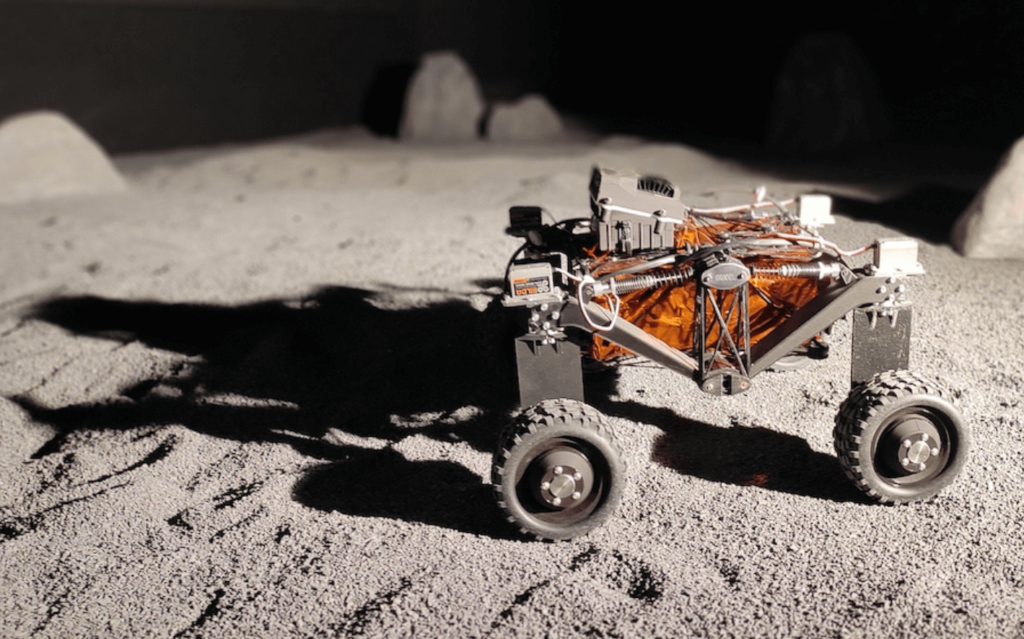
Flexible material choice, high strength and small weight.
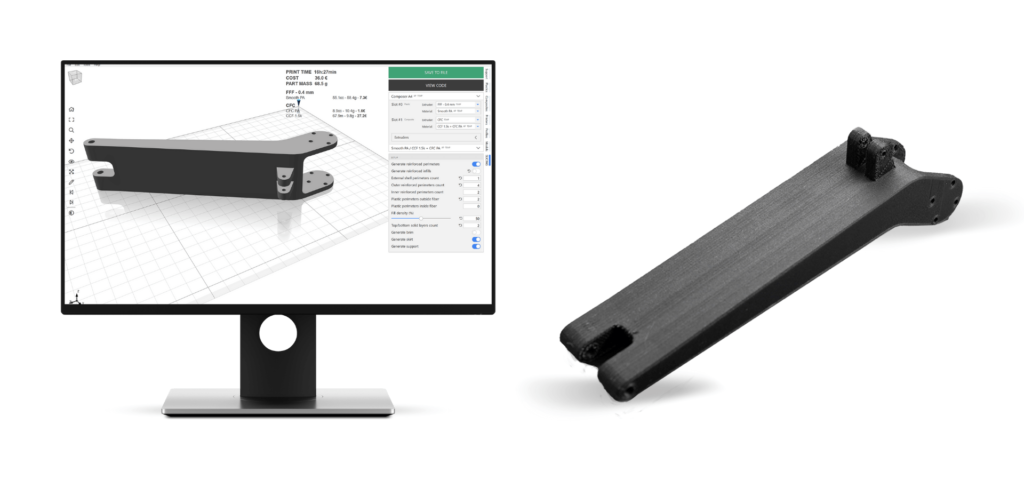
The benefits of continuous fiber-reinforced composites open up a wide array of industrial applications where weight is crucial. One prominent industry is aerospace, where additional mass leads to significant costs due to increased fuel consumption. In 2021, a team successfully 3D printed lightweight components for a lunar rover that emerged victorious in a global space application hackathon. Their approach involved redesigning two suspension components—a wheel mount and a control arm—by incorporating layered reinforcing fibers, thereby enhancing strength and durability.
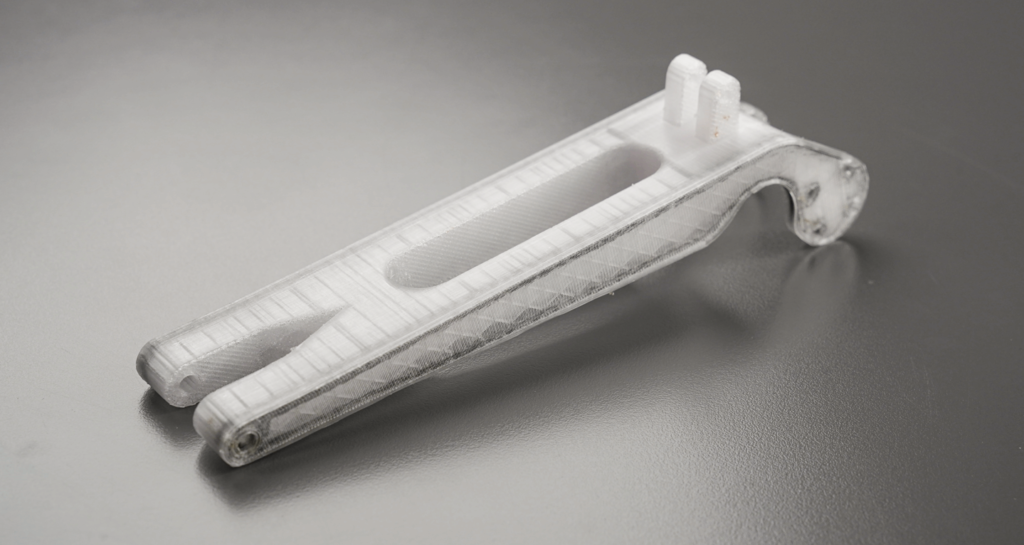
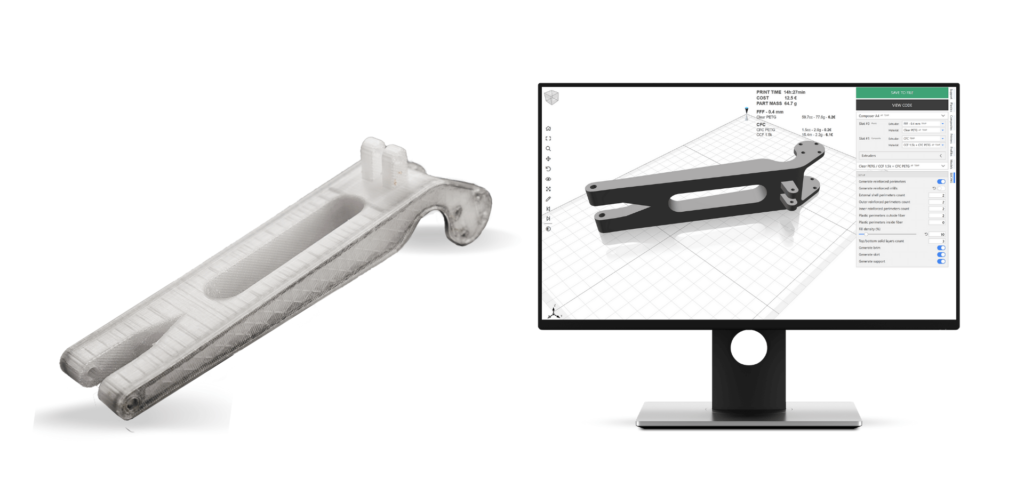
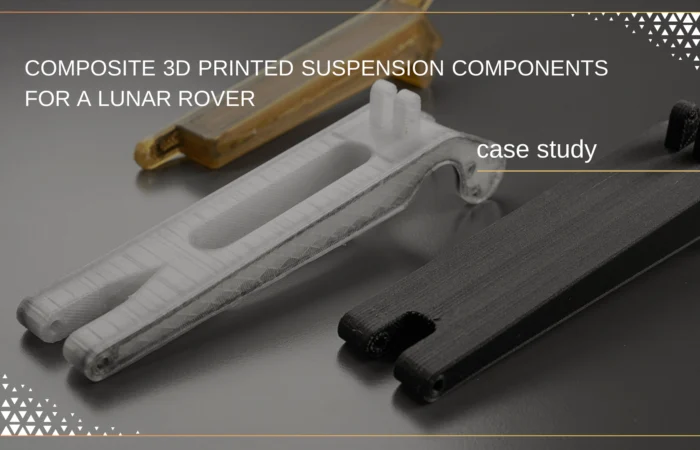
There exists an endless pursuit of perfection, driving the continuous exploration of innovative approaches and materials tailored for various use cases and applications. Recently, a significant milestone was achieved: the team successfully reproduced components for the Lunar Rover utilizing a new material, Clear PETG. The primary goal of this endeavor is to elevate the design by reducing weight while simultaneously enhancing efficiency.
The specific component of the Lunar Rover was crafted through 3D printing, utilizing Clear PETG in conjunction with Composite Carbon Fiber (CCF) on the advanced “Composer A4” 3D printer. Reflecting on past achievements, in 2021, the team initially utilized Smooth PA paired with CCF. They adeptly modified the design to incorporate fiber reinforcements and specified a minimal infill density of just 10%. This strategic decision was critical in adhering to the imposed constraints—where the maximum weight for the rover was capped at 4 kg, and each component was restricted to under 100 g.
In this latest iteration, the team embarked on testing the new material combination of Clear PETG and CCF. They undertook significant geometry modifications to eliminate unnecessary mass, focusing on optimizing the structure to withstand longitudinal stresses. The newly designed model showcases these advancements and reaffirms the commitment to innovation in aerospace applications.
The outcome of this redesign effort led to a notable reduction in both cost and material consumption, all while ensuring the parts retained their crucial functionality. This aspect is particularly vital in aerospace sectors, where performance metrics and cost-efficiency hold substantial weight.
A comparative analysis of the Lunar Rover’s parts—namely those printed with Clear PETG combined with CCF, alongside previous models using Smooth PA and CCF—reveals significant improvement. The accompanying table presents a benchmark comparison between these new results and the earlier versions, also introducing a projected assessment for a lighter plastic, LW-PLA. This comparison is strategically included to highlight one of the core advantages of coextrusion technology: the flexibility in material selection. By leveraging appropriate preparation and settings, a diverse range of plastics can be seamlessly integrated with continuous fibers. This combination yields outstanding physical properties while maintaining a desirable balance between mass and production cost.
Through this relentless pursuit of innovation and optimization in material science, the team reaffirms its commitment to advancing technologies that respond to the exacting demands of the aerospace industry.
| Material | Smooth PA | Clear PETG | LW-PLA* |
|---|---|---|---|
| Weight | 64 g | 66.2 g | ~41.6 g |
| Cost | € 21.6 | € 12.6 | ~€10 |
| Density | 1.06 g/cm3 | 1.3 g/cm3 | ~0.82 g/cm3 |
For instance, the example above illustrates how different materials and designs yield varying outcomes. As more components, load maps, and objectives are considered, additional options and choices emerge. This enables engineers to fine-tune their designs for optimal performance while also reducing costs and enhancing overall business metrics.
-
COMPOSER A3 FFF 3D Printer
Desktop FFF 3D printer for easy parts manufacturing of optimal composites with continuous fiber reinforcement.
-
Technology:
FFF
-
Materials:
Plastic Filaments
-
Technology:
-
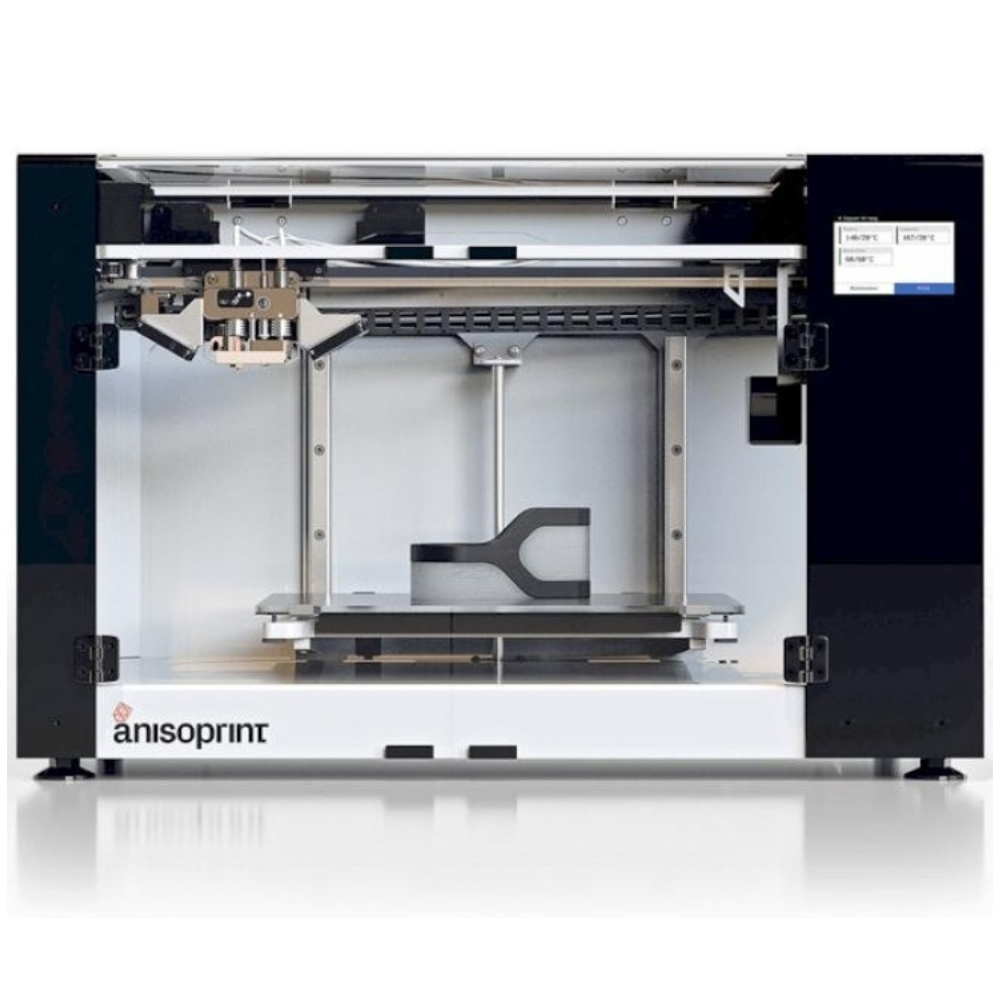
COMPOSER A4 FFF 3D Printer
Desktop FFF 3D printer for easy parts manufacturing of optimal composites with continuous fiber reinforcement.
-
Technology:
FFF
-
Materials:
Plastic Filaments
-
Technology:
Elevate Your 3D Printing with Additive Plus
If you’re ready to take your 3D printing projects to the next level, Additive Plus is here to help. With over 10 years of experience, we specialize in helping clients integrate and optimize 3D printing technologies seamlessly into their operations.
Our curated portfolio features industry-leading brands like Farsoon Technologies, Kings3D, offering a wide range of materials and services to meet diverse needs. From design to consulting, we provide the expertise and tools to bring your ideas to life.
FAQ
What is the main goal of using Clear PETG in the Lunar Rover components?
The primary goal is to elevate the design by reducing weight while enhancing efficiency. Clear PETG offers a combination of lightweight properties and improved structural integrity, which are critical for aerospace applications.
What advantages does coextrusion technology provide in this context?
Coextrusion technology allows the seamless integration of various plastics with continuous fibers, resulting in enhanced physical properties. This flexibility in material selection leads to a balance between mass reduction and production cost efficiency.
How did the use of Clear PETG and CCF affect the cost and material consumption?
The redesign incorporating Clear PETG and CCF led to a notable reduction in both cost and material consumption, which is crucial for the financial viability and sustainability of aerospace projects.
Why is innovation in material science particularly important for aerospace applications?
Innovation in material science is vital in aerospace due to the stringent requirements for performance, durability, and cost-efficiency. Lightweight materials with high strength are essential to enhance the performance of aerospace vehicles while keeping operational costs manageable.
Explore What’s New in 3D Printing
Top 5 Heat-Resistant Plastics for High-Temperature Applications
Polyamide vs Nylon: Key Differences, Strengths, and Best Uses
Join Additive Plus at RAPID + TCT 2025 for the Launch of AO Metal 3D Printers
TPR vs TPE: Understanding the Differences and Choosing the Right Material
Additive Plus Joins Axtra3D as Official Professional Reseller
316 vs 304 Stainless Steel: Which One Is Best for Your Project?
3D Printing Troubleshooting: Common 3D Printing Issues and How to Fix Them