Skip to content
Additive-Plus_3D-Printing-Los-Angeles-9

5 Ways Atomization Boosts US Metal AM Quality
Education
1. Guide to Understanding SLA (Stereolithography) 3D printing
2. What Is SLA 3D Printing? A Guide to Stereolithography
3. How to Line Up 3D Printed Parts: Techniques for Perfect Assembly
4. How to Clean a 3D Printer Nozzle: Easy Steps for Optimal Performance
5. Can You 3D Print Metal? A Comprehensive Guide to Metal 3D Printing Technologies
6. The Role of Metal Additive Manufacturing in Accelerating R&D and Innovation
7. Can You Glue ABS to PVC? Tips and Best Practices for a Strong Bond
8. 5 Ways Atomization Boosts US Metal AM Quality
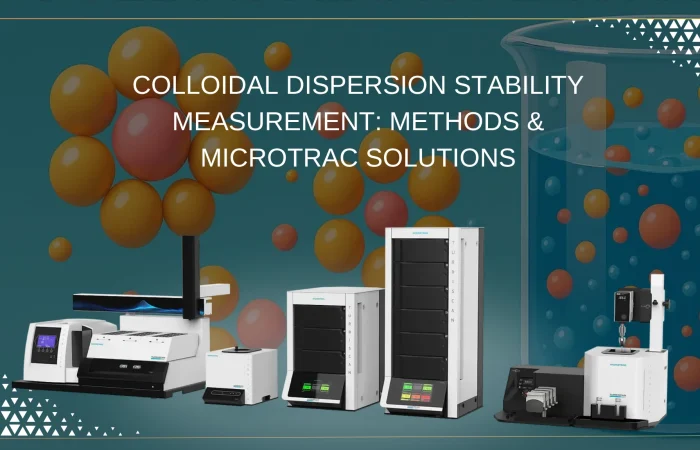
9. Understanding Particle Size Distribution: Methods, Applications, and Microtrac Solutions
10. What Are 3D Printing Joints? A Beginner’s Guide to Connecting 3D-Printed Parts
11. Everything You Need To Know About Food-Safe 3D Printer Filament

Metal additive manufacturing (AM) in the U.S. is growing fast, with aerospace, medical, and defense companies pushing for higher standards of precision and reliability. At the center of this progress is the quality of the metal powder.

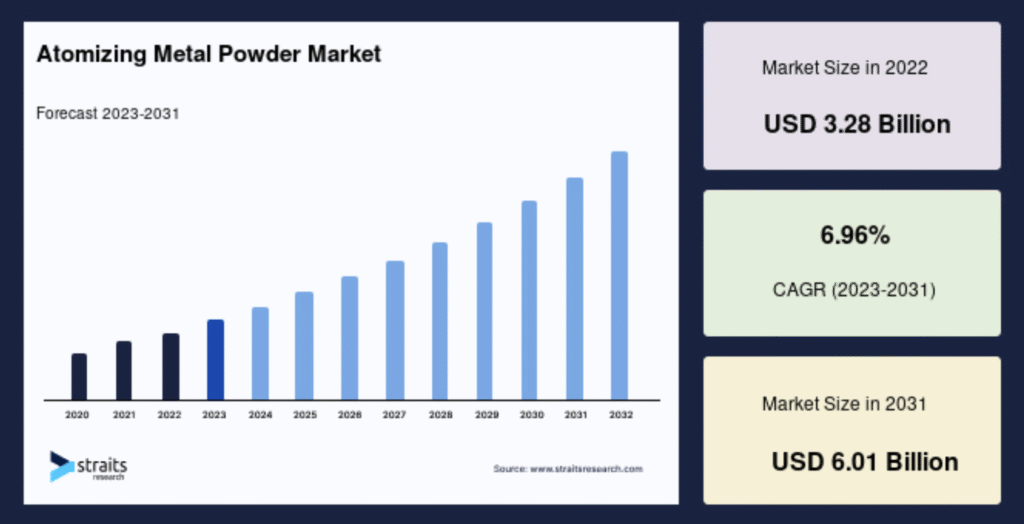
5 Ways Atomization Boosts US Metal AM Quality statistics

Source: Stratiresearch 

Atomization is the method that turns bulk metal into fine powders used in 3D printing. The way these powders are produced affects every layer of the build, influencing part density, surface finish, and overall performance. For U.S. manufacturers focused on consistency and stronger local supply chains, metal atomization technology is a competitive advantage.

This article explores five ways atomization raises the quality of metal AM parts, from flowability and particle size control to cleaner alloys and sustainable powder reuse.

1. Enhanced Powder Sphericity For Better Flowability

One of the main advantages of powder atomization is the ability to produce highly spherical metal particles. Shape matters; irregular powders tend to clump, resist smooth spreading, and create uneven layers during printing.

With metal atomization technology, particles form into near-perfect spheres that flow more easily across the build plate. This improves layer uniformity, reduces the risk of voids, and leads to denser final parts with smoother surfaces. The effect is clear in both laser-based and electron beam AM systems, where consistent powder flow directly impacts process stability.

Better flowability also makes powders easier to handle, store, and recycle. For manufacturers, this means fewer print failures, improved efficiency, and stronger confidence in repeatable results, whether producing a medical implant, an aerospace component, or a prototype in a U.S. R&D lab.

Source: Metal Additive Manufacturing Magazine

2. Controlled Particle Size Distribution

Screenshot-2025-08-27-at-14.08.57

Source: Springer

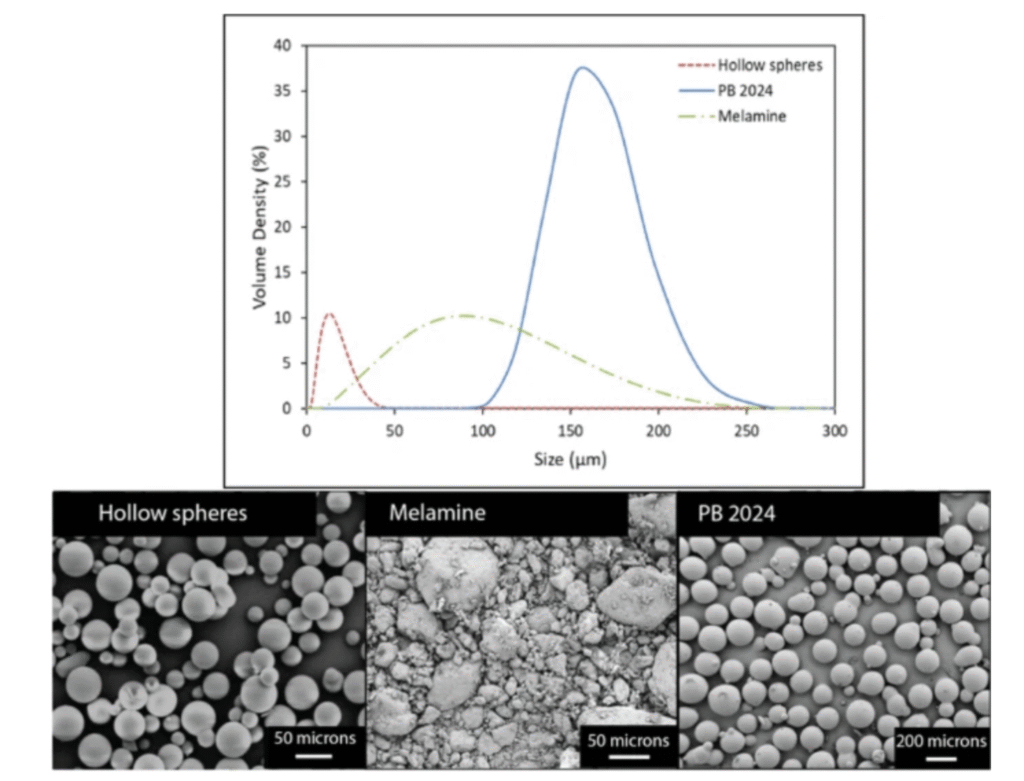
How tightly sized your powder particles are can make or break metal AM results.
Too much variation in particle size means inconsistent melting. Larger particles take longer to absorb laser energy, while very small ones may vaporize or clump, leading to voids or uneven grains.

A recent technical review explains that particle size distribution (PSD) isn’t just a spec on a datasheet; it drives how powders feed, flow, and ultimately how densely parts form. Narrow PSD yields better process stability and repeatable build integrity, especially vital in aerospace, energy, defense, and medical sectors.

With atomization technology, you can engineer powders with a tight PSD consistently. Adjusting gas pressure, melt flow, nozzle design, or sonotrode vibration lets you dial in just the right distribution for laser or electron beam systems.

Read related resources:

3. Reduced Contamination And Oxidation

Oxygen, nitrogen, and other impurities are some of the most damaging variables in metal additive manufacturing. Even small amounts can weaken mechanical properties, reduce fatigue resistance, and compromise corrosion performance. This is especially critical in aerospace and medical applications, where failure is not an option.

Atomization technology addresses this challenge by producing powders in closed-loop, inert gas environments. Using gases such as argon or nitrogen prevents oxygen pickup during droplet formation and solidification. Studies show that powders atomized under inert conditions have lower oxygen content and fewer inclusions, which directly translates to improved ductility and longer service life of the printed parts.

In contrast, water atomization or open-air processes can introduce oxide films and trapped impurities, making powders less suitable for high-performance AM. For U.S. manufacturers, adopting inert gas metal atomization ensures that critical parts meet stringent quality standards while reducing the risk of costly failures.


4. Custom Alloy Development And Homogeneity

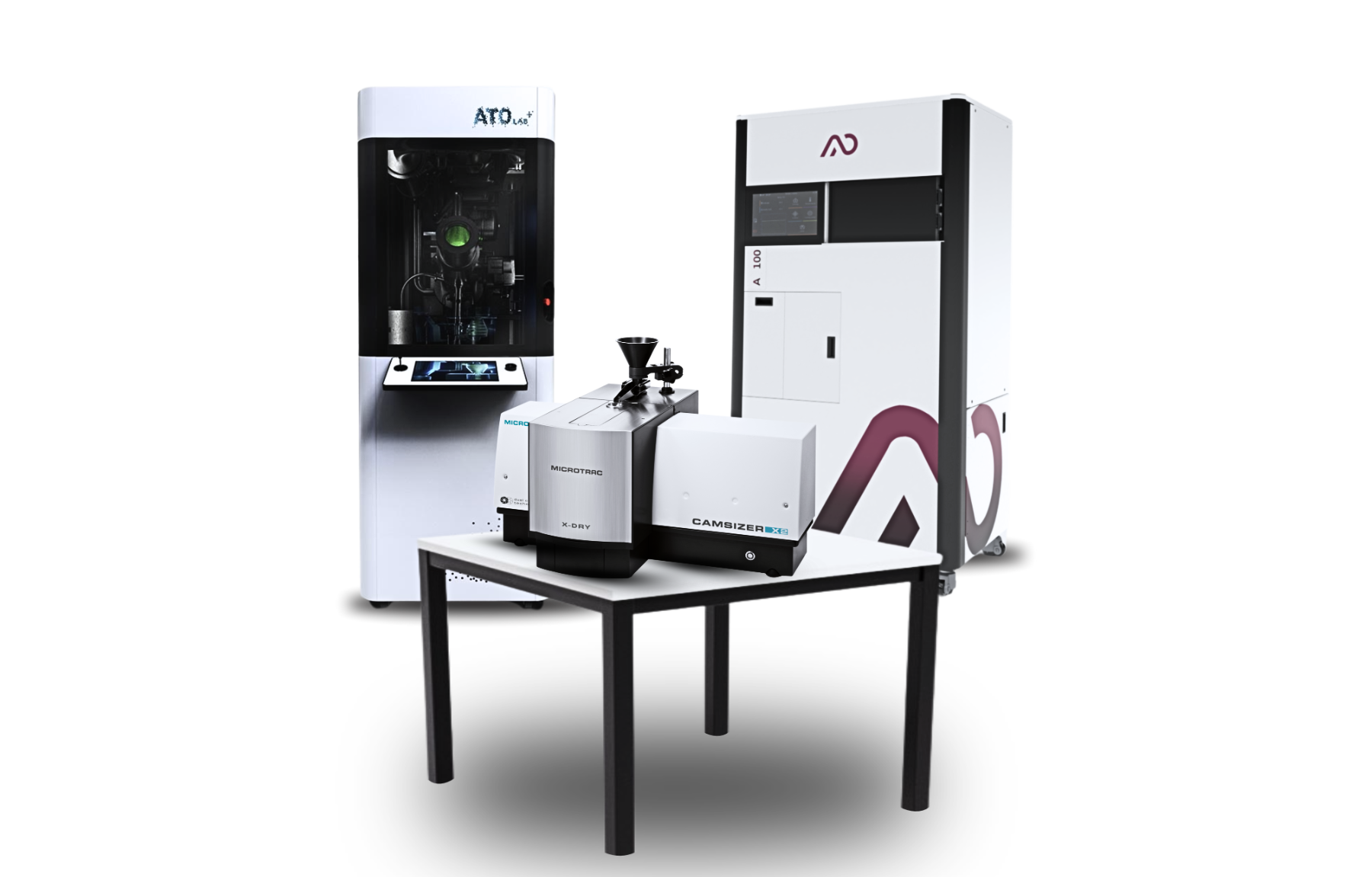
Buy the AO METAL + ATO Lab Plus + Camsizer x2 and other atomizers with financing today! 

Innovation in metal AM depends on access to new alloys. Standard steels, aluminum, and titanium cover many applications, but advanced industries require more: superalloys for turbines, biocompatible metals for implants, and high-temperature materials for defense.

Powder atomization technology makes it possible to produce experimental or proprietary alloys in small batches. Unlike mechanical blending, where powders can separate, atomization melts and solidifies the alloy as a uniform structure. The result is consistent chemistry and homogeneous microstructures that improve reliability in AM builds.

Studies show that alloys created by metal powder atomisation demonstrate stronger mechanical properties and better stability than blended powders, which often leave local weaknesses. That makes atomization a critical tool for R&D labs, universities, and defense programs advancing material science.

For U.S. manufacturers, producing and testing custom alloys domestically accelerates innovation, reduces dependence on imports, and secures supply chains.


5. Improved Powder Recycling And Sustainability

One of the practical challenges in metal AM is managing unused powder. Every build leaves residual material, and without stable properties, it can only be discarded, raising costs and creating waste.

With metal atomization technology, powders show more consistent morphology and chemistry across multiple reuse cycles. Spherical particles maintain good flow, while controlled particle size distribution helps powders spread and melt predictably even after several builds. Research confirms that atomized powders can be reused multiple times with minimal impact on density or mechanical performance.

This reliability lowers the cost per part and supports sustainable manufacturing goals. For U.S. companies, metal powder atomization also reduces dependence on imported materials by keeping more of the powder lifecycle domestic. In industries under pressure to cut waste and strengthen supply chains, powder recyclability is both an economic and strategic advantage.

Shaping The Future Of U.S. Metal AM With Atomization

Atomization is more than a powder production method; it is the backbone of quality in metal additive manufacturing. By improving particle shape, controlling size distribution, minimizing contamination, enabling custom alloys, and supporting recycling, it directly raises the reliability and performance of AM parts.

For the U.S., investing in local metal atomisation and powder atomization capabilities also strengthens supply chains and reduces reliance on overseas sources. It’s a step toward consistent quality, faster innovation, and more resilient domestic manufacturing

At Additive Plus, we help companies bring these advantages into their own workflows with advanced atomization systems, powder analysis tools, and metal 3D printers. If you’re ready to explore how atomization technology can improve your production quality, our team is here to guide you.

See Additive Plus’s Selection

Request a quote

Scan My Object

Please describe your part and scanning needs. Include details like size, material, and how you plan to use the 3D model. Let us know if you require additional services like digital sculpting. Upload images of your part(s) if you have them.

Ask for details

Partner with us

Get instant quote

Talk to Material Expert

Select the unit of measurement for your file
No 3D file? We’ve got you. We can design it for you or scan your existing part.
Upload a photo or drawing if you have one — we’ll get in touch soon.
Select the unit of measurement for your file
No 3D file? We’ve got you. We can design it for you or scan your existing part.
Upload a photo or drawing if you have one — we’ll get in touch soon.
Select the unit of measurement for your file
No 3D file? We’ve got you. We can design it for you or scan your existing part.
Upload a photo or drawing if you have one — we’ll get in touch soon.
Select the unit of measurement for your file
No 3D file? We’ve got you. We can design it for you or scan your existing part.
Upload a photo or drawing if you have one — we’ll get in touch soon.