Skip to content
Additive-Plus_3D-Printing_news-1

Understanding Particle Size Distribution: Methods, Applications, and Microtrac Solutions
Education
1. Guide to Understanding SLA (Stereolithography) 3D printing
2. What Is SLA 3D Printing? A Guide to Stereolithography
3. How to Line Up 3D Printed Parts: Techniques for Perfect Assembly
4. How to Clean a 3D Printer Nozzle: Easy Steps for Optimal Performance
5. Can You 3D Print Metal? A Comprehensive Guide to Metal 3D Printing Technologies
6. The Role of Metal Additive Manufacturing in Accelerating R&D and Innovation
7. Can You Glue ABS to PVC? Tips and Best Practices for a Strong Bond
8. 5 Ways Atomization Boosts US Metal AM Quality
9. Understanding Particle Size Distribution: Methods, Applications, and Microtrac Solutions

10. What Are 3D Printing Joints? A Beginner’s Guide to Connecting 3D-Printed Parts
11. Everything You Need To Know About Food-Safe 3D Printer Filament

Particle size distribution is a critical measurement for understanding and controlling how materials perform. It defines how particles are spread across different sizes, directly affecting flow, solubility, reactivity, compressibility, and other essential properties.

From pharmaceuticals to mining, particle size and size distribution play a central role in research, development, and quality control. Accurate particle size distribution analysis enables teams to predict performance, maintain consistency, and meet industry standards.

At Additive Plus, we provide access to world-class instruments by Microtrac for particle size determination, backed by expert guidance to ensure every measurement delivers meaningful results for your application.

The Basics Of Particle Size Distribution

unnamed-64

Source: Microtrac

At its core, particle size distribution describes the proportion of particles in a sample that fall within specific size ranges. This statistical breakdown helps identify whether a material is uniform or varied in size, a distinction known as monodisperse versus polydisperse systems.

There are several ways to express particle size and distribution:

  • Number-based distributions, where every particle is counted equally (common in image analysis).
  • Volume-based or mass-based distributions, which reflect each particle’s contribution to the total volume or weight (typical in laser diffraction or sieve analysis).

A key part of particle distribution analysis is understanding percentiles:

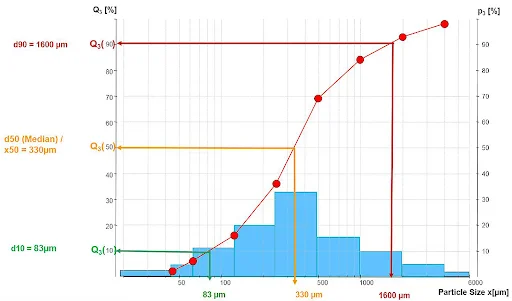
  • d10 – 10% of particles are smaller than this size.
  • d50 – the median or middle point of the distribution.
  • d90 – 90% of particles are smaller than this size.

Together, these values give a quick yet powerful overview of a material’s characteristics and are essential in particle size determination for quality control and process optimization.

Microtrac technology enables precise measurement of particle sizes across all ranges, from submicron powders to large granulates, ensuring accurate, reliable data for your applications.

Why Particle Size Distribution Matters

Understanding particle size distribution is not just about gathering data; it’s about predicting and controlling how a material will behave in real-world processes. Even small variations in particle size and size distribution can significantly impact quality, performance, and efficiency.


In powders, emulsions, and suspensions, PSD influences:


  • Flow and conveying behavior – critical for consistent manufacturing.
  • Solubility and dissolution rate – smaller particles dissolve faster, essential in pharmaceuticals and food.
  • Reactivity and extraction efficiency – fine particles offer more surface area for chemical or thermal processes.
  • Abrasiveness and compressibility – key for tool wear, compaction, or tablet formation.
  • Sensory characteristics – texture, mouthfeel, and visual appearance in consumer products.

Across industries, accurate particle size distribution analysis supports better process control, compliance with standards, and improved end-product performance.

Methods To Measure Particle Size Distribution

Accurate particle size distribution analysis starts with selecting the right method for your material and goals. Different techniques produce different data types, and understanding their strengths ensures the most reliable particle size determination. 

Key methods include:


Laser Diffraction (LD)

  • Covers a wide range of particle sizes, from submicron powders to millimeter-scale granules.
  • Produces volume-based particle distribution curves, ideal for industries like cement production, metal powders, and food processing.
  • Highly repeatable and compliant with ISO standards.

Dynamic Light Scattering (DLS)

  • Specialized for nanoparticles and colloids in suspension.
  • Generates intensity-based size distribution analysis, often used in biotech for protein solutions or in cosmetics for emulsions.
  • Sensitive to very fine particles, though large particles can dominate the reading.

Dynamic Image Analysis (DIA)

  • Captures both particle size and distribution, along with shape parameters.
  • Useful in mining, pharmaceuticals, and advanced materials where particle morphology matters.
  • Creates number-based particle size distribution curves for detailed analysis of irregular particles.

Sieve Analysis

  • A traditional, robust method for coarse powders and aggregates.
  • Common in construction materials testing, using a grain size distribution curve to ensure compliance with grading requirements.

With Microtrac’s technology, you can match your application to the right instrument, whether you need high-speed LD analysis for production, particle distribution curve visualization in R&D, or classic sieve-based compliance checks.

How Particle Size Distribution Is Represented

unnamed-63

Once measurements are taken, the results of particle size distribution analysis are typically presented in both tables and visual formats. These representations make it easier to compare results, identify trends, and detect irregularities.

Common formats include:

  • Histograms – Show the frequency of particles in each size class. The bar height reflects the quantity in that range, creating a clear particle distribution curve for quick assessment.

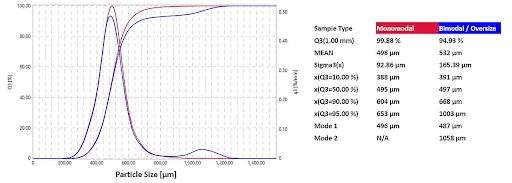
  • Cumulative curves – Known as particle size distribution curves, these plots display the percentage of particles smaller than a given size (percent passing or Q) or larger than a given size (percent retained or 1–Q).

  • Grain size distribution curves – Frequently used in construction, mining, and geoscience to evaluate material grading and compliance with standards.

Tabular data often lists size classes alongside number-based, volume-based, or mass-based percentages. For example, a size distribution analysis might show that 50% of particles are smaller than the median size (d50), with 10% smaller than d10 and 90% smaller than d90. These values are critical for quality control, process adjustments, and detecting oversize or undersize material.

Interpreting And Analyzing Distribution Results

unnamed-62-1

A particle size distribution curve is only as valuable as the insights you can extract from it. Effective analysis particle size means understanding the metrics that define your material’s behavior and knowing how to act on them.


Key parameters include:

  • Percentiles (d10, d50, d90) – Indicate fine, median, and coarse fractions.
  • Span value – Calculated as (d90 – d10) / d50, it reflects the width of the distribution.
  • Mode size – The most frequently occurring particle diameter in your sample.
  • Multimodal distributions – Curves with two or more peaks, which may be intentional (blended materials) or indicate inconsistency.

Analyzing these parameters helps determine whether a sample meets required specifications, how it will perform in processing, and where adjustments are needed. For example, a narrow span in size particle distribution often improves flow consistency, while a controlled fine fraction can speed dissolution in pharmaceuticals.

unnamed-61

Accurate particle size distribution analysis is not just a laboratory exercise — it’s a critical factor in real-world performance across diverse industries. The right particle size and distribution can improve product quality, increase efficiency, and even reduce production costs.

Key industry applications include:


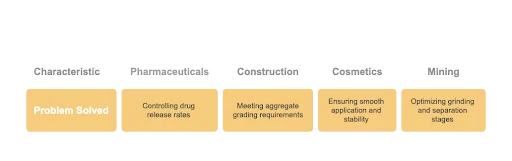
  • Pharmaceuticals – Controlling dissolution rate and bioavailability of active ingredients, ensuring batch-to-batch consistency, and complying with regulatory standards.
  • Food and Beverage – Optimizing solubility, texture, and mouthfeel in products like instant beverages, chocolate, and dairy powders.
  • Cosmetics and Personal Care – Achieving smooth application, targeted absorption, and long-term product stability.
  • Construction Materials – Using grain size distribution curves to meet grading requirements for cement, aggregates, and asphalt mixtures.
  • Mining and Minerals – Improving grinding efficiency, maximizing recovery rates, and minimizing waste.
  • Pigments and Chemicals – Controlling color stability, dispersion quality, and chemical reactivity.

When combined with process data, PSD results can reveal opportunities for tighter control and better outcomes. For example, narrowing the size particle distribution in a pigment batch can produce more vibrant, consistent color, while optimizing the fine fraction in a cement mix can improve setting times without increasing material use.

Microtrac Solutions For Particle Size Distribution

Microtrac offers one of the industry’s most comprehensive portfolios for particle size distribution analysis, covering every major method from laser diffraction to dynamic light scattering and image analysis.

Key technologies include:

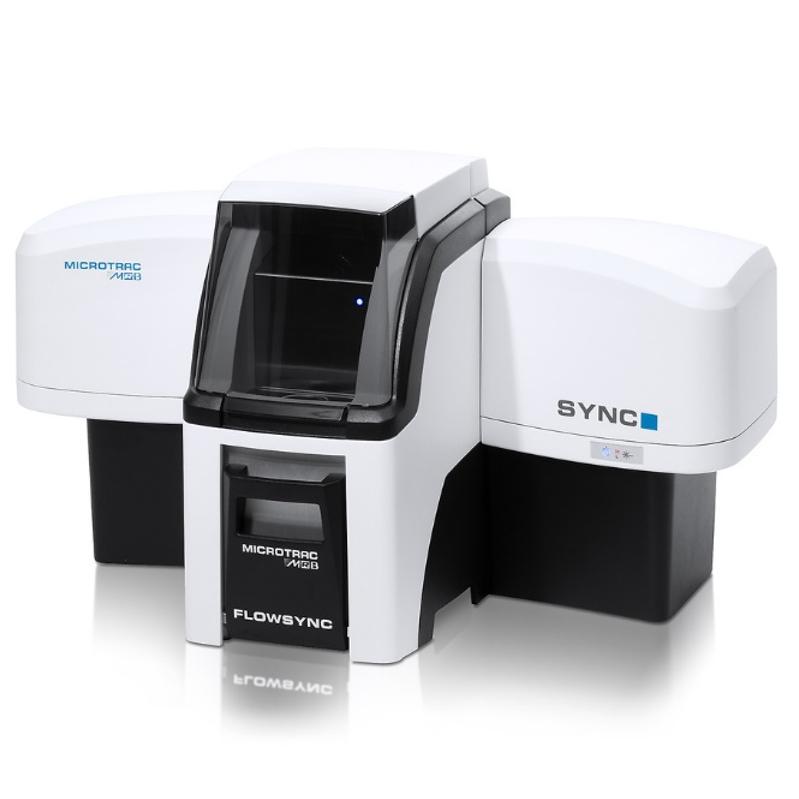
SYNC – Combines LD and DIA for complete size and shape data in one system.

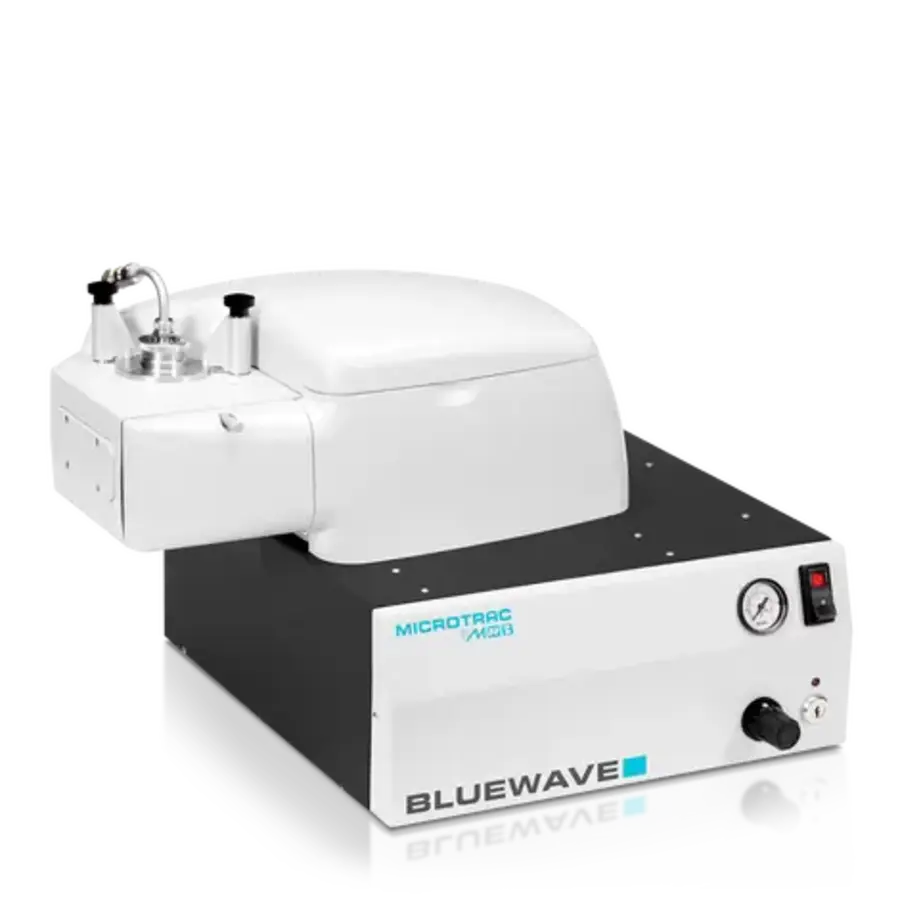
Bluewave – Trusted LD system for a wide particle size range.

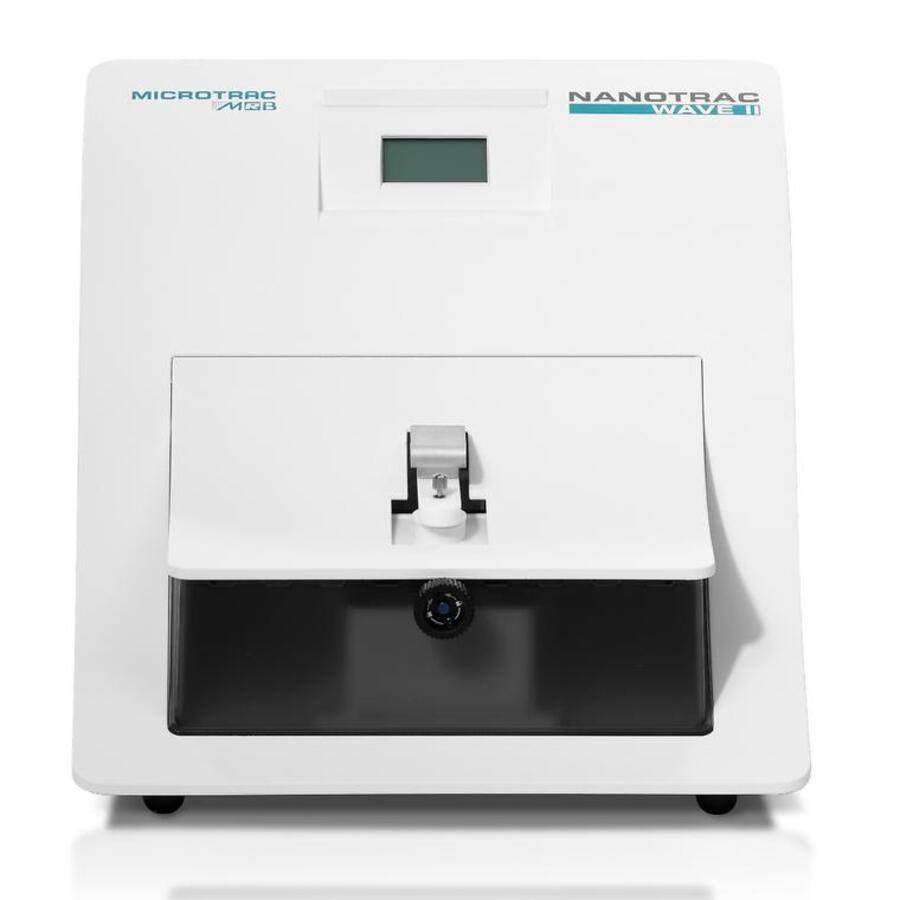
Nanotrac Series – High-sensitivity DLS instruments for nanoparticles and colloids.

Through Additive Plus, customers gain access to these advanced tools with expert support for particle size determination, method selection, and integration into laboratory or production environments.

The Bottom Line On Particle Size Distribution

Particle size and distribution directly affect production efficiency, product quality, and compliance. Accurate size distribution analysis ensures consistency, meets standards, and supports process optimization.

Microtrac instruments from Additive Plus deliver precise, ISO-compliant results, from a quick particle size distribution curve for QC to a full particle distribution analysis for R&D.

Contact Additive Plus to find the right PSD solution for your application.

FAQ

How often should particle size distribution be measured in production?

The ideal frequency depends on your process and industry requirements. High-value or tightly regulated products may need PSD checks for every batch, while continuous processes may monitor on a set schedule. Regular size distribution analysis helps detect shifts before they affect product quality.

Yes. Unexpected peaks in a particle size distribution curve can reveal foreign particles or process debris. Detecting these early prevents quality issues and helps maintain compliance.

A narrow distribution often means predictable flow and performance, ideal for applications like pharmaceuticals. A broad distribution may improve packing density or certain structural properties, useful in construction or additive manufacturing.

Humidity, temperature, and static can alter sample behavior, especially for fine powders. Controlled lab conditions ensure particle size determination remains accurate and reproducible.

Yes, but only if you understand the basis of each method (number-, volume-, or mass-based). Data from one particle distribution analysis method can be converted to another model, though precision may vary depending on the material and its characteristics.

Request a quote

Scan My Object

Please describe your part and scanning needs. Include details like size, material, and how you plan to use the 3D model. Let us know if you require additional services like digital sculpting. Upload images of your part(s) if you have them.

Ask for details

Partner with us

Get instant quote

Talk to Material Expert

Select the unit of measurement for your file
No 3D file? We’ve got you. We can design it for you or scan your existing part.
Upload a photo or drawing if you have one — we’ll get in touch soon.
Select the unit of measurement for your file
No 3D file? We’ve got you. We can design it for you or scan your existing part.
Upload a photo or drawing if you have one — we’ll get in touch soon.
Select the unit of measurement for your file
No 3D file? We’ve got you. We can design it for you or scan your existing part.
Upload a photo or drawing if you have one — we’ll get in touch soon.
Select the unit of measurement for your file
No 3D file? We’ve got you. We can design it for you or scan your existing part.
Upload a photo or drawing if you have one — we’ll get in touch soon.