Skip to content

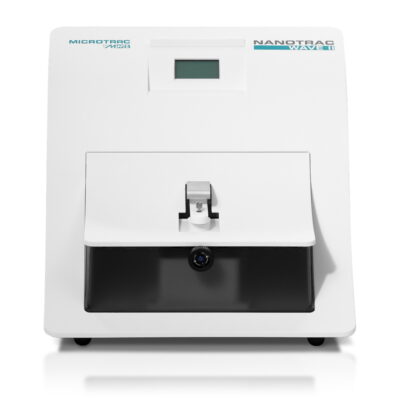
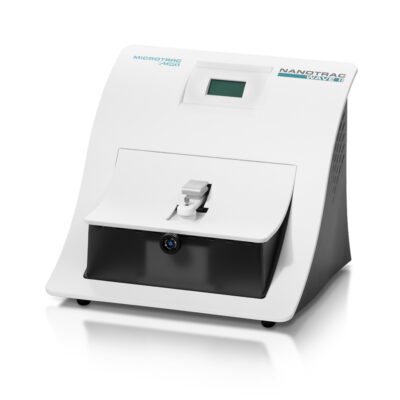
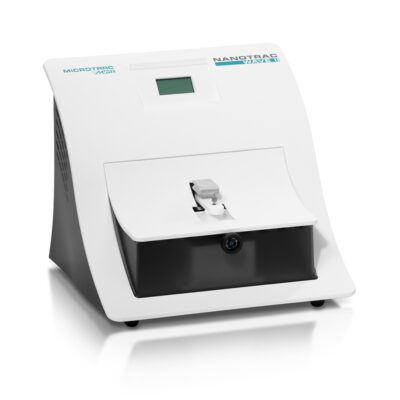
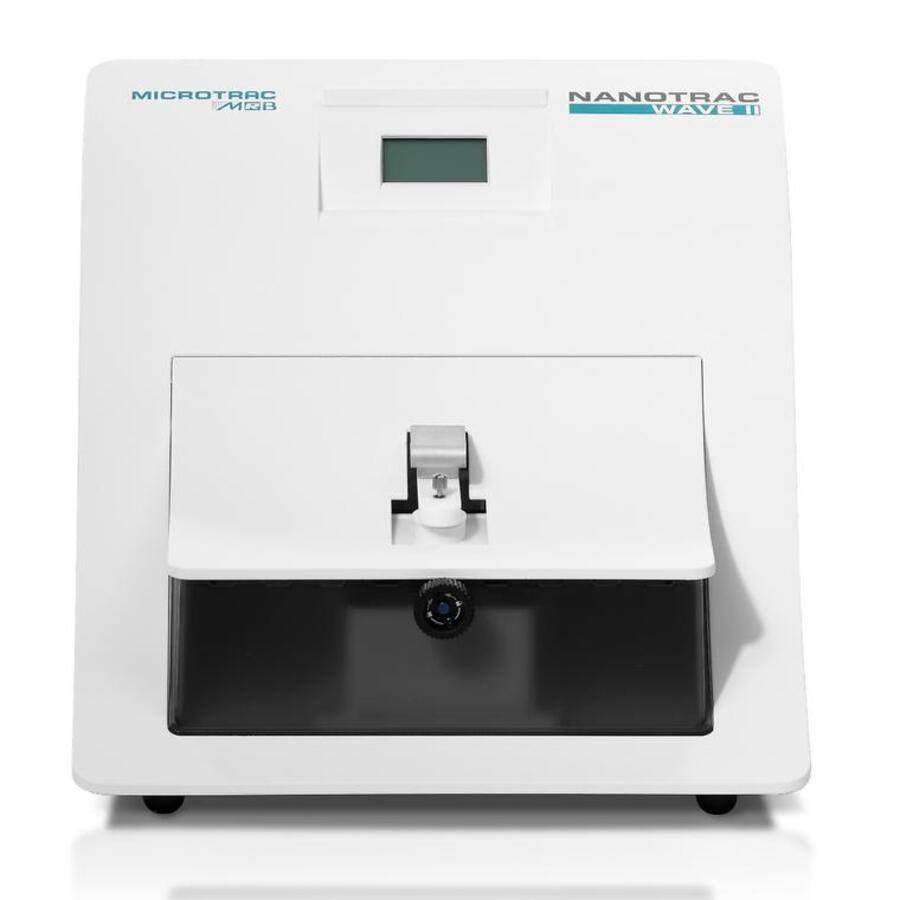
Microtrac NANOTRAC WAVE II Nanoparticle Size Analyzer

Microtrac’s NANOTRAC WAVE II is a highly flexible Dynamic Light Scattering (DLS) analyzer providing information on particle size, zeta potential, concentration, and molecular weight.

  • Brand:

    Microtrac

Request a quote
  • Description
  • Details
  • Materials
  • Documents
  • Videos
  • Review

Description

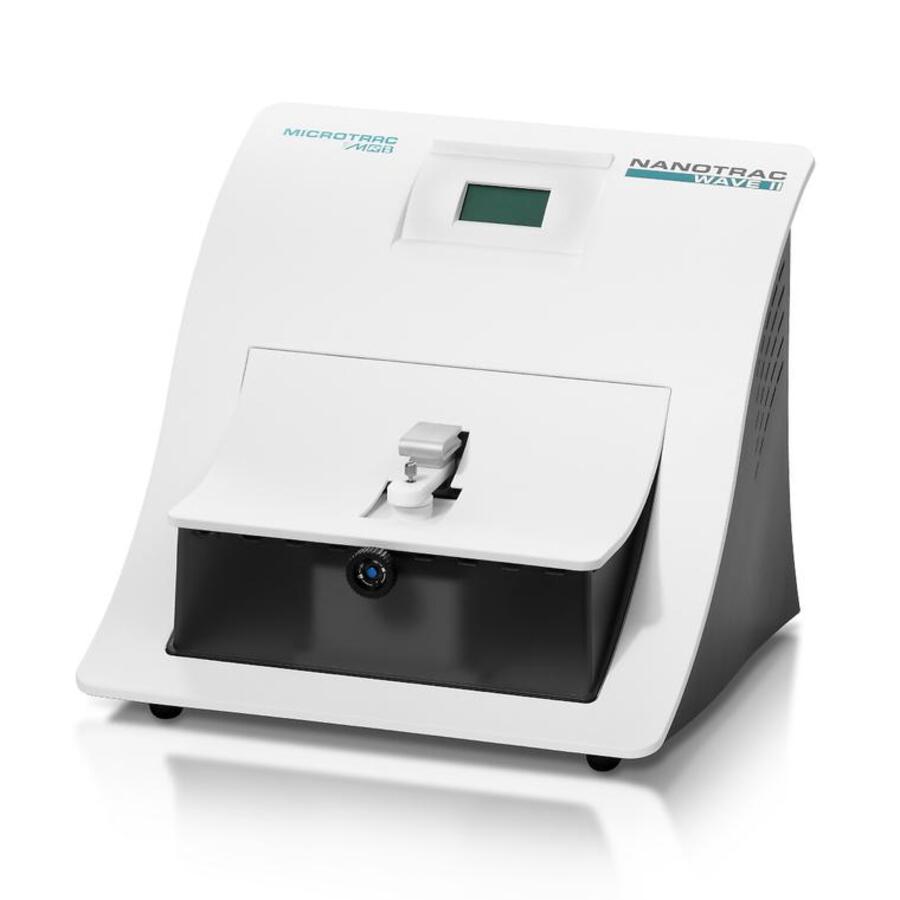
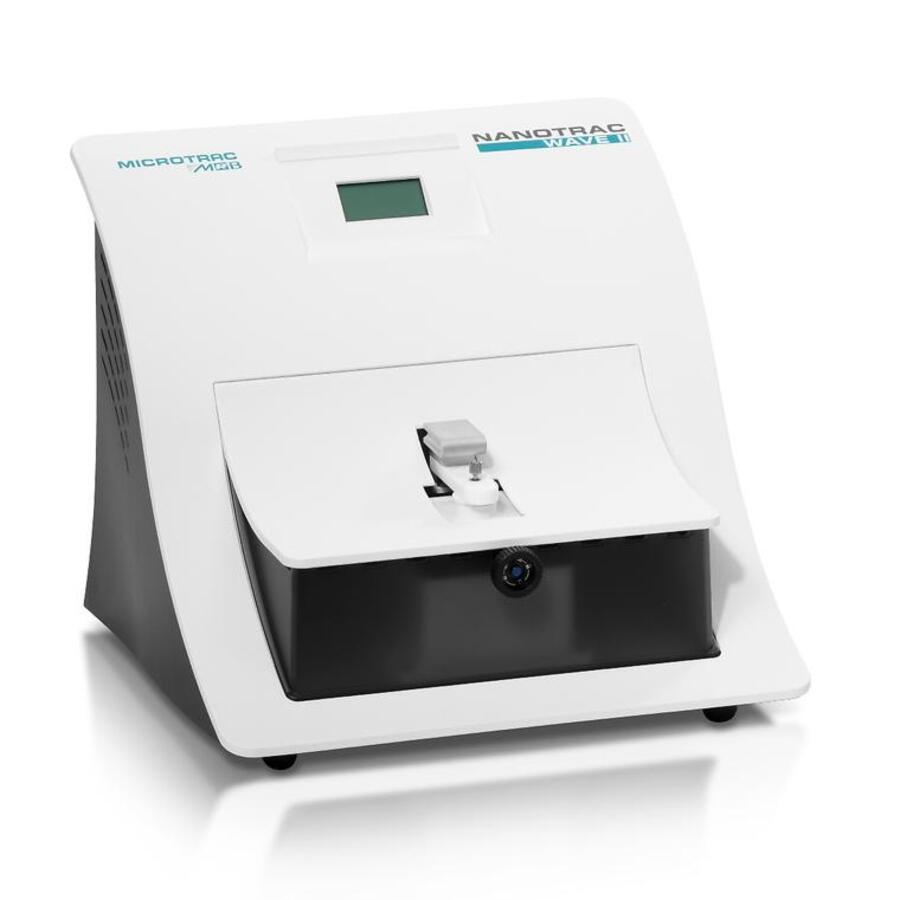
Microtrac’s NANOTRAC Wave II / Zeta is a highly flexible Dynamic Light Scattering (DLS) analyzer which provides information on particle size, zeta potential, concentration, and molecular weight. It allows faster measurements with reliable technology, higher precision, and better accuracy. All of this combined into a compact DLS analyzer with a revolutionary fixed optical probe. With the unique and flexible probe design and the use of the Laser Amplified Detection method in the NANOTRAC Wave II / Zeta, the user is able to choose from a wide array of measurement cells that satisfy the needs of any application. This design also allows measurements of samples over a wide concentration range, monomodal or multimodal samples, all without prior knowledge of the particle size distribution. This is made possible through the use of the Frequency Power Spectrum (FPS) method instead of classical Photon Correlation Spectroscopy (PCS).


ADVANTAGES

 
  • 180° backscatter DLS setup
  • Stable fixed optics sample interface – no adjustments required
  • Rapid field reversal prevents electro-osmosis
  • Robust mobility calculation as a function of power spectrum ratio
  • High concentration zeta potential measurements
  • Sample concentration and molecular weight determination
  • Universal solvent compatibility
  • Frequence Power Spectrum calculation model instead of PCS
  • Laser Amplified Detection – high signal to noise ratio
  •      


NANOPARTICLE SIZE ANALYZER NANOTRAC WAVE II / ZETA: IDEAL FOR NANOPARTICLE & ZETA POTENTIAL ANALYSIS

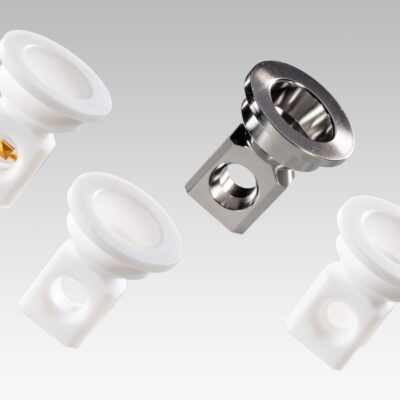
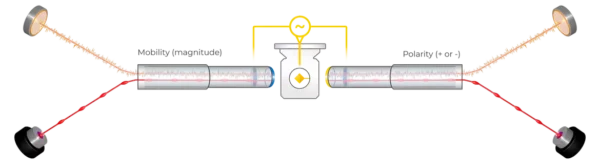
The measurement of zeta potential in the NANOTRAC WAVE II particle size analyzer takes advantage of the same Frequency Power Spectrum methodology used for measuring nanoparticle size distributions. The same stable optics sample interface means no adjustments are required. The backscatter and laser amplified detection signals are collected as in the size measurement, and the rapid sequencing of applied electric fields prevents electroosmosis. The optical probe surface is coated to provide electrical contact with the sample. Two probes are used, one to determine the polarity of the particle charge at the slipping plane and one to measure the mobility of the particles in an electric field. Polarity is measured in a pulsed electric field, while mobility is measured in a high frequency sine wave electric field excitation. The zeta cell has two detection probes, on opposite sides, to detect polarity and mobility.


llfunction-4


From the linear frequency power spectrum distribution (PSD), the Loading Index (LI), which is proportional to particle concentration, can be calculated. Loading Index values provide a single number for total scattering that can be used to determine particle mobility in microns / sec / volt / cm and particle polarity as + / -, positive or negative. Measuring mobility and zeta potential begins by measuring the PSD and determining the LI with the excitation off. Then the PSD is measured with the high frequency sine wave on and a ratio is taken. Polarity is determined by measuring the LI before and after pulsed DC excitation. A ratio of LI after the excitation divided by LI before excitation of less than one is a positive polarity (concentration decreasing) and a ratio greater than one is negative (concentration increasing) for a positively charged probe surface.


Mobility = C × (ratio of [PSD(on) – PSD(off)] / LI(off)


Zeta Potential ∝ Mobility


NANOPARTICLE SIZE ANALYZER NANOTRAC WAVE II / ZETA: FUNCTIONAL PRINCIPLE

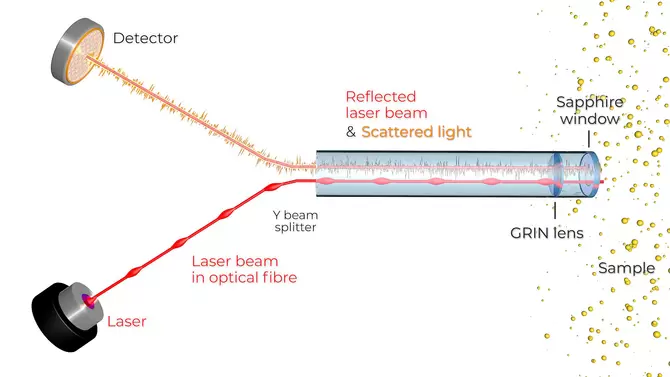
The optical bench of the nanoparticle size analyzer NANOTRAC WAVE II is a probe containing an optical fiber coupled with a Y splitter. Laser light is focused on a volume of sample at the interface of the probe window and the dispersion. The high reflectivity sapphire window reflects a portion of the laser beam back to a photodiode detector. The laser light also penetrates the dispersion and the particle’s scattered light reflects at 180 degrees back to the same detector. The scattered light from the sample has a low optical signal relative to the reflected laser beam. The reflected laser beam mixes with the scattered light from the sample, adding the high amplitude of the laser beam to the low amplitude of the raw scatter signal. This Laser Amplified Detection method provides up to 106 of times the signal to noise ratio of other DLS methods like Photon Correlation Spectroscopy (PCS) and NanoTracking (NT).


llfunction-3


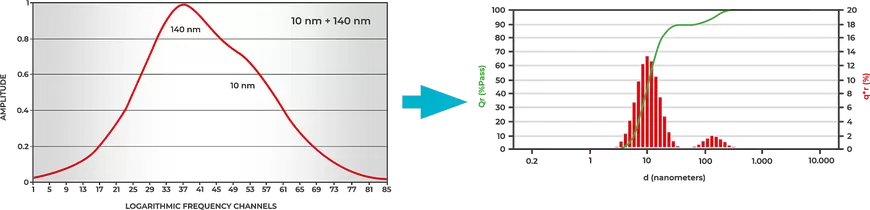
A Fast Fourier Transform (FFT) of the Laser Amplified Detection signal results in a linear frequency power spectrum which is then transformed into logarithmic space and deconvoluted to give the resulting particle size distribution. Combined with Laser Amplified Detection, this frequency power spectrum calculation provides robust calculation of all types of particle size distributions – narrow, broad, mono-modal or multi-modal – with no need for a priori information for algorithm fitting as it is for PCS. The Laser Amplified Detection method used in Microtrac particle analyzers is unaffected by signal aberrations due to contaminants in the sample. Classical PCS instruments need to either filter the sample or create complicated measurement methods to eliminate these signal aberrations.


Iterative Particle Size Calculation from Power Spectrum


iterative-ps-power-spectrum


INTUITIVE USE WITH JUST A FEW CLICKS: DIMENSIONS LS FOR NANOTRAC SERIES


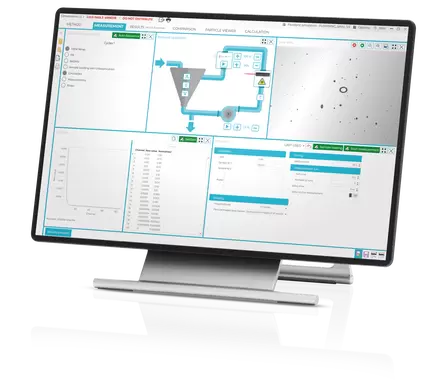
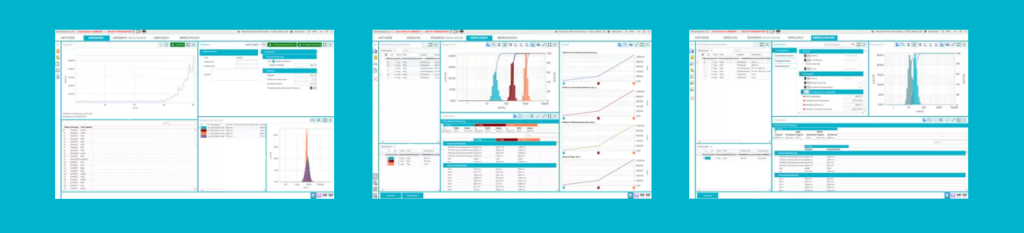
The DIMENSIONS LS software comprises five clearly structured Workspaces for easy method development and operation of the NANOTRAC instrument. Results display and evaluation of multiple analyses are possible in the corresponding workspaces, even during ongoing measurements.


  • Simple method development
  • Clearly structured result presentation
  • Various evaluation options
  • Intuitive workflow
  • Extensive data export
  • Multi-user capability


dimensions-ls-sync-display
-30


NANOPARTICLE SIZE ANALYZER NANOTRAC WAVE II TYPICAL APPLICATIONS

Versatility is a great strength of Dynamic Light Scattering (DLS). This makes the method suitable for a variety of applications in both research and industry, such as pharmaceuticals, colloids, microemulsions, polymers, industrial minerals, inks and many more.


llfeaturespharmaceuticals
llfeaturesemulsions
llfeaturessteel


pharmaceuticals

 
  • pharmaceuticals
  • inks
  • life sciences
  • ceramics
  • beverages & food


  • emulsions

     
    • colloids
    • polymers
    • microemulsions
    • cosmetics
    • chemicals
     
  •  


steel

 
  • environment
  • adhesives
  • metals
  • industrial 
  • minerals
  • Brand Microtrac
  • Country of origin Germany
  • Measurement principle Backscattered laser-amplified scattering reference method
  • Measuring range 0.3 nm - 10 µm
  • Calculation Model FFT power spectrum
  • Measurement angle 180°
  • Sample cell Various sample cell options
  • Zeta potential analysis yes
  • Zeta measurement range (potential) -200 mV - +200 mV
  • Zeta measurement range (size) 10 nm - 20 µm
  • Electrophoretic mobility 0 - 15 (µm/s) / (V/cm)
  • Conductivity measurement yes
  • Conductivity range 0 - 10 mS / cm
  • Molecular weight measurement yes
  • Molecular weight range <300 Da -> 20 x 10^6 Da
  • Temperature range +4°C - +90°C
  • Temperature accuracy ± 0.1°C
  • Temperature control yes
  • Temperature control range +4°C - +90°C
  • Titration yes
  • Reproducibility (size) =< 1%
  • Reproducibility (zeta) + / - 3%
  • Sample volume size measurement 50 µl - 3 ml
  • Sample volume zeta measurement 150 µl - 2 ml
  • Concentration measurement yes
  • Sample concentration up to 40 % (sample dependent)
  • Carrier fluids Water, polar and unpolar organic solvents, acid and base
  • Laser 780 nm, 3 mW; 2 laser diodes with zeta
  • Humidity 90 % non-condensing
  • Dimensions (W x H x D) 13.2×15×12.9 in / 355×381×330 mm

Videos

Send Us a Message

Request a quote

Scan My Object

Please describe your part and scanning needs. Include details like size, material, and how you plan to use the 3D model. Let us know if you require additional services like digital sculpting. Upload images of your part(s) if you have them.

Ask for details

Partner with us

Get instant quote

Talk to Material Expert

Select the unit of measurement for your file
No 3D file? We’ve got you. We can design it for you or scan your existing part.
Upload a photo or drawing if you have one — we’ll get in touch soon.
Select the unit of measurement for your file
No 3D file? We’ve got you. We can design it for you or scan your existing part.
Upload a photo or drawing if you have one — we’ll get in touch soon.
Select the unit of measurement for your file
No 3D file? We’ve got you. We can design it for you or scan your existing part.
Upload a photo or drawing if you have one — we’ll get in touch soon.
Select the unit of measurement for your file
No 3D file? We’ve got you. We can design it for you or scan your existing part.
Upload a photo or drawing if you have one — we’ll get in touch soon.