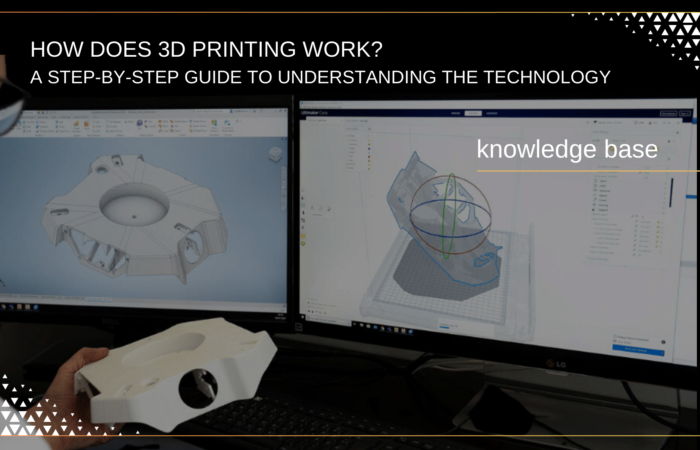
How Does 3D Printing Work? A Step-by-Step Guide to Understanding the Technology
3D printing isn’t just for tech enthusiasts—it’s transforming industries, and your business could be next.
The global market for 3D printing products and services was worth approximately $12.6 billion in 2020, with an annual growth rate of around 17% from 2020 to 2023.
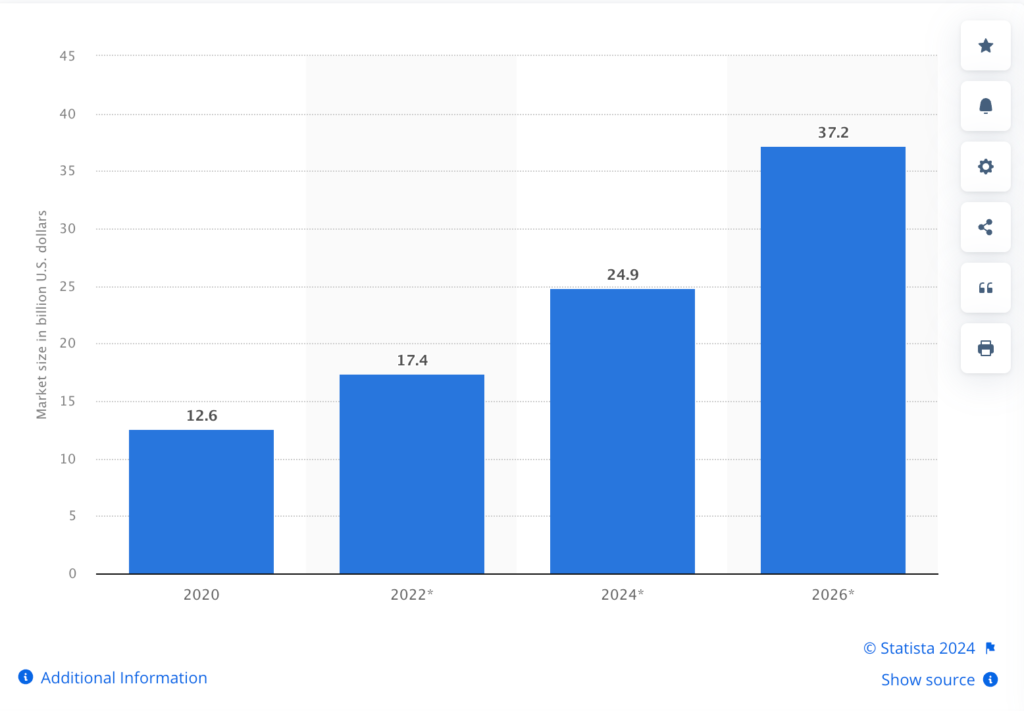
Source: Statista
Whether designing innovative prototypes, creating customized products, or streamlining your production process, 3D printing offers flexibility and efficiency that traditional methods can’t match.
In this guide, we’ll break down the steps of how does 3D printing work, from the design stage to the final product. We’ll also explore different printing technologies, 3d printing materials, and real-world applications you can benefit from.
What Is 3D Printing?
At its core, 3D printing, or additive manufacturing, creates three-dimensional objects layer by layer from a digital design. Unlike traditional manufacturing methods that involve cutting, drilling, or molding material, 3D printing only adds material where needed, resulting in less waste and increased efficiency.
Traditional manufacturing often removes materials from a larger block to form the final product. This can be time-consuming and wasteful, especially for complex designs. In contrast, 3D printing builds objects from the ground up, offering more intricate designs with minimal material waste. This precision and speed make 3D printing a game-changer for businesses looking to innovate, reduce costs, and increase production flexibility.
How Does 3D Printing Work? Step-by-Step Process
While 3D printing may seem like a high-tech mystery, it’s actually a very organized and straightforward process.
Here’s a deeper dive into the typical steps involved:
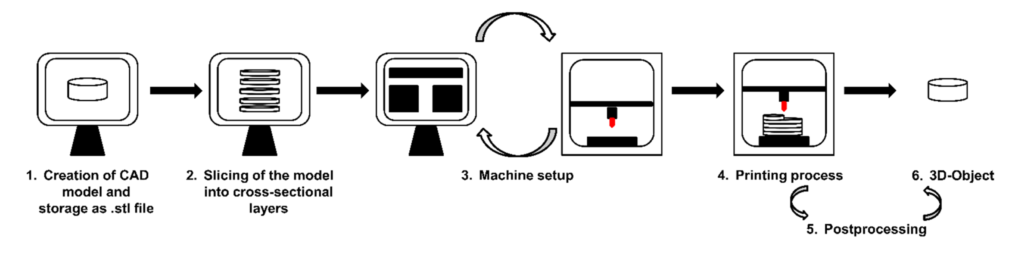
Designing the Model
The process of how 3D printing works begins with the creation of a digital 3D model. You can design this model yourself using CAD (Computer-Aided Design) software or rely on professional designers if you need more expertise. If you’re just getting started, there are plenty of online repositories that offer free or paid 3D models that can be used for a variety of applications. The key is ensuring that your model is both accurate and optimized for 3D printing, keeping in mind the material you’ll be using and the intended functionality of the part.
Converting the File
Once the design is ready, it should be converted into a 3D printable file. The most common file formats are STL and OBJ, which essentially break down the 3D model into a series of thin horizontal slices (layers). This is what enables the 3d printer to build the object layer by layer, ensuring precision and structural integrity. At this stage, it’s crucial to check the design for errors (such as holes or unsupported areas) that could affect the print quality.
Preparing the Printer
With the design file ready, it’s time to get the 3D printer set up. This step involves choosing the right material for your print. You’ll load filament, powder, or liquid resin into the printer, depending on the technology you’re using. For example, if you’re using FDM (Fused Deposition Modeling), you’d load a filament spool, while SLA (Stereolithography) requires liquid resin. The printer’s build platform is also prepped, and some models might require calibration to ensure the printer is positioned correctly for accurate printing.
Printing the Object
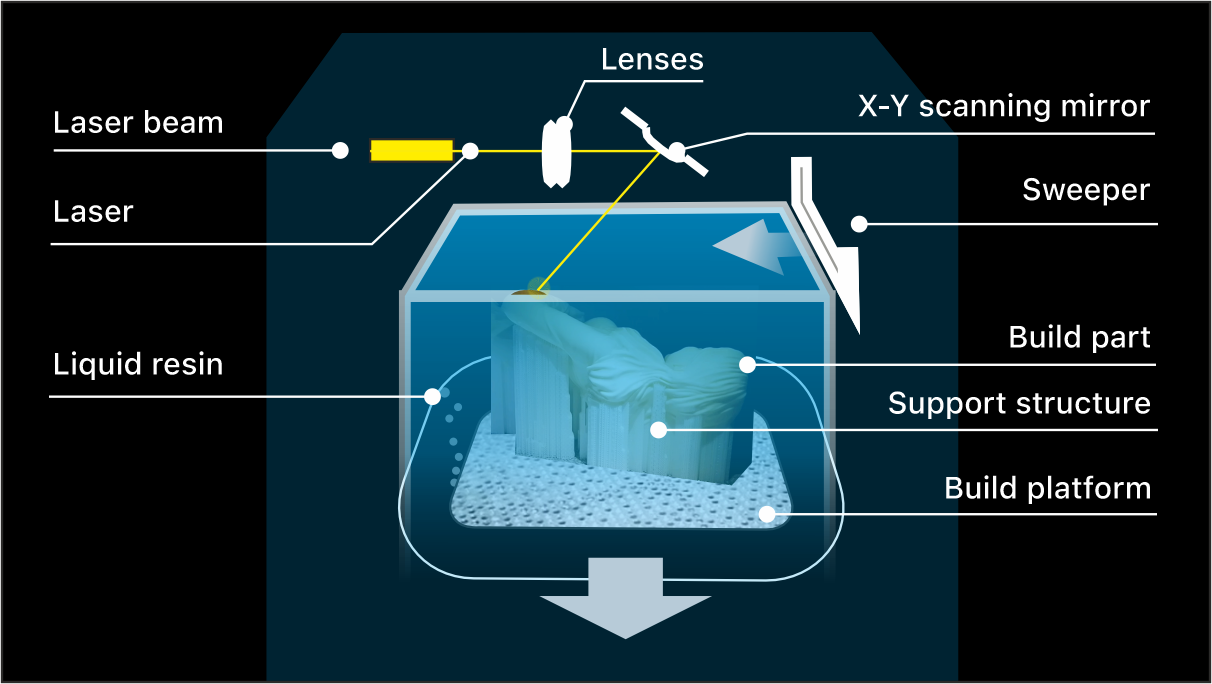
Now, the fun begins! The printer follows the instructions from the converted file and starts printing layer by layer, depositing or curing material in precise patterns. For example, in FDM, the printer heats the filament to a specific temperature and extrudes it onto the build surface. In SLA, a UV laser cures resin one layer at a time. The complexity of the object will affect how long the print takes, with smaller objects printing in hours and larger, intricate designs taking days.
Post-Processing
After the object is printed, it often requires post-processing steps to achieve its final form. In some cases, the print might need to be cleaned (especially if it involves excess material), support structures removed, or parts sanded down for a smoother finish.
SLA prints, for instance, require the use of isopropyl alcohol to clean away uncured resin, and in DMLS (Direct Metal Laser Sintering) prints, post-processing might involve heat treatment to enhance material strength. Finishing touches like painting, polishing, or assembly might also be required to prepare the object for use.
This process gives you a custom-made part, tool, or prototype that would be difficult, time-consuming, and expensive to create with traditional manufacturing methods.
Types of 3D Printing Technologies and Processes
There are various 3D printing technologies available today, each offering distinct advantages depending on the material, application, and desired result.
Here are the most common types, explained simply:
Technology | Description | Key Applications | Materials Used |
Stereolithography (SLA) | Cures resin using a laser, offering high detail and smooth finishes. | Jewelry, dental models, intricate prototypes | Resin (Photopolymer) |
Vat Photopolymerization | Uses a laser or digital projector to cure liquid resin layer by layer. | Jewelry, dental, prototypes | Resin (Photopolymer) |
Digital Light Processing (DLP) | Cures resin using a projector, faster than SLA. | Dental, small parts production | Resin (Photopolymer) |
Material Jetting | Sprays droplets of material that solidify layer by layer. | Multi-material parts, full-color prototypes | Wax, photopolymers |
Fused Deposition Modeling (FDM) | Extrudes heated plastic filament onto a build surface. | Prototypes, tools, low-volume production | Thermoplastics (ABS, PLA, etc.) |
Fused Filament Fabrication (FFF) | Similar to FDM but often used with desktop printers. | Prototypes, consumer goods, educational models | Thermoplastics (ABS, PLA, etc.) |
Selective Laser Sintering (SLS) | Uses lasers to fuse powdered material into solid layers. | Engineering-grade parts, aerospace, automotive | Plastic, metals, ceramics |
Direct Metal Laser Sintering (DMLS) | Uses lasers to fuse metal powders, ideal for metal parts. | Aerospace, automotive, medical | Metal (Titanium, Stainless Steel) |
Binder Jetting | Uses binder to glue powder layers, followed by sintering. | Sandcasting, metal prototypes | Sand, metal powders |
Directed Energy Deposition (DED) | Uses a focused energy source to melt material onto a substrate. | Metal repair, aerospace, tooling | Metal alloys |
Common Applications Across Industries
3D printing isn’t just a futuristic idea—it’s changing the game across industries right now. The majority of 3D printing demand comes from industrial use. The global 3D printing market is expected to reach $41 billion by 2026. It’s helping companies in aerospace, automotive, healthcare, and consumer products save time, reduce costs, and create better products.
Let’s break down how it’s being used:
Aerospace
- Faster Prototyping: Aerospace companies use 3D printing to quickly create prototype parts, helping them test new designs faster and refine them in real-time. This cuts down on development time.
For example, Boeing uses 3D-printed titanium pieces in its 787 Dreamliner. General Electric, in 2017, managed to produce a helicopter engine with only 16 parts, down from 900, demonstrating the potential for 3D printing to disrupt supply chains.
- Lighter, Stronger Parts: Parts like turbine blades or fuel nozzles can be printed with complex geometries that are lighter yet stronger, helping aircraft perform better and save fuel.
- On-Demand Spare Parts: Instead of waiting months for specific spare parts, companies can print them on-demand, keeping production lines moving without delay.
Automotive
- Custom Parts: Whether it’s a custom interior part or a prototype engine component, 3D printing lets automakers create small batches of parts quickly—no need for expensive molds.
- Tooling and Fixtures: 3D printing is used to make tools and fixtures that improve the accuracy and speed of production, making assembly lines more efficient.
- Supply Chain Flexibility: By printing parts on-demand, automotive manufacturers can avoid costly delays and shortages in the supply chain, keeping production running smoothly.
Healthcare
- Personalized Implants and Prosthetics: 3D printing is revolutionizing healthcare by making custom implants, prosthetics, and even dental devices tailored to individual patients. This means better fit, function, and comfort.
- Surgical Tools: Surgeons can use 3D printed custom guides to plan and perform surgeries with better precision, which can also help patients recover faster.
- Bioprinting: In the future, 3D printing could even help print organs for transplant—an exciting development that could change the lives of patients in need.
Consumer Products
- Unique, Custom Products: Want to create one-of-a-kind jewelry, home decor, or fashion items? 3D printing lets you personalize products to match your exact vision, offering endless design possibilities.
- Low-Volume Production: For companies that don’t want to commit to mass production, 3D printing allows for small-batch production of specialized products like limited edition items or prototypes without the high cost of traditional manufacturing.
In short, 3D printing is making industries more efficient, cost-effective, and innovative. Whether you’re in aerospace, automotive, healthcare, or consumer goods, this technology opens up new ways to prototype, manufacture, and personalize your products.
Advantages Of 3D Printing
3D printing offers a multitude of benefits that can take your business to the next level. Whether you’re designing a one-off prototype or creating custom parts for a small production run, this technology brings significant advantages:
Advantage | Description |
| Customization and Design Flexibility | – Create tailor-made solutions for your specific needs. |
| – Easily produce parts with complex geometries. | |
| – Make on-demand design adjustments quickly. | |
| Cost-Effectiveness for Small Production Runs | – No need for costly molds or tooling. |
| – Reduced material waste by using only the required amount of material. | |
| – Lower labor costs due to automation. | |
| Rapid Prototyping and Speed to Market | – Quick prototyping to test and iterate designs fast. |
| – Faster time to market by shortening prototyping and testing cycles. | |
| – Shorter product development cycles, leading to faster innovation. |
Whether you’re prototyping, creating custom parts, or producing small batches, the technology offers unmatched benefits that can help streamline operations and speed up your go-to-market strategy.
Key Materials Used In 3D Printing
3D printing offers a diverse range of materials that can be used for different applications. Each material brings unique properties to the table, enabling businesses to select the best fit for their needs. Here’s an overview of the most common materials and their use cases:
Use Cases: Prototyping, consumer goods, and medical devices.
Examples: PLA, ABS, Nylon.
- Metals:
Perfect for applications requiring strength and durability. Often used in DMLS and SLM printing.
Use Cases: Aerospace components, automotive parts, and industrial tools.
Examples: Stainless steel, titanium, aluminum.
- Ceramics:
Used for precision and heat resistance, typically in SLA printing.
Use Cases: Aerospace, electronics, and medical applications.
Examples: Zirconia, alumina.
- Carbon Fiber:
A composite material offering high strength and low weight, used in FDM and FFF printing.
Use Cases: Lightweight structures in aerospace, automotive, and sporting goods.
Examples: Carbon fiber reinforced filaments.
- Composites:
Materials that combine polymers with other elements like metals or ceramics for improved properties.
Use Cases: Engineering, manufacturing, and custom parts.
Examples: Carbon fiber composites, glass fiber composites.
By selecting the right material for your project, you can optimize for strength, durability, flexibility, or even aesthetic qualities, depending on the requirements of your industry.
Your Path To Innovative 3D Printing Starts Here
Understanding 3D printing is key to staying competitive in today’s market. Whether you’re in aerospace, healthcare, or consumer products, 3D printing helps you create custom parts, speed up prototyping, and unlock new design possibilities that traditional methods can’t match.
At Additive Plus, we offer more than just 3D printing. We provide complete, tailored solutions designed to address your specific pain points.
Whether you’re dealing with high production costs, long lead times, or challenges in design flexibility, our comprehensive 3d printing services SLA are here to make your projects more efficient and cost-effective.
Why Choose Additive Plus?
- Tailored Solutions for Your Needs: We understand the complexities of different industries. Whether you need small-batch production, custom parts, or rapid prototyping, we’ve got you covered.
- High-Quality Materials & Advanced Printers: From metals and ceramics to carbon fiber and polymers, we offer a broad range of materials and advanced 3D printers that ensure you get the best results every time.
- Full Support Every Step of the Way: Our services go beyond printing. With consulting, design expertise, and equipment financing, we provide the full support to make your projects smooth and successful.
- Proven Expertise: With over 10 years of experience, we are committed to delivering reliable, high-quality, and innovative solutions that save you time and cut down on costs.
Ready to get started? Get a Quote today to learn how we can help with your next project.
3D printing isn’t just for tech enthusiasts—it’s transforming industries, and your business could be next.
The global market for 3D printing products and services was worth approximately $12.6 billion in 2020, with an annual growth rate of around 17% from 2020 to 2023.
Frequently Asked Questions (FAQ)
How does SLA 3D printing work?
The way how stereolithography works is a process of laser curing liquid resin layer by layer to create detailed and precise objects. The laser traces patterns on the resin’s surface, hardening it, and building the object from the bottom up. This method is known for producing high-resolution prints with smooth finishes, making it ideal for creating prototypes and intricate designs.
How does 3D printing work for prototyping?
When you ask, “how does 3D printing work for prototyping,” the answer lies in its ability to quickly transform digital designs into physical objects. Using various technologies like SLA or FDM, 3D printing creates prototypes in hours, which helps speed up the testing and iteration phases. This allows designers to make adjustments and ensure the prototype matches the design intent before committing to expensive manufacturing processes.
How does 3d printing work for creating custom parts?
In the context of custom parts, 3D printing works by allowing for precise control over the design and geometry of parts. Through technologies like FDM, SLA, and SLS, custom parts are created layer by layer based on a digital file. This flexibility allows for complex geometries and lightweight structures that would be difficult or impossible to create with traditional manufacturing methods.
How does metal 3D printing work?
Metal 3D printing uses powdered metal materials, which are melted and fused together layer by layer using high-powered lasers or electron beams. Technologies like DMLS (Direct Metal Laser Sintering) and SLM (Selective Laser Melting) allow for precise creation of metal parts, which can be used in industries such as aerospace, automotive, and healthcare. The result is strong, functional parts with complex geometries.
How does 3D printing work with different materials?
How 3D printing works with various materials depends on the type of printer and technology used. For example, FDM printers use thermoplastics like PLA and ABS, while SLA printers use resin. Metal 3D printing, on the other hand, works with metal powders. Each material offers unique properties, such as strength, flexibility, or heat resistance, allowing for a wide range of applications in industries like automotive, healthcare, and manufacturing.
How does 3D printing work to reduce production costs?
How 3D printing works with various materials depends on the type of printer and technology used. For example, FDM printers use thermoplastics like PLA and ABS, while SLA printers use resin. Metal 3D printing, on the other hand, works with metal powders. Each material offers unique properties, such as strength, flexibility, or heat resistance, allowing for a wide range of applications in industries like automotive, healthcare, and manufacturing.
How does SLA 3D printing compare to other 3D printing technologies?
SLA 3D printing stands out for its high level of precision and fine details, particularly when compared to technologies like FDM or SLS. While FDM is more common for general-purpose printing, SLA is used in industries that require highly detailed and accurate parts, such as jewelry, dental, and electronics. Understanding how SLA 3D printing works helps in choosing the right technology based on your needs.
How does 3D printing work in the healthcare industry?
In healthcare, 3D printing works by creating customized prosthetics, implants, and surgical tools tailored to an individual’s unique anatomy. Through technologies like SLA and metal 3D printing, medical professionals can produce high-precision models for pre-surgical planning and simulate operations to enhance outcomes, offering a level of personalization that traditional methods cannot match.
How does 3D printing work for manufacturing complex parts?
3D printing works by enabling the creation of complex, geometrically intricate parts that would be difficult or impossible to produce using conventional methods. By building components layer by layer, technologies such as SLA and metal 3D printing can fabricate highly detailed structures with internal channels, lattice designs, and lightweight properties, making them ideal for industries like aerospace and automotive.
Explore What’s New in 3D Printing
Is Resin or Filament Better for 3D Printing? A Detailed Comparison
Enhancing Performance and Sustainability in Additive Manufacturing: The Role of Materials Science
Unleash Creativity This Holiday Season with EinStar Vega & EinStar 3D Scanners
How to Line Up 3D Printed Parts: Techniques for Perfect Assembly
How to Clean a 3D Printer Nozzle: Easy Steps for Optimal Performance
Related Posts