Skip to content
Additive-Plus_3D-Printing-Los-Angeles-6

Particle Size Analysis: Comparing DIA, SLS, Sieving & DLS Techniques
Reviews
1. Why Industrial Vacuum Cleaners with HEPA/ULPA Filters Are Essential in 3D Printing
2. Renting vs. Buying Industrial Vacuums for Metal & Plastic Powder Handling: Pros & Cons
3. 3D Printing vs. Injection Molding: Which Manufacturing Method is Right for You?
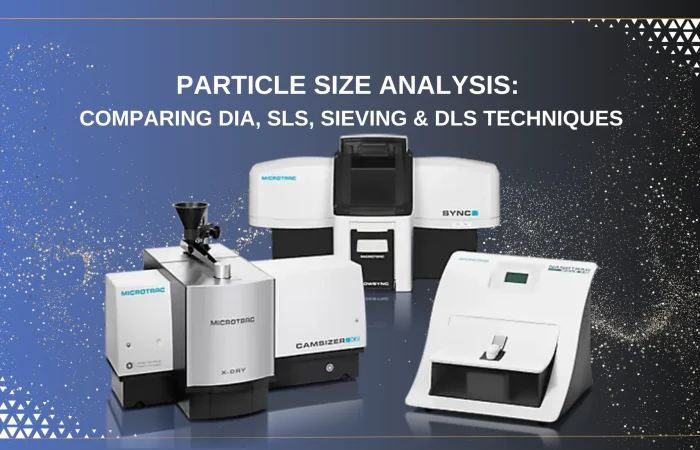
4. Particle Size Analysis: Comparing DIA, SLS, Sieving & DLS Techniques
5. Ultra-Spherical Copper & Alloy Powders for AM | Optimized Ultrasonic Atomization Process
6. The Role of Metal Additive Manufacturing in Accelerating R&D and Innovation
7. Understanding Particle Size Distribution: Methods, Applications, and Microtrac Solutions
8. Colloidal Dispersion Stability Measurement: Methods & Microtrac Solutions

The most common methods for determining particle size distribution include:

  • Dynamic Image Analysis (DIA)

  • Static Laser Light Scattering (SLS / Laser Diffraction)

  • Dynamic Light Scattering (DLS)

  • Sieve Analysis

This article explores the advantageslimitations, and comparability of these techniques, helping you select the optimal method for your needs.

Key Considerations

  1. Measurement Ranges Vary:
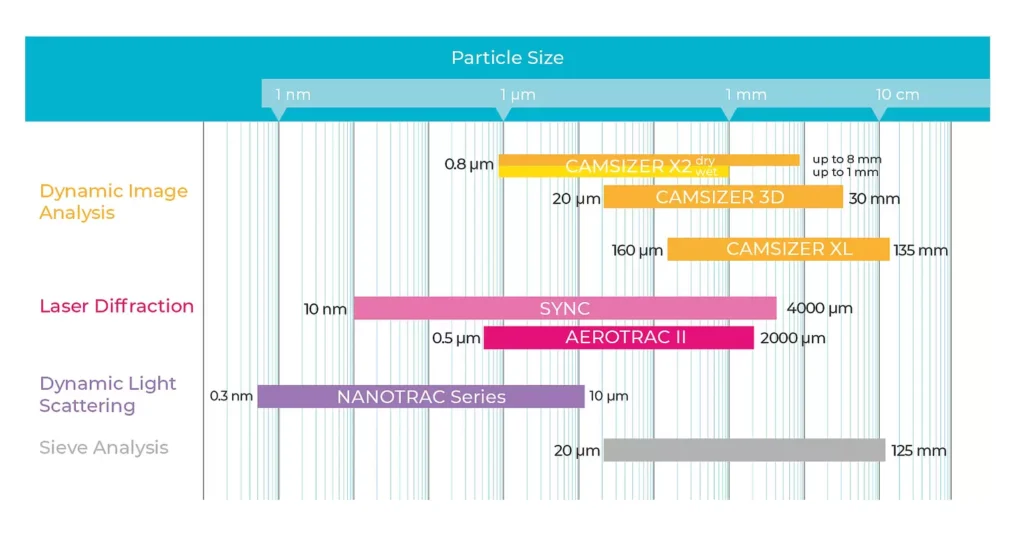
    Each technique covers a characteristic size range, with partial overlaps. For example:

    • DIA, SLS, and Sieve Analysis all measure particles between 1 µm and 3 mm.

    • DLS specializes in sub-micron particles (0.001–10 µm).

  2. Results Depend on Methodology:
    Measurements of the same sample can differ significantly across techniques due to distinct physical principles (e.g., imaging vs. light scattering vs. mechanical separation).

Technology Comparison Overview

The table below summarizes the measuring ranges for each technique and highlights compatible Microtrac Analyzers:

llproductsselectiontitle

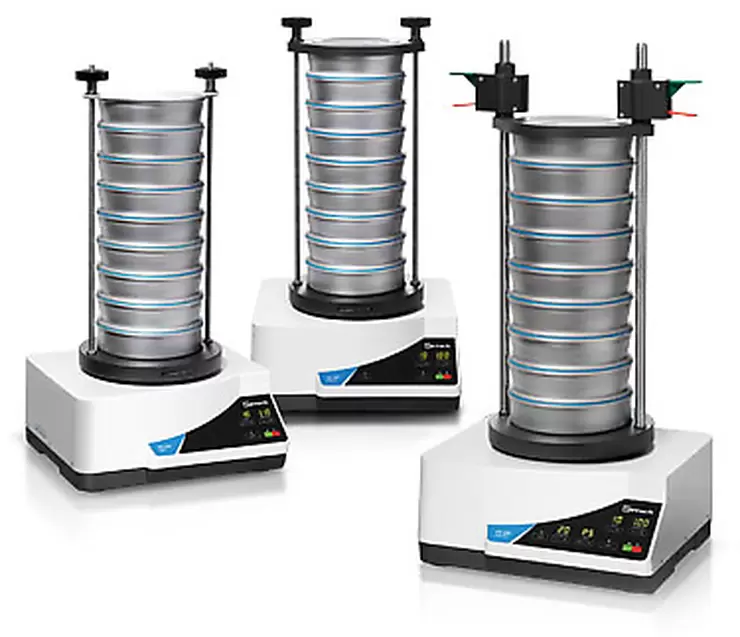
Sieve Analysis: Time-Tested, But With Limitations

Sieve analysis remains the traditional and most widely used method for determining particle size distribution. While reliable, it has inherent constraints modern techniques address.

How It Works:

  1. A stack of sieves is assembled, with mesh sizes increasing from top to bottom.

  2. The sample is placed on the top sieve.

  3. The stack is clamped into a sieve shaker and vibrated for 5–10 minutes.

  4. Particles separate into fractions based on size, collecting on sieves where they can’t pass through the apertures.

  5. Each sieve is weighed after reaching constant mass (no further changes).

  6. Results are calculated as a mass-based distribution (percentage by weight per fraction).

Key Characteristics & Challenges:

AspectDetailImplication
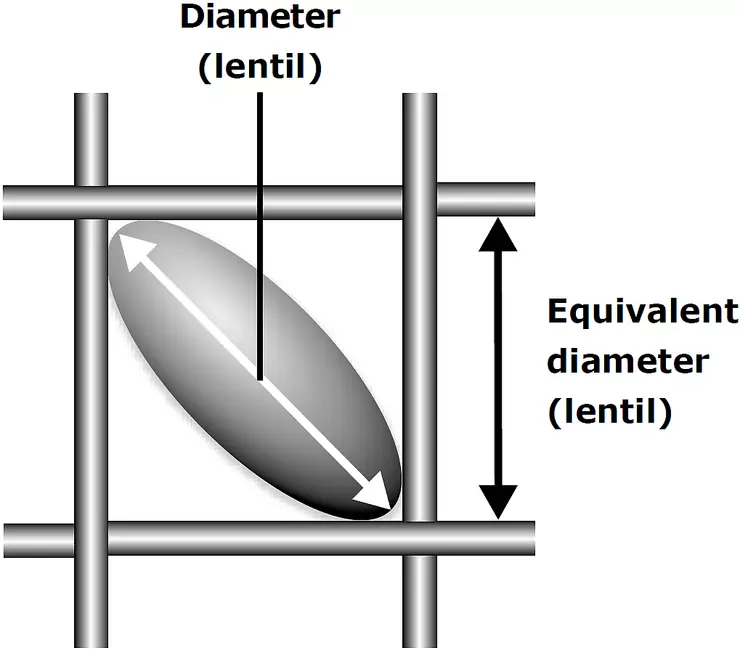
Particle Size ReportedMeasures particle width (smallest projection surface).
e.g., Cubic particles ≈ edge length; Lenticular particles ≈ value between thickness & diameter.
Results reflect orientation during sieving, not absolute dimensions.
ResolutionLimited by number of sieves (typically ≤8 fractions).Distribution based on only 8 data points – low resolution vs. modern methods.
AutomationManual weighing, cleaning & setup required.Time-consuming process, prone to human error.
Common Errors– Sieve overloading (blocks apertures → coarse bias)
– Worn/damaged sieves (fine bias)
– Data transfer mistakes
– Inherent sieve tolerances
Requires strict quality control and calibration.

Critical Note on Sieve Tolerances:
Even new, compliant sieves have significant aperture variations:

  • “1 mm” sieve apertures can average 970–1030 µm (±30 µm).

  • “100 µm” sieve apertures can average 95–105 µm (±5 µm).
    Note: Individual apertures within a sieve may be even larger than the average tolerance.

llknowledgebasedifferentparticletechniqueshl3
llapplicationsknowledgebaseparticlesizeanalysisheadline-llmiscellaneoussieveanalysis

Dynamic Image Analysis (DIA) vs. Sieve Analysis: A Modern Approach

While sieving relies on mechanical separation, Dynamic Image Analysis (DIA) uses advanced imaging to deliver richer, more accurate particle data in less time.

How DIA Works:

  1. Particles flow rapidly past a high-resolution camera system.

  2. Real-time imaging captures millions of individual particles in minutes.

  3. Sophisticated software analyzes size and shape parameters instantly.

Key Advantages Over Sieving:

FeatureSieve AnalysisDynamic Image Analysis (DIA)
OrientationMeasures “preferred orientation” (width bias)Measures truly random orientation
Data OutputMass-based distribution (8 data points max)30+ size/shape parameters (e.g., breadth, length, equivalent circle diameter)
Speed & AutomationManual (10–15 min/sample + cleaning)Fully automated (results in minutes)
ResolutionLow (limited by sieve count)High (analyzes millions of particles)


DIA Measurement Parameters Include:

  • Breadth (b)

  • Length (L)

  • Equivalent Circle Diameter (xⱼ)
    (Visual: Add graphic showing particle parameters)

Technology Behind DIA:
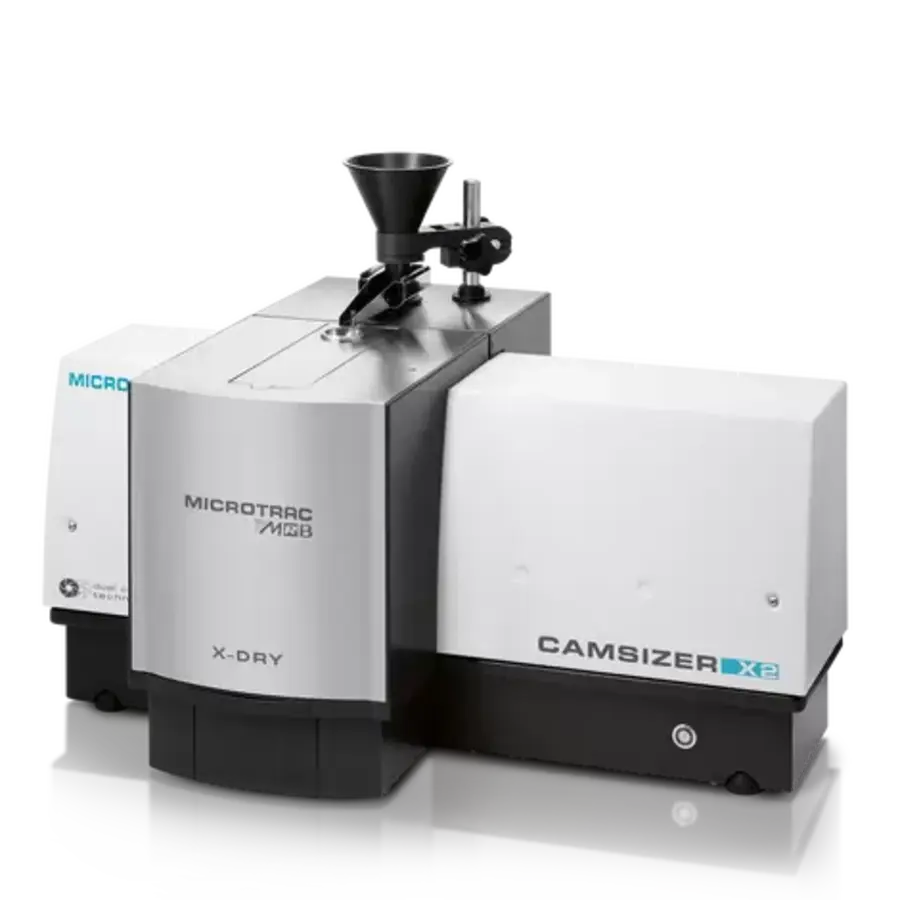
Modern systems like Microtrac’s CAMSIZER series combine:

  • Ultra-fast cameras (hundreds of frames/second)

  • High-intensity lighting

  • Short exposure times

  • AI-powered particle recognition

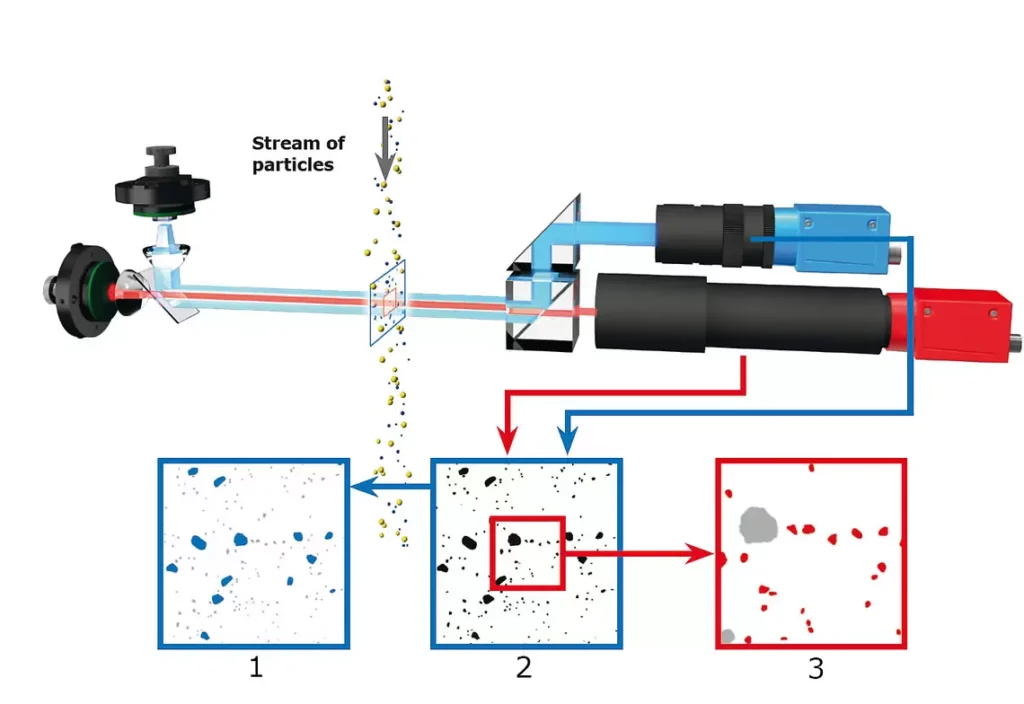
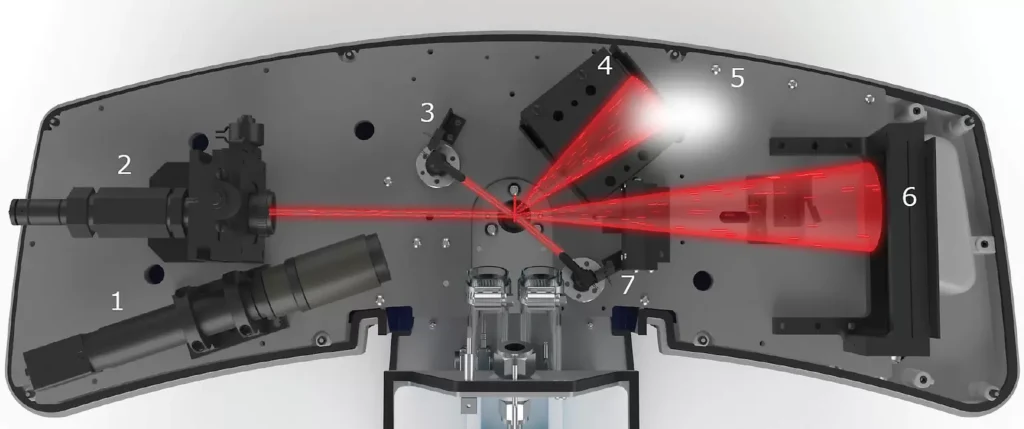
llproductscamsizerdualcameratechnologytitle

1. The basic camera detects the larger particles.
2. The complete particle flow is recorded by two cameras.
3. The zoom camera analyzes the smaller particles.

llgeneralfigure-1

Beyond Size: Shape Analysis & Critical Advantages of DIA

Dynamic Image Analysis (DIA) doesn’t just measure size – it quantifies particle shape and delivers unmatched sensitivity for quality-critical applications.

Key Shape Parameters Measured:

ParameterDefinitionQuality Impact
SphericityHow closely a particle resembles a perfect sphereFlowability, reactivity, compaction
SymmetryBalance of particle dimensions around its axesMixing uniformity, structural integrity
ConvexitySmoothness of the particle surface (absence of concavities)Powder flow, abrasiveness
Aspect RatioRatio of particle length to width (elongation)Packing density, suspension stability
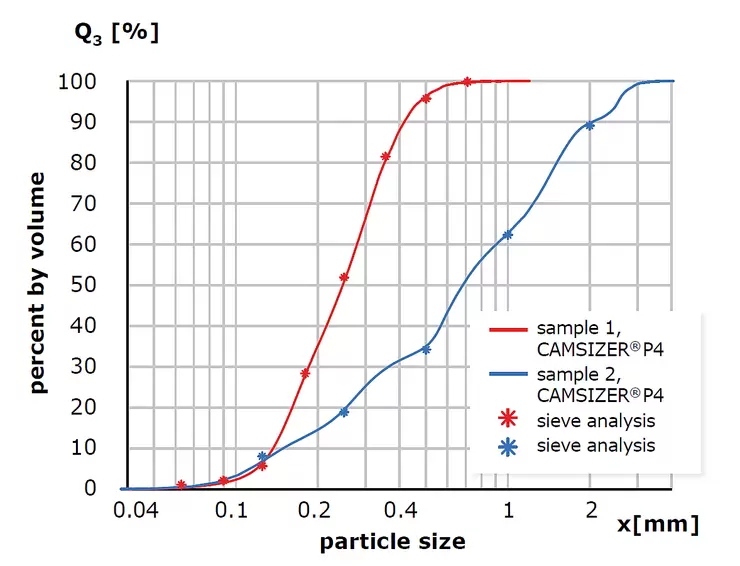
diagram-particlesize-volume-b

Unrivaled Detection Capabilities:

  • Extreme Oversized Particle Sensitivity:

    • CAMSIZER® P4: Detects every single particle in a sample.

    • CAMSIZER® X2: Identifies oversized contaminants down to 0.01% concentration.

  • Ultra-High Resolution:

    • Reliably distinguishes micron-level size differences.

    • Accurately resolves complex multimodal distributions.

Bridging the Gap: DIA vs. Sieve Analysis

While DIA’s particle width measurement correlates best with sieve results, systematic differences arise with irregular particles due to DIA’s random orientation vs. sieving’s width bias.


Microtrac’s Solution:CAMSIZER® Correlation Algorithms mathematically align DIA results with sieve data, achieving >99% comparability.


Why This Matters Globally:
In quality control, labs worldwide use different techniques. This standardized correlation:

  • Ensures consistent specs across supply chains.

  • Eliminates technique-dependent discrepancies.

  • Meets ISO/API requirements for cross-method validity.

Dynamic Image Analysis vs. Laser Diffraction: Direct vs. Indirect Measurement

llknowledgebasedifferentparticletechniqueshl4

While both techniques analyze particle size, their approaches differ fundamentally – impacting resolution, sensitivity, and application scope.

How Laser Diffraction (SLS) Works

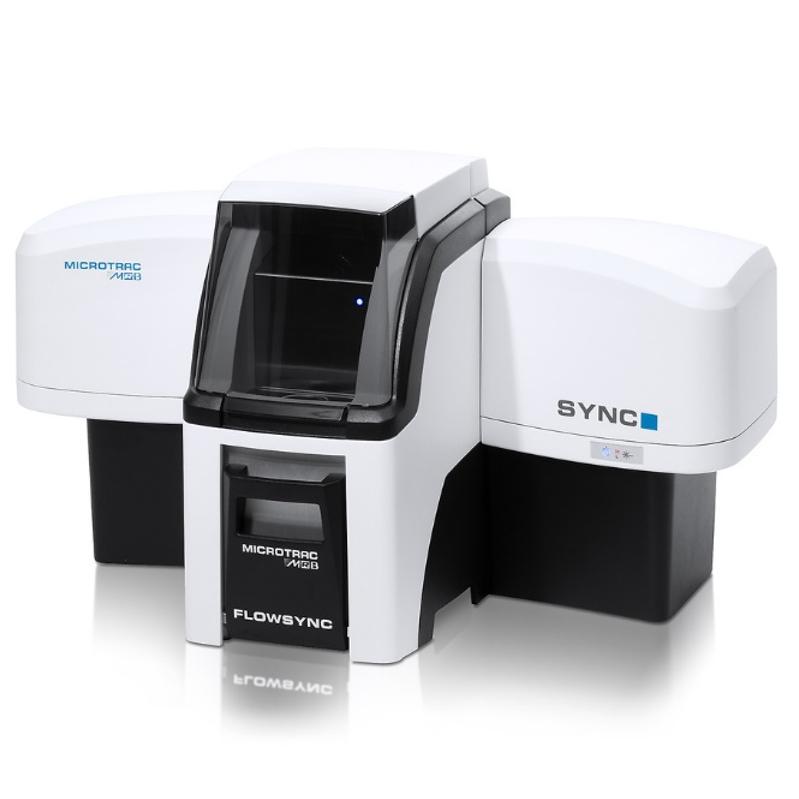
  1. Tri-Laser Principle (e.g., Microtrac SYNC):
    Particles scatter light from multiple lasers across wide angles.

  2. Indirect Calculation:
    Software reconstructs size distribution from superimposed scattering patterns.

  3. Size-Angle Correlation:

    • Large particles → Low-angle scattering (sharp peaks)

    • Small particles → High-angle scattering (diffuse signal)

DIA Measurement Parameters Include:

  • Breadth (b)

  • Length (L)

  • Equivalent Circle Diameter (xⱼ)
    (Visual: Add graphic showing particle parameters)

Technology Behind DIA:
Modern systems like Microtrac’s CAMSIZER series combine:

  • Ultra-fast cameras (hundreds of frames/second)

  • High-intensity lighting

  • Short exposure times

  • AI-powered particle recognition

Key Challenges with SLS

IssueCauseConsequence
Signal OverlapScattering patterns of all particles superimposeComplex deconvolution needed; struggles with polydisperse samples
Size ResolutionDiffuse small-particle signals mask subtle differencesRequires ≥3x size difference to resolve bimodal distributions
Shape LimitationRelies on spherical modelsIrregular particles report as “equivalent spheres” → shape-blind

DIA vs. SLS: Critical Differences

FeatureDynamic Image Analysis (DIA)Laser Diffraction (SLS)
PrincipleDirect imaging of individual particlesIndirect light scattering from particle collective
Shape DataMeasures 30+ parameters (sphericity, aspect ratio, etc.)None – assumes spheres
SensitivityDetects 1 oversized particle in 10,000 (0.01%)Detects outliers only > 2 vol%
Polydisperse SamplesResolves multimodal distributions easilyRequires large size gaps (factor 3+)

Why Choose DIA? When SLS Suffices

Opt for DIA when you need:

  • Shape characterization (e.g., abrasives, APIs, ceramics)

  • Detection of trace oversize contaminants (QC-critical)

  • High resolution of similar-sized particles

SLS excels for:

  • Rapid, broad-range sizing (nm to mm)

  • High-throughput spherical materials (e.g., emulsions, spray-dried powders)

  • Automated routine checks

💡 Hybrid Solution: Instruments like the Microtrac SYNC (with camera module) combine laser diffraction with targeted imaging to overcome limitations of both techniques.

Static Laser Light Scattering (SLS/Laser Diffraction): The Workhorse Technique

SLS calculates particle size distributions by analyzing combined scattering patterns from particle collectives. While powerful, it has specific requirements and limitations.

How It Works

  1. Particles scatter laser light at angles inversely proportional to size:

    • Large particles → Low-angle scattering

    • Small particles → High-angle scattering

  2. Software reconstructs size distribution from superimposed patterns

  3. Requires accurate material refractive index (RI) for sub-micron accuracy

Modern solutions like Microtrac SYNC simplify RI challenges with built-in databases and hybrid camera verification.

Key Advantages

StrengthPractical Benefit
Broadest RangeMeasures particles from nanometers to millimeters
High SpeedResults in seconds with full automation
EstablishedISO 13320 standard; industry-proven reliability
AutomationIdeal for high-throughput QC environments

Inherent Limitations

ConstraintImpact
Spherical AssumptionNo shape data; reports “equivalent spheres”
Oversize DetectionMinimum 2 vol% concentration required
Multimodal ResolutionNeeds 3x size difference between components
RI DependencySub-micron accuracy requires precise optical properties

Strategic Positioning vs. Image Analysis

ApplicationSLS ChoiceDIA Choice
Sub-micron Particles✓ (Down to 10nm)✗ (Limited to >1µm)
Shape-Sensitive QC✓ (30+ parameters)
Trace Contaminants✗ (Needs 2% concentration)✓ (Detects 0.01%)
Routine High-Volume✓ (Seconds per sample)✗ (Minutes per sample)
llgeneralfigure-2
llgeneralfigure-3

Head-to-Head: SLS vs. DIA vs. Sieving in Real Samples

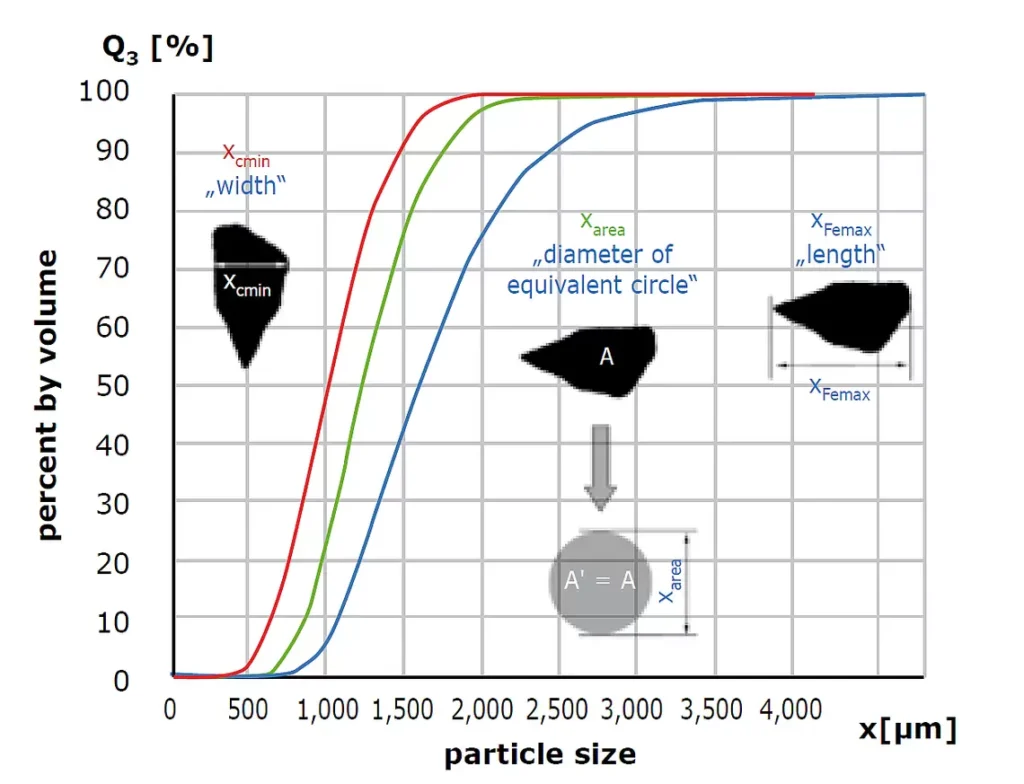
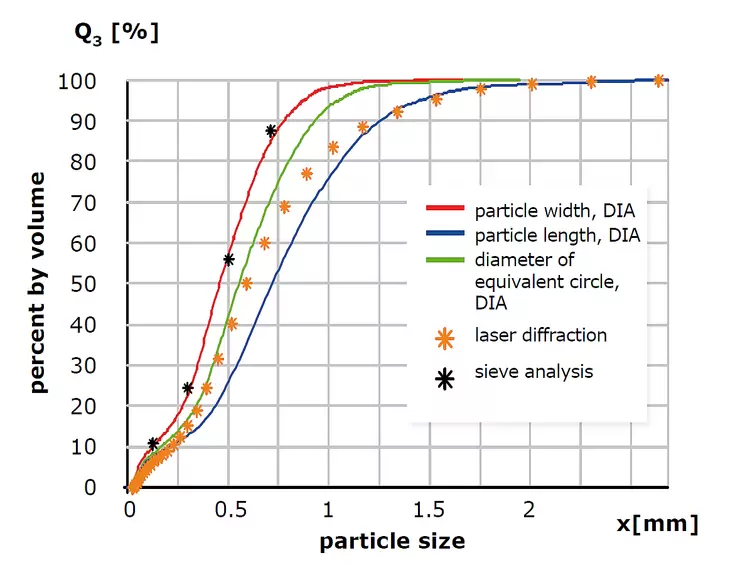
Case 1: Ground Coffee Analysis

MethodKey FindingWhy It Matters
Sieve AnalysisFinest resolution (mass-weighted fractions)Industry benchmark for width-based sizing
DIA (CAMSIZER® X2)Matches sieving when reporting particle widthValidates precision + adds shape data
SLS≈ DIA’s xₐᵣₑₐ (area-equivalent sphere)Broader distribution – averages all orientations as spheres

🔍 Science Insight:
*SLS distributions appear broader because they:

  1. Volume-weight particles (large particles dominate)

  2. Report spheres – masking true size/shape variation*


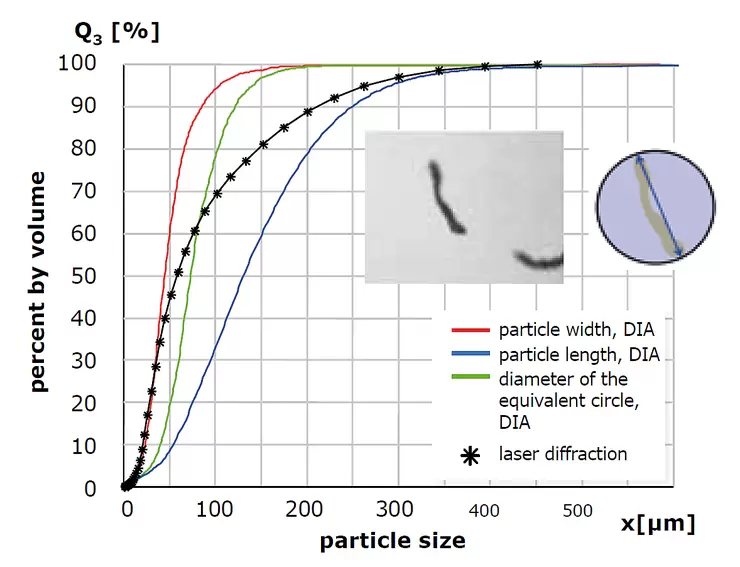
Case 2: Cellulose Fibers – Where Techniques Diverge

ParameterDIA (CAMSIZER® X2)SLS (Laser Diffraction)
Fiber ThicknessDirectly measured (e.g., 5-20 µm)Not detectable – blended into sphere-equivalent
Fiber LengthDirectly measured (e.g., 100-500 µm)Indirectly influences large-size tail
DistributionResolves bimodal thickness/length peaksSingle broad peak ≈ averaged dimension

(Visual: Overlay DIA width/length vs. SLS curve)

Critical Implications:

  • SLS: Curve starts near DIA’s width, then drifts toward length values → misrepresents true distribution.

  • DIA: Quantifies both thickness (packing density) and length (flowability) independently.


Why This Matters for Your Applications

ChallengeSievingSLSDIA (CAMSIZER)
Match industry specs✓ (via correlation)
Nano/micro hybrids✗ (>1µm only)
Fiber/aspect ratio QC
Trace oversized particlesLimited>2 vol%0.01%

Dynamic Light Scattering (DLS) vs. Laser Diffraction: The Nano/Micro Divide

How DLS Works

  1. Particles in suspension undergo Brownian motion:

    • Smaller particles → Faster movement

    • Larger particles → Slower movement

  2. Scattered light fluctuations reveal diffusion speed

  3. Stokes-Einstein equation calculates hydrodynamic diameter (d<sub>H</sub>):
    d_H = (k_B * T) / (3πηD)
    (k<sub>B</sub> = Boltzmann constant; T = Temp; η = Viscosity; D = Diffusion coefficient)


Key DLS Characteristics

AttributeSpecificationPractical Implication
Size ReportedHydrodynamic diameter (d<sub>H</sub>)Includes solvation layer → Larger than SLS equivalent
Optimal Range0.3 nm – 1 μmSuperior to SLS for nanoparticles
Upper Limit≤10 μm (low precision >1 μm)Unsuitable for most microparticles
Additional OutputsZeta potential, Molecular weightStability & formulation insights

SLS vs. DLS: Direct Comparison

ParameterLaser Diffraction (SLS)Dynamic Light Scattering (DLS)
PrincipleAngular light scatteringBrownian motion fluctuations
Size TypeVolume-based “equivalent sphere”Hydrodynamic diameter (solvated)
Effective Range10 nm – 5 mm0.3 nm – 1 μm
Nanoparticle SensitivityLimited below 100 nmGold standard
Sample StateDry powders or suspensionsSuspensions only
Key AdvantageBroad size coverageNano-resolution & stability metrics

Why Hydrodynamic Diameter Matters

![Hydrodynamic Diameter Diagram](placeholder: show particle with solvation shell)
DLS reports larger sizes than SLS because:

  1. Measures particle core + bound solvent layer

  2. Reflects real behavior in suspensions (diffusion, stability)

  3. Critical for:

    • Vaccine/nanodrug performance

    • Ink dispersion stability

    • Protein aggregation studies


Strategic Application Guide

ScenarioPreferred TechniqueWhy
Nanoparticles in solutionDLSOnly reliable nano-scale method
Dry powders (0.1μm – 5mm)SLSFull range coverage + automation
Zeta potential measurementDLSDirect stability assessment
Suspensions >1μmSLSDLS imprecise above micron scale

💡 Pro Tip: For comprehensive characterization, combine techniques:
DLS for nano-properties + SLS for micron-range + DIA for shape/contaminants

To learn more, attend our event!

Additive Plus invites you to an exclusive Open House Event spotlighting the latest in Microtrac particle characterization, powder atomization ATO Lab Plus and LPBF Part Manufacturing AO Metal 3D printing technologies. 

📅 Dates: July 29 or 30, 2025 (identical program both days)
📍 Location: Additive Plus Facility, Gardena, CA

  • Hands-On Demos:

    • Microtrac’s SYNC, CAMSIZER, DLS/Zeta, Turbiscan & more

    • Powder atomization (ATO Lab Plus) & LPBF metal 3D printing (AO Metal)

  • Technical Sessions: Latest advancements in materials R&D

  • Expert Networking: Connect with industry leaders

  • Full R&D Instrumentation Bundle showcase

Microtrac-Product-Spotlight_Additive-Plus-scaled

Powder Analysis and Manufacturing with Microtrac, ATO Lab Plus & AO Metal – July 2025

Additive Plus invites you to an exclusive Open House Event on either July 29 or 30, 2025, spotlighting the latest…

Request a quote

Scan My Object

Please describe your part and scanning needs. Include details like size, material, and how you plan to use the 3D model. Let us know if you require additional services like digital sculpting. Upload images of your part(s) if you have them.

Ask for details

Partner with us

Get instant quote

Talk to Material Expert

Select the unit of measurement for your file
No 3D file? We’ve got you. We can design it for you or scan your existing part.
Upload a photo or drawing if you have one — we’ll get in touch soon.
Select the unit of measurement for your file
No 3D file? We’ve got you. We can design it for you or scan your existing part.
Upload a photo or drawing if you have one — we’ll get in touch soon.
Select the unit of measurement for your file
No 3D file? We’ve got you. We can design it for you or scan your existing part.
Upload a photo or drawing if you have one — we’ll get in touch soon.
Select the unit of measurement for your file
No 3D file? We’ve got you. We can design it for you or scan your existing part.
Upload a photo or drawing if you have one — we’ll get in touch soon.