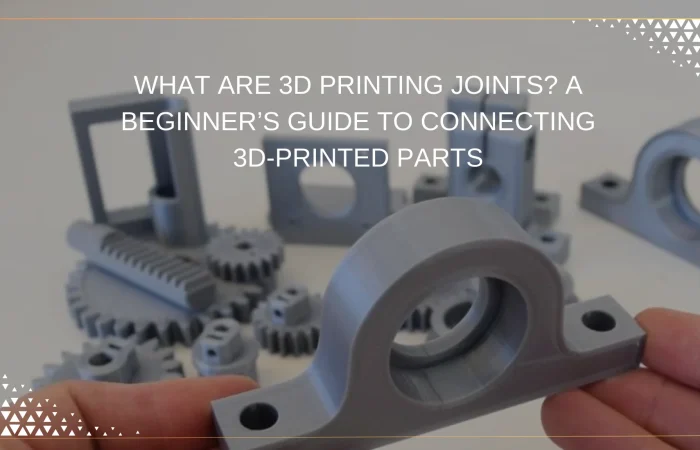
Struggling with aligning your 3D printed parts? This guide offers step-by-step instructions, tips, and techniques to ensure accurate, seamless fitment every time.
Shining 3D Scanners: Revolutionizing Measurement and Inspection Across Industries
3D scanning is no longer a niche tool—it’s becoming essential across industries. From dental labs and engineering teams to classrooms and design studios, professionals rely on 3D scanners to work faster, cut waste, and improve precision.
Shining 3D scanners are helping make this possible. They offer high-quality results, are easy to use, and come in models suited for different needs—whether you’re capturing fine details for jewelry, measuring body shapes for prosthetics, or checking tolerances on manufactured parts.
At Additive Plus, we support teams looking to move their work forward with reliable scanning tools. With over a decade of experience in 3D technologies, we help clients choose the right equipment and integrate it into their existing workflows—without the confusion or downtime.
In this article, you’ll learn how Shining 3D scanners work across industries, what makes them different, and which model might be the best fit for your use case.
The Evolution Of 3D Scanning Technology
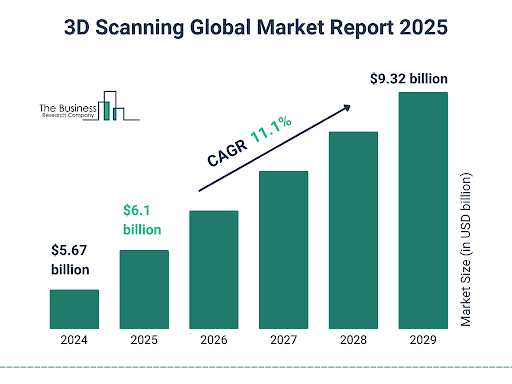
Source: The Business Research Company
3D scanning has come a long way. What once required bulky setups and long processing times is now possible with lightweight, handheld devices that deliver detailed, real-time data. This progress has made 3D scanning more practical—not just for labs or research, but for everyday tasks in manufacturing, healthcare, and design.
3D scanning is also growing fast in the global market. In 2018, it was valued at around $5 billion, and it’s expected to reach $10.9 billion by 2026, with steady growth each year. More companies are using it as a standard tool in their design, production, and inspection processes.
Shining 3D has played an important role in this progress. Their scanners are built to meet real-world needs: high accuracy, fast results, and ease of use. Whether you’re scanning small, complex parts or larger objects, Shining 3D’s range covers it.
Key improvements driving this evolution include:
- Multiple scan modes for flexibility across object types and sizes
- Support for reflective, black, or complex surfaces, which older scanners struggled with
- Built-in color cameras that allow for full-texture capture
- Compact, portable designs that don’t require large, dedicated setups
As scanning technology continues to improve, it’s no longer just about collecting data. It’s about making better decisions, reducing rework, and helping teams get results they can trust.
4 Applications Of Shining 3D Scanners Across Industries
Shining 3D scanners are used in a wide range of industries—each with different needs, but all requiring reliable results. Whether it’s improving product accuracy, speeding up design, or reducing waste, these scanners help professionals work smarter and more efficiently.
Healthcare
In medical fields, accuracy is critical. Shining 3D scanners are used to design patient-specific prosthetics, orthotics, and dental appliances. They help professionals capture exact body or oral anatomy to produce better-fitting, more effective solutions. Shining 3D dental products offer clear scanning workflows for crowns, bridges, and clear aligners, improving fit and turnaround times in dental labs.
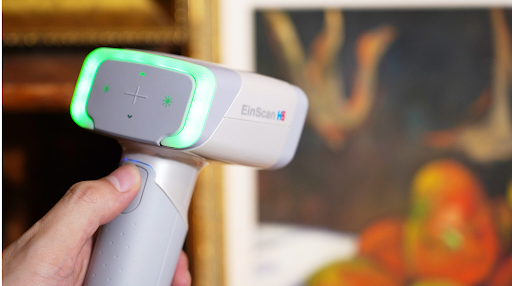
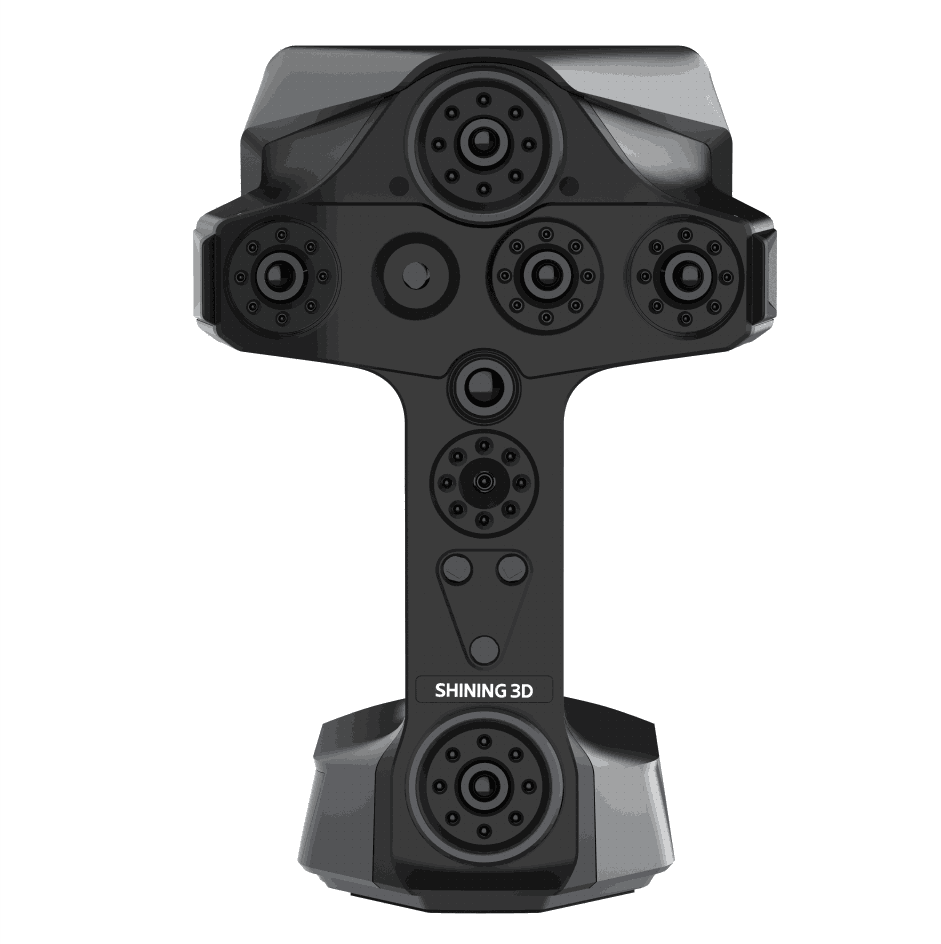
The EinScan H2 is a reliable choice for scanning human faces and bodies. It features a 5MP texture camera and three infrared VCSEL projectors for high accuracy and comfortable scanning. With a wide scanning area and adjustable working distance, this Einstart shining 3D scanner handles everything from facial structure to full-body measurements—no markers needed.
Learn more about the dimensions and other capacities of EinScan H2 today!
“Wireless Handheld Shining 3D EinScan Libre Scanner” has been added to your cart. View cart
-
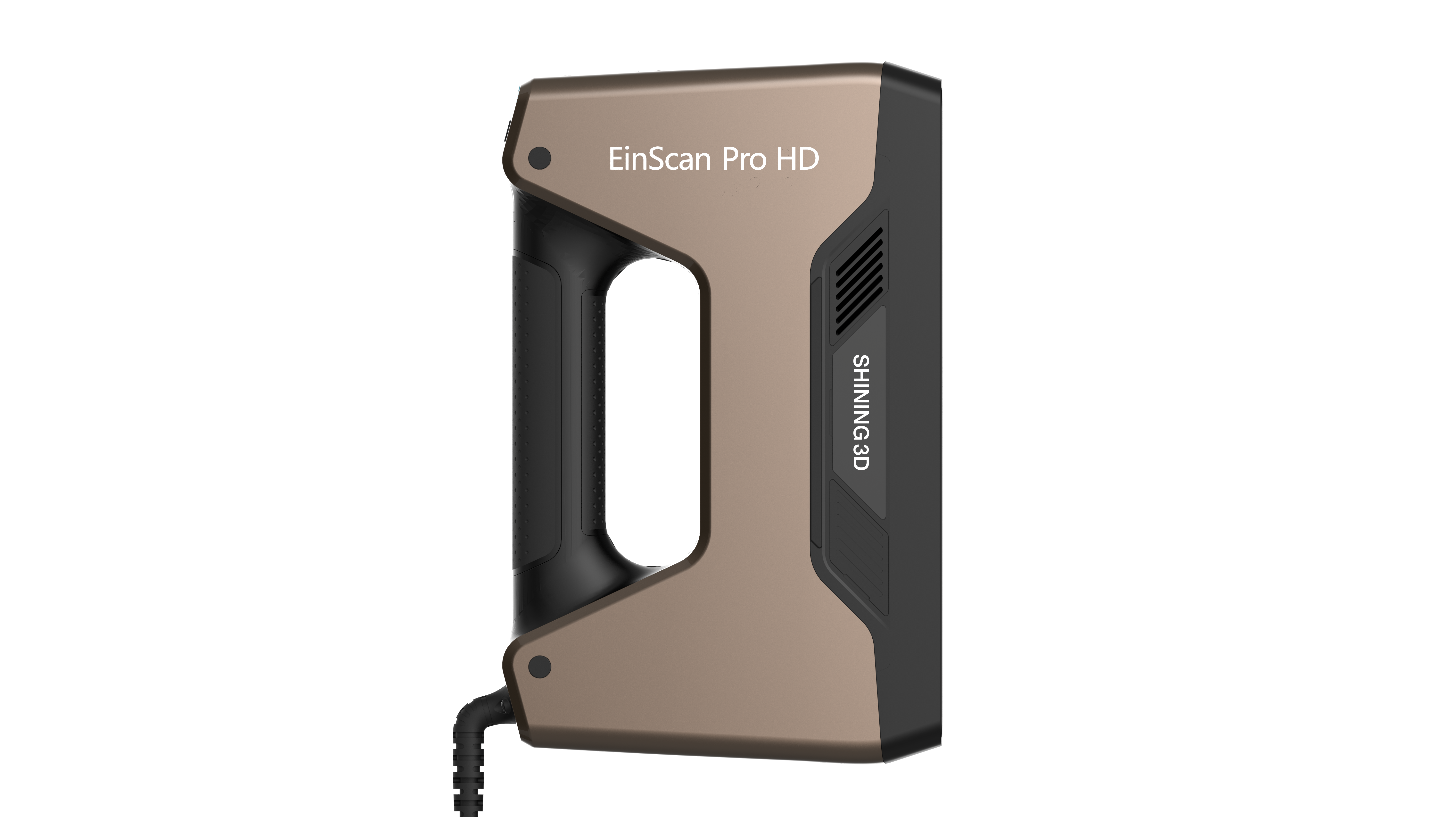
Handheld Shining 3D EinScan Pro HD
The Shining 3D EinScan Pro HD is a handheld 3D scanner designed for high-resolution 3D modeling, reverse engineering, and CAD...
Education
In education, 3D scanners are used for hands-on design, engineering, and research learning. Students and educators can digitize real-world objects, study their structure, and apply CAD skills to modify or recreate them.
The EinScan Pro HD is modular and versatile. It offers fixed and handheld scan modes, high resolution, and compatibility with color and industrial packs. It’s well-suited for scanning artifacts, prototypes, and mechanical parts across subjects. Its portability and detailed output make this Einstart shining 3D scanner a solid all-in-one option for academic environments.
Learn more about the dimensions and other capacities of EinScan Pro HD today!
Jewelry Design
Jewelry designers use 3D scanning to capture fine surface detail and replicate intricate elements. Precise data is essential for custom engagement rings or restored vintage pieces.
The EinScan HX is known for its hybrid dual light source—blue LED and blue laser—which makes it excellent at handling shiny, reflective, or dark surfaces often found in jewelry. It also includes a built-in color camera and delivers high-resolution scans at fast speeds, supporting both artistic and technical needs.
-
Wireless Handheld Shining 3D EinScan Libre Scanner
The Shining 3D EinScan Libre is a wireless, markerless, all-in-one 3D scanner that offers full-color and high-precision scanning for various...
Manufacturing
Manufacturers depend on accurate 3D scans for reverse engineering, quality checks, and design improvements. Scanners help verify tolerances, capture worn or legacy parts, and support prototyping.
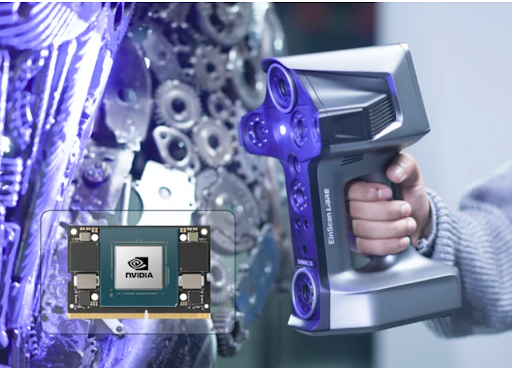
- The EinScan Libre is a completely wireless handheld scanner with an embedded display and NVIDIA processor. It supports three scan modes—IR Rapid, IR Adaptive, and Laser HD—and includes a 48MP color camera. Its marker-free scanning, high accuracy (up to 0.04 mm/m), and color capture make it a powerful fit for fast-paced environments.
From clinics to classrooms and production floors, Shining 3D scanners are designed to meet industry-specific challenges. Each model provides practical features tailored to common scanning needs, without overcomplicating the workflow.
Here’s a clean, easy-to-read table that summarizes the Shining 3D product lineup mentioned in the section:
Model | Best For | Key Features | Use Cases |
Face & body scanning | 5MP texture camera, 3 infrared VCSEL projectors, white light & IR modes, no markers needed | Healthcare, digital art, clothing design, and cultural preservation | |
Reflective & industrial parts | Blue LED + blue laser, high scan speed (1.6M pts/s), built-in color camera | Reverse engineering, manufacturing, shiny or dark surfaces | |
Multi-purpose & high-resolution applications | Modular design, handheld & fixed scan modes, supports add-ons, up to 0.045mm volumetric accuracy | Education, prototyping, academic labs, precision part scanning | |
Wireless mobility & on-site scanning | Fully wireless, OLED touchscreen, built-in NVIDIA processor, 48MP color camera, 3 scan modes | Fieldwork, multi-location scanning, outdoor use, rapid object digitization |
Not sure which scanner is right for your industry? Contact Additive Plus for personalized help.
Key Features Of Shining 3D Scanners
Shining 3D scanners are built to handle real tasks, not just lab conditions. Whether you’re scanning a person, a mechanical part, or an artistic object, these scanners focus on the features that matter most: accuracy, speed, and ease of use.
Here are some of the core features found across their models:
High Accuracy and Resolution
Most Shining 3D scanners offer precision ranging from 0.04 mm to 0.1 mm, depending on the model and mode. This makes them a reliable choice for applications where exact dimensions are essential, like dental, manufacturing, or engineering tasks. Models like the EinScan HX and EinScan Pro HD are especially strong in this area, capturing fine details that are difficult to get with lower-end devices.
Multiple Scan Modes
Each model offers more than one way to scan. For example:
- The EinScan Libre offers IR Rapid, IR Adaptive, and Laser HD modes to handle everything from large objects to reflective materials.
- The EinScan Pro HD allows both handheld and fixed scanning, giving users more control over speed and detail.
- The FreeScan Combo adds options like deep hole scanning and marker-free infrared scanning for metrology-level work.
These modes make it easier to work with different object sizes, shapes, and materials, without needing multiple devices.
Built-In Color Cameras
Several Shining 3D scanners include integrated color cameras, like the EinScan HX and EinScan Libre. These capture full-color textures during scanning, which is especially useful for design, digital art, cultural preservation, or creating realistic 3D models for display.
Portable and User-Friendly
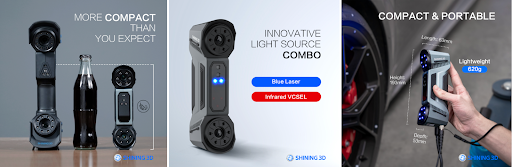
All scanners in the lineup are handheld and lightweight, with most weighing between 600g and 1.8kg. Their ergonomic designs help reduce fatigue during longer scan sessions. You also don’t need a high-end PC to operate newer models like the EinScan Libre, which has an onboard processor and screen for a fully wireless, standalone experience.
Versatile Alignment and Output Options
Each scanner supports multiple alignment methods: feature, marker, texture, and hybrid. This flexibility makes it easier to get accurate results with minimal setup time. File formats like OBJ, STL, ASC, and PLY are supported across the board, so the data you collect is compatible with most CAD and modeling software.
Benefits Of Using Shining 3D Scanners In Various Industries
Using a Shining 3D scanner is not just about creating 3D models—it’s about improving how teams work, solve problems, and make decisions. Across industries, these scanners help reduce errors, save time, and provide the kind of detail that professionals need to move forward with confidence.
Cost Efficiency
Accurate 3D scans help prevent costly mistakes. Whether you’re reverse engineering a part, fitting a dental crown, or building a custom prototype, getting the right data early means fewer revisions. This lowers material costs, saves labor, and cuts down on wasted production runs. For businesses working at scale, these small improvements quickly add up.
Faster Prototyping
Shining 3D scanners make it possible to capture complex shapes in minutes. For example, the EinScan HX can reach scanning speeds of up to 1.6 million points per second. This allows engineers and designers to test and revise physical objects quickly—speeding up product development and reducing time-to-market. It’s especially helpful for design teams working with tight deadlines or iterative processes.
Customization
Many industries need customized outputs. With Shining 3D scanners, you can create exact digital copies of physical objects and tailor them to individual needs:
- In healthcare, you can model prosthetics or dental devices around a patient’s anatomy.
- In jewelry or digital art, you can refine intricate details that would be impossible to replicate manually.
- In manufacturing, you can recreate discontinued or undocumented parts through reverse engineering with precision that manual measurements can’t match.
This level of customization helps professionals deliver better-fit solutions and improves final product quality.
Material Savings and Sustainability
Accurate scanning helps reduce overproduction and the need for extra materials. Instead of trial-and-error prototyping, teams can work from precise digital models. This reduces waste and supports more sustainable manufacturing practices.

- When paired with solutions like the FreeScan Combo or Digimetric Photogrammetry System, teams can capture fine measurements for quality checks, reducing scrap and ensuring parts are right the first time.
Learn more about the dimensions and other capacities of FreeScan Combo today!
Repeatability and Consistency
Shining 3D scanners also bring consistency to processes that were once highly manual. You can repeat scans, compare results over time, and document every step. This is especially useful for quality assurance, patient record-keeping, and product inspections.
Shining 3D products help teams work with better information. The scanners give you confidence in the data, which leads to more efficient planning, fewer production issues, and more consistent outcomes.
How To Choose The Right Shining 3D Scanner For Your Needs
Not every scanner fits every situation. Choosing the right Shining 3D model depends on what you’re scanning, how often you’ll use it, and what kind of results you need. Here are a few practical factors to help guide your decision:
What’s the Main Use Case?
Start with your core application. Are you scanning people, industrial parts, jewelry, or something else?
- For medical and human scanning: Look at the EinScan H2. It’s designed for comfortable and accurate body scanning, with strong performance in both clinical and creative settings.
- For engineering or industrial parts: The EinScan HX is a great fit. It handles dark, shiny, and reflective surfaces with high accuracy.
- For schools, R&D, or prototyping: The EinScan Pro HD gives you flexibility with multiple modes and add-ons.
- For mobile teams or field scanning: The EinScan Libre gives you full wireless freedom and built-in processing power.
What’s Your Budget?
All four scanners offer strong value, but your price range can help narrow things down:
- The EinScan H2 and Pro HD are great mid-range options with high-quality results.
- The EinScan HX offers more power and precision, which comes at a higher price point.
- The EinScan Libre, while the newest and wireless, is designed for professionals needing on-device flexibility—often with more investment upfront.
How Often Will You Use It?
If you need fast, repeatable results every day, go for a model with built-in color capture, fast scan speeds, and multiple scan modes. If you scan occasionally or for educational demos, a modular or simpler system may be enough.
What Level of Accuracy Do You Need?
Precision requirements vary by industry. Jewelry and dental labs may need detail down to 0.04 mm. Educational projects or basic reverse engineering may not need that level of fine detail. Consider:
- EinScan HX and Pro HD for high-precision scans
- EinScan H2 for reliable scanning of softer details
- EinScan Libre for flexible use with decent precision and wireless portability
The Future of 3D Scanning with Shining 3D
3D scanning is becoming an everyday tool across industries—from healthcare and education to manufacturing and product design. As the technology matures, expectations for speed, accuracy, and ease of use continue to grow. Shining 3D has kept up with those expectations by developing scanners that are practical, reliable, and ready for real-world use.
Whether you need detailed color textures, high-precision geometry, or the flexibility to scan anywhere without a tethered setup, Shining 3D’s lineup offers options that match your workflow—not the other way around.
At Additive Plus, we don’t just sell equipment. We help you integrate it, support your team, and make sure your investment works for the long term. If you’re ready to explore how a Shining 3D scanner can improve your process, we’re here to help.
Explore the full range of Shining 3D scanners or reach out to our team for expert guidance tailored to your needs.