Skip to content

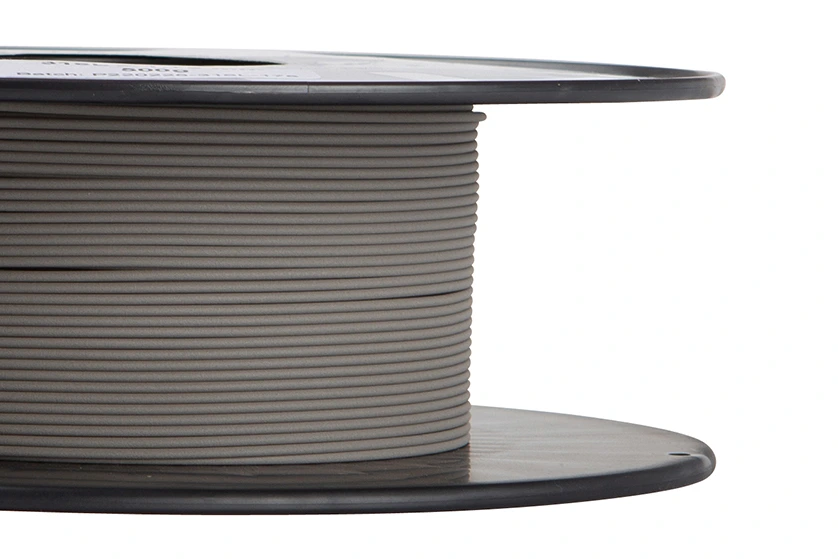
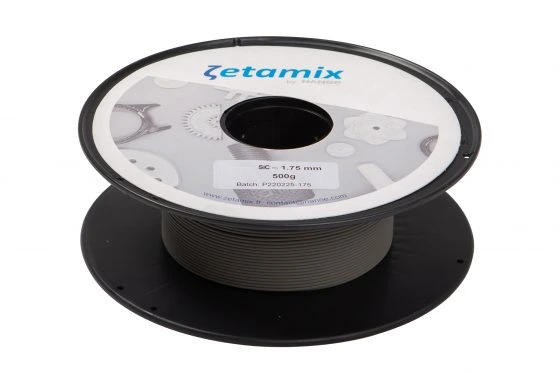
Zetamix Silicon Carbide Filament 1,75mm

$535

Silicon carbide filament: Print FDM parts → sinter into ultra-hard, thermal-shock resistant components for extreme environments.

  • Compatible platform:

    FFF

  • Type:

    Ceramic Filaments

Request a quote
  • Description
  • Details
  • Materials
  • Documents
  • Videos
  • Review

Description

Zetamix Silicon Carbide Filament enables direct production of one of the hardest technical ceramics using standard FDM 3D printers. Create components with exceptional hardness, superior thermal shock resistance, and outstanding wear performance—ideal for the most demanding aerospace, defense, and industrial applications where extreme durability is required.

Why Aerospace & Defense Engineers Choose Zetamix SiC

Extreme Hardness & Wear Resistance

  • Exceptional hardness: 25 GPa (Hv10) – among the hardest materials available

  • Superior abrasion resistance for high-wear applications

  • 400 MPa bending strength for structural components

  • 98-99% density for maximum performance

Superior Thermal Performance

  • Excellent thermal shock resistance

  • Maintains properties at extreme temperatures

  • Ideal for heat exchangers and thermal management systems

  • Stable in high-temperature environments

Advanced Application Capabilities

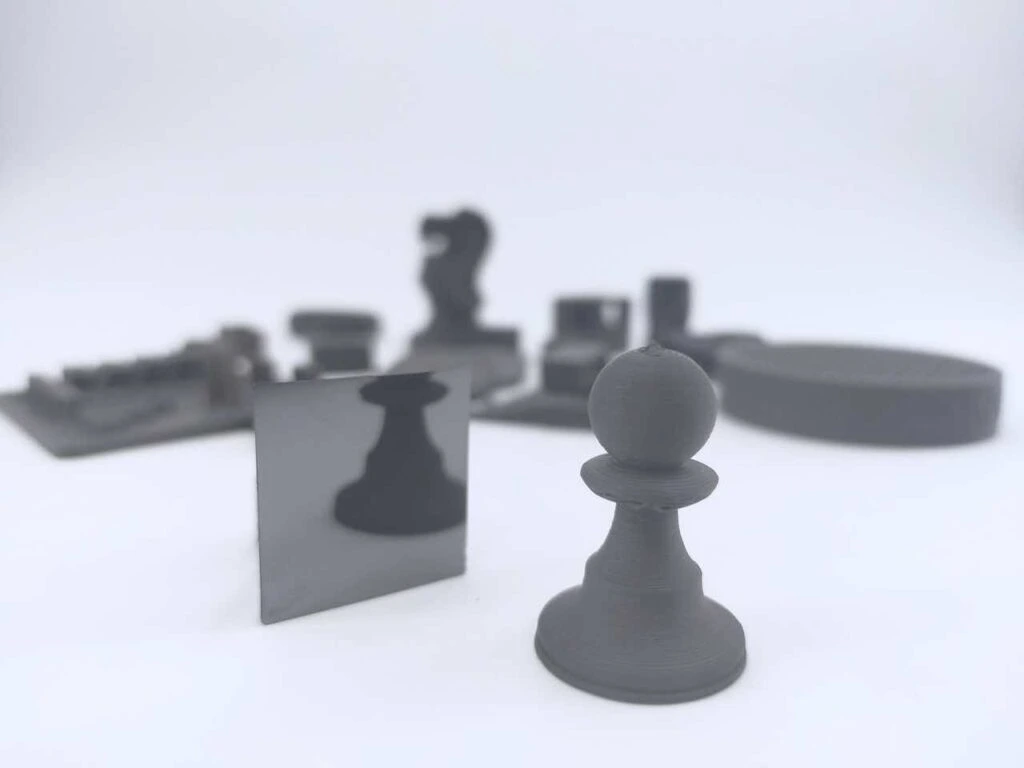
  • Aerospace mirrors and optical components

  • Defense and military applications

  • Wear-resistant industrial components

  • Lightweight yet extremely durable structures

Material Properties After Sintering

Nanoe-launches-a-Silicon-Carbide-filament-for-3D-printing-1024x768-1
  • Density: 98-99% of theoretical density
  • Hardness: 25 GPa (Hv10)
  • Bending Strength: 400 MPa
  • Composition: 78% SiC by mass

Your Path to Ultra-Hard Ceramic Parts

1. Design for Extreme Performance

  • Scale models to account for sintering shrinkage: 16.8% (X/Y) & 22.6% (Z)

  • Optimize for SiC’s exceptional hardness and thermal properties

  • Consider anisotropic effects on final part performance

2. Precision Printing Protocol

  • Use standard FDM/FFF printing techniques

  • Follow general Zetamix ceramic printing guidelines

  • Use appropriate drive gears to prevent filament grinding

  • Print on flexible build plates for easy remov

3. Advanced Thermal Processing

  • Chemical Debinding: Acetone process per general guidelines

  • Thermal Debinding: Standard ceramic thermal debinding process

  • Sintering: High-temperature process at 2200°C under controlled atmosphere (partial vacuum with Argon)

FAQs

What makes silicon carbide unique compared to other ceramics?

SiC offers exceptional hardness (25 GPa), superior thermal shock resistance, and excellent wear resistance—making it one of the most durable ceramic materials available, ideal for the most demanding applications.

Aerospace mirrors and optics, defense components, heat exchangers, wear-resistant industrial parts, and any application requiring extreme hardness combined with thermal stability.

At 25 GPa, silicon carbide is significantly harder than alumina (19 GPa) and zirconia (10-19 GPa), making it one of the hardest engineering ceramics available.

Sintering requires a high-temperature furnace capable of reaching 2200°C with controlled atmosphere (partial vacuum with Argon at 90 mb). This is more specialized than standard ceramic furnaces.

Yes! SiC can be polished to create high-quality mirrors and optical components, making it valuable for aerospace and defense applications where precision optics are required.

SiC can withstand rapid temperature changes without cracking, making it ideal for heat exchangers, rocket components, and other applications experiencing extreme thermal cycling

Follow standard ceramic design guidelines—avoid sharp corners, maintain uniform wall thicknesses, and account for significant sintering shrinkage in the Z-direction (22.6%).

Absolutely. SiC maintains its exceptional properties at high temperatures, making it ideal for thermal management systems, furnace components, and high-temperature processing equipment.

Silicon carbide is significantly lighter than most metals while offering superior hardness and wear resistance, providing excellent strength-to-weight ratio for aerospace applications.

Standard ceramic filament handling precautions apply. Use in well-ventilated areas and wear appropriate PPE during printing and handling.

  • Brand Zetamix by Nanoe
  • Printing Materials Ceramic Filaments
  • Technology FFF
  • Chemical symbol SiC
  • Sintering type Solid State Sintering
  • Printing temperature 120°C
  • Sintering Temperature 2200°C under partial vacuum (Ar 90 mb)
  • Shrinkage 16.8% ( x and y) ; 22,6% (z)
  • Density 98-99%
  • Mass fluidity index[g/10(min)] 16
  • Volumetric fluidity index [cm3/10(min)] 5
  • Moisture Absorption 24 hours [%] <0,1%
  • Moisture Absorption , 7 days [%] <0,3%
  • Shore D 56

Videos

Send Us a Message

Request a quote

Scan My Object

Please describe your part and scanning needs. Include details like size, material, and how you plan to use the 3D model. Let us know if you require additional services like digital sculpting. Upload images of your part(s) if you have them.

Ask for details

Partner with us

Get instant quote

Talk to Material Expert

Select the unit of measurement for your file
No 3D file? We’ve got you. We can design it for you or scan your existing part.
Upload a photo or drawing if you have one — we’ll get in touch soon.
Select the unit of measurement for your file
No 3D file? We’ve got you. We can design it for you or scan your existing part.
Upload a photo or drawing if you have one — we’ll get in touch soon.
Select the unit of measurement for your file
No 3D file? We’ve got you. We can design it for you or scan your existing part.
Upload a photo or drawing if you have one — we’ll get in touch soon.
Select the unit of measurement for your file
No 3D file? We’ve got you. We can design it for you or scan your existing part.
Upload a photo or drawing if you have one — we’ll get in touch soon.