Skip to content

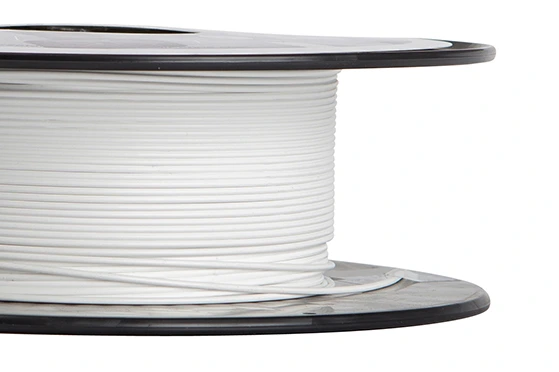
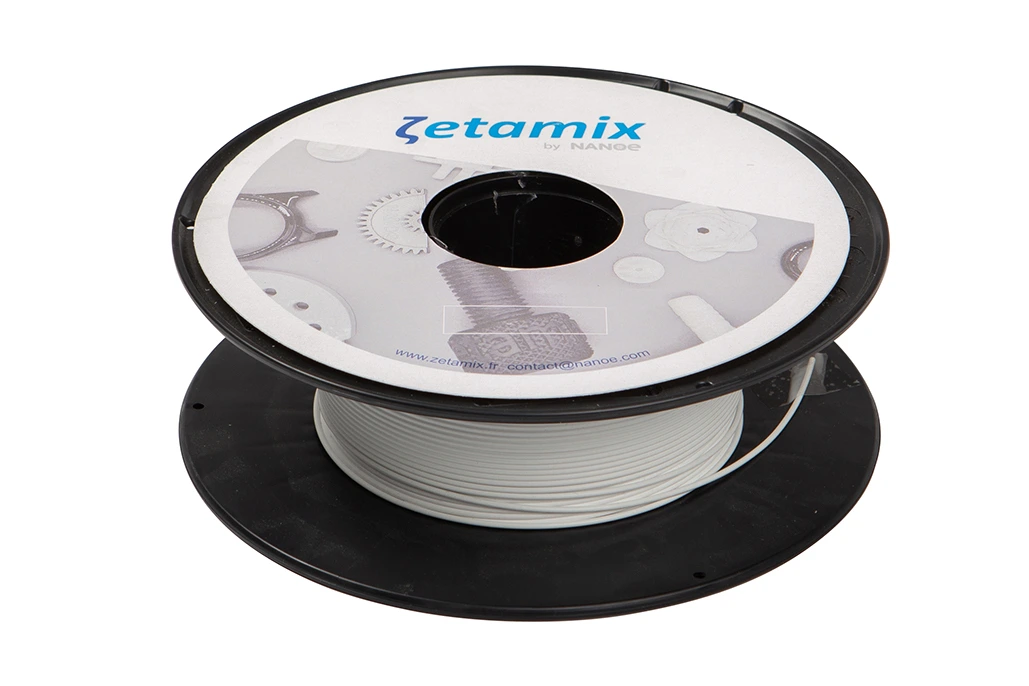
Zetamix Alumina Filament 1,75mm

$460

Alumina ceramic filament: Print FDM parts → sinter into high-temperature resistant, electrically insulating components for extreme environments.

  • Compatible platform:

    FFF

  • Type:

    Ceramic Filaments

Request a quote
  • Description
  • Details
  • Materials
  • Documents
  • Videos
  • Review

Description

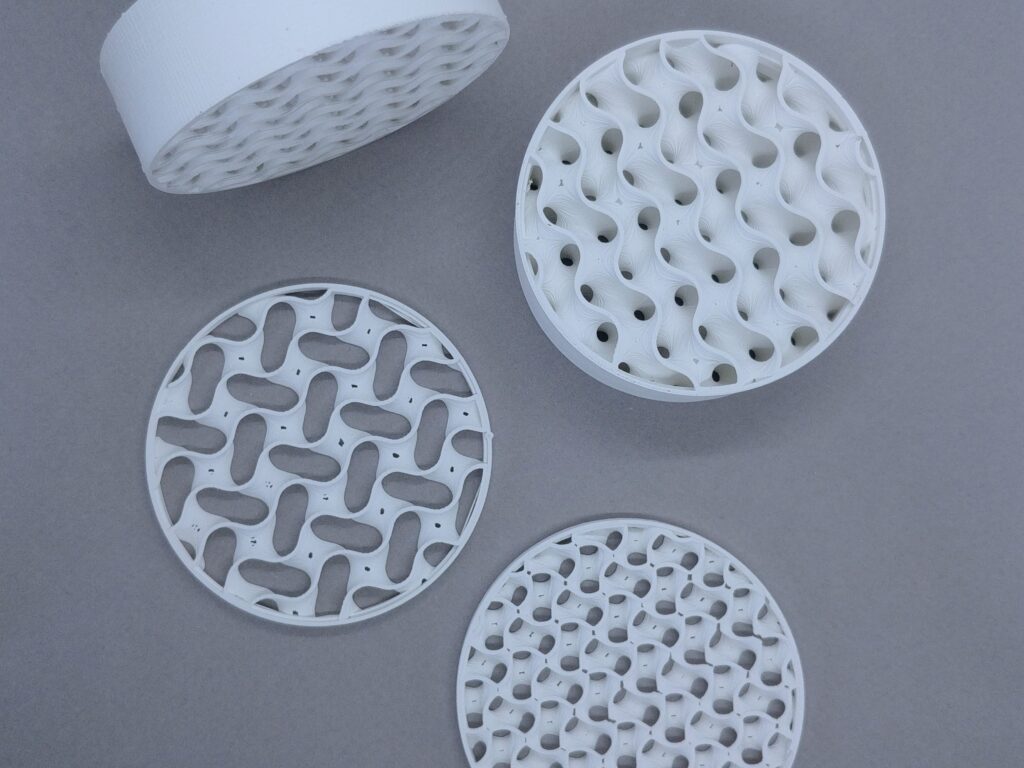
Zetamix Alumina Filament enables direct production of advanced ceramic components using standard FDM 3D printers. Create parts with exceptional temperature resistance, excellent electrical insulation, and superior wear resistance—ideal for high-temperature applications, electrical insulation, and demanding industrial environments where conventional materials fail.

Why Engineers & Manufacturers Choose Zetamix Alumina

Extreme Temperature Performance

  • Withstands temperatures up to 1550°C after sintering

  • Excellent thermal stability and heat resistance

  • Ideal for furnace components, thermocouple tubes, and high-temperature tooling

  • Maintains mechanical properties in extreme thermal environments

Superior Electrical Properties

  • Excellent electrical insulator with dielectric constant of 9 (±0.5)

  • Low loss tangent: ≈1×10⁻³

  • Stable performance from -50°C to +110°C (±5%)

  • Perfect for electrical insulation applications

Exceptional Wear & Chemical Resistance

  • High hardness: 19 GPa (Hv10)

  • Excellent wear resistance for abrasive applications

  • Chemically inert – resistant to most acids and alkalis

  • 98-99% density for maximum durability

Material Properties After Sintering

filtre-bleu-scaled-1
  • Density: 98-99% of theoretical density

  • Bending Strength: 200-500 MPa

  • Hardness: 19 GPa (Hv10)

  • Dielectric Constant: 9 (±0.5) at 9.4 GHz

  • Melting Point: 2072°C

Your Path to High-Temperature Ceramic Parts

1. Design for Extreme Environments

  • Scale models by 126.2% (X/Y) and 130.2% (Z) for sintering shrinkage

  • Minimum part size: 6mm cube | Minimum wall: 1mm

  • Minimum pin diameter: 2.5mm | Minimum hole: 0.6mm (vertical)

  • Maximum overhang: 40° unsupported, 20° for ceilings

2. Precision Printing Protocol

  • Use grooved drive gears to prevent filament grinding

  • Print on flexible build plates for easy removal

  • 100% fan speed for optimal surface quality

  • 1mm retraction at 20 mm/s recommended

  • Maintain room temperature below 25°C (use AC if needed)

  • Minimum 2 wall layers with 5-100% infill density

3. Controlled Debinding & Sintering

  • Chemical Debinding: 6h acetone bath at 40°C (>5% mass loss)

  • Thermal Debinding: 8°C/h ramp to 500°C (≈2.5 days) or accelerated cycle available

  • Sintering: 50°C/h to 1550°C with 2h hold in air atmosphere

FAQs

What makes alumina ideal for high-temperature applications?

Alumina maintains excellent mechanical properties at extreme temperatures (up to 1550°C), offers outstanding thermal stability, and is chemically inert—making it perfect for furnace components, thermal processing, and high-temperature tooling.

Alumina offers superior temperature resistance (1550°C vs 1475°C for zirconia) and better electrical insulation, while zirconia provides higher mechanical strength. Choose alumina for extreme temperatures and electrical applications.

High-temperature furnace components, electrical insulators, thermocouple protection tubes, laboratory equipment, wear-resistant liners, chemical processing parts, and any application requiring thermal stability with electrical insulation.

Yes! Alumina is an excellent electrical insulator with a dielectric constant of 9 and low loss tangent, making it ideal for high-voltage insulation, circuit components, and electrical feedthroughs.

Alumina is highly chemically inert, resisting most acids, alkalis, and corrosive environments. This makes it suitable for chemical processing equipment, laboratory ware, and corrosive fluid handling.

Maximum printed size determined by furnace dimensions, minimum wall: 1mm, minimum feature: 0.6mm. Account for anisotropic shrinkage (different in X/Y vs Z directions).

Printing varies by model. Chemical debinding takes 6h + 2h drying, thermal debinding ≈60h (or 23h accelerated), and sintering ≈30h including ramp times and holding.

Use in well-ventilated areas, wear FFP2 masks during printing and handling. The sintered alumina is biologically inert and safe for handling.

Six months when stored in original vacuum-sealed packaging in cool, dry conditions.

Yes! This is a key advantage over traditional ceramic manufacturing. Create intricate internal cooling channels, complex fluid paths, and geometries impossible with conventional methods.

  • Brand Zetamix by Nanoe
  • Printing Materials Ceramic Filaments
  • Technology FFF
  • Chemical symbol Al2O3
  • Sintering type Solid State Sintering
  • Printing temperature 170-180°C
  • Sintering Temperature 1550°C under air
  • Shrinkage x,y = 20.8% ±1% / z = 23.2% ±1%
  • Density 98-99%
  • Specific Gravity [g.cm-3 ] 2.5
  • Melt Flow Rate [g/10(min)] 200
  • Melt Volume Rate [cm3 /10(min)] 80
  • Moisture Absorption 24 hours [%] <0,1%
  • Moisture Absorption , 7 days [%] <0,3%
  • Shore D 40

Videos

Send Us a Message

Request a quote

Scan My Object

Please describe your part and scanning needs. Include details like size, material, and how you plan to use the 3D model. Let us know if you require additional services like digital sculpting. Upload images of your part(s) if you have them.

Ask for details

Partner with us

Get instant quote

Talk to Material Expert

Select the unit of measurement for your file
No 3D file? We’ve got you. We can design it for you or scan your existing part.
Upload a photo or drawing if you have one — we’ll get in touch soon.
Select the unit of measurement for your file
No 3D file? We’ve got you. We can design it for you or scan your existing part.
Upload a photo or drawing if you have one — we’ll get in touch soon.
Select the unit of measurement for your file
No 3D file? We’ve got you. We can design it for you or scan your existing part.
Upload a photo or drawing if you have one — we’ll get in touch soon.
Select the unit of measurement for your file
No 3D file? We’ve got you. We can design it for you or scan your existing part.
Upload a photo or drawing if you have one — we’ll get in touch soon.