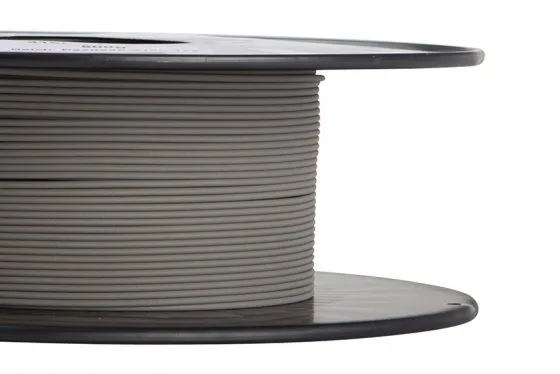
Zetamix 316L Steel Filament 1,75mm
$390
Industrial 316L stainless steel filament: Print FDM tooling → sinter into corrosion-resistant, impact-resistant functional metal parts.
-
Compatible platform:
FFF
-
Type:
Metal Filaments
-
Categories:
Materials, Composite Tooling, Engineering, FFF(FDM), Filaments, Jigs&Fixtures, Manufacturing, Metal Filament
- Description
- Details
- Materials
- Documents
- Videos
- Review
Description
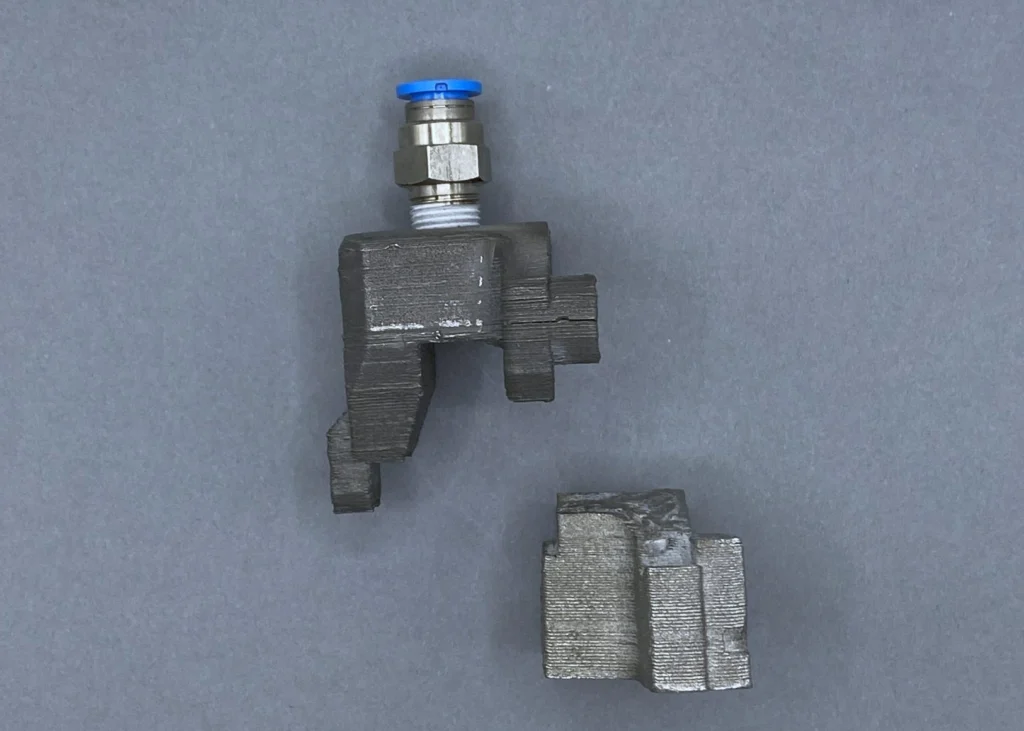
Zetamix 316L Stainless Steel Filament transforms standard 3D printing into metal manufacturing, enabling you to create industrial-grade metal components with complex geometries impossible through traditional machining. From durable tooling to corrosion-resistant fluid system parts, achieve near-wrought metal properties through our proven debinding and sintering process
Why Manufacturing & Engineering Teams Choose Zetamix 316L
Certified Material Performance
Authentic 316L stainless steel composition (92% metal by mass)
Corrosion resistance meeting ASTM A240 standards
Impact strength 2.5x higher than sintered ceramics
16 W/m·K thermal conductivity for heat management applications
Industrial Application Ready
Functional tooling surviving >10k injection cycles
Salt-spray resistant marine and chemical processing components
CIP/SIP-compatible fluid fittings and valves
Biocompatible potential (meets ASTM F138 post-processing)
Precision Manufacturing Workflow
Predictable shrinkage: 15.4% (X/Y) & 14.7% (Z) for accurate scaling
Zetasinter furnace compatibility for repeatable results
Design guidelines for manufacturability and performance
Material Properties After Sintering
- Density: >90% of theoretical density
- Corrosion Resistance: Excellent against acids, chlorides, saline
- Impact Strength: Superior to ceramic alternatives
- Thermal Performance: Withstands high-temperature applications
Your Path to Precision Metal Parts
1. Design for Metal
Scale models by 118.2% (X/Y) and 117.2% (Z) for sintering shrinkage
Minimum wall thickness: 1mm | Minimum pin diameter: 3mm
Maximum overhang: 35° unsupported | Minimum hole size: 1.5mm
Maximum part size: 200mm (printed) with optimal furnace dimensions
2. Print with Confidence
Use grooved drive gears to prevent filament grinding
Print on flexible build plates for easy removal
Maintain consistent extrusion at 120-130°C
3 wall layers minimum with 20-100% infill density
3. Debind & Sinter
Chemical Debinding: 24h in acetone bath at 40°C (>4% mass loss)
Thermal Debinding: 10°C/h ramp from 50°C to 650°C in Ar/H₂ atmosphere
Sintering: 50°C/h to 1350°C with 2h hold in controlled atmosphere
FAQs
What equipment do I need beyond my 3D printer?
You’ll need acetone for solvent debinding and a high-temperature furnace capable of 1350°C with argon/hydrogen atmosphere control. The Zetasinter furnace is optimized for this process.
How do the mechanical properties compare to traditional 316L?
After proper sintering, parts achieve >90% density with corrosion resistance and mechanical properties suitable for functional applications, though slightly below wrought metal due to porosity.
What are the design limitations?
Maximum printed size: 200mm (recommended: 100mm), minimum wall thickness: 1mm, minimum feature size: 1.5mm. Avoid abrupt size changes and use rounded corners.
What safety precautions are required?
Use in well-ventilated areas, wear FFP2 masks when handling, and safety glasses. The raw powder form is hazardous, but the filament is not classified as dangerous when handled properly.
Can I create food-safe or medical components?
The sintered 316L meets ASTM F138 for implant-grade biocompatibility with proper post-processing, making it suitable for medical prototypes and some food processing applications.
How long does the complete process take?
Printing varies by model. Debinding takes approximately 64 hours (chemical + thermal), and sintering requires about 30 hours including ramp times and holding.
What's the shelf life and storage requirements?
The filament has a one-year shelf life when stored in its original vacuum-sealed packaging in cool, dry conditions.
What applications is this best suited for?
Ideal for jigs/fixtures, fluid system components, marine hardware, thermal management parts, and low-volume production where complex geometries make machining impractical.t.
Can I use supports and how are they removed?
Yes, use standard FDM support structures. They are removed during the debinding process along with the primary binder system.
- Brand Zetamix by Nanoe
- Printing Materials Metal Filaments
- Technology FFF
- Sintering type Solid State Sintering
- Printing temperature 130°C – 160°C
- Sintering Temperature 1350°C, under hydrogenated argon
- Shrinkage x,y = 15.4% ±1% / z = 14.7% ±1%
- Density >90 %
- MFR [g/10min] (@120°C, 2.5kg, half die) 24
- MVR [cm3/10(min)] 5
- Moisture Absorption , 7 days [%] <0,3%
Documents
Videos